Udderly luxurious research centre opens
Multi-million dollar learning complex a boon for dairy
Advertisement
Hey there, time traveller!
This article was published 17/09/2018 (2852 days ago), so information in it may no longer be current.
Five dozen cows are settling in to a new $4-million home at the University of Manitoba’s Glenlea Research Station and local dairy farmers are poised to milk the benefits.
On Sept. 13, the U of M officially opened the Dairy Farmers of Manitoba Discovery and Learning Complex, about 16 kilometres south of the Perimeter Highway off Highway 75.
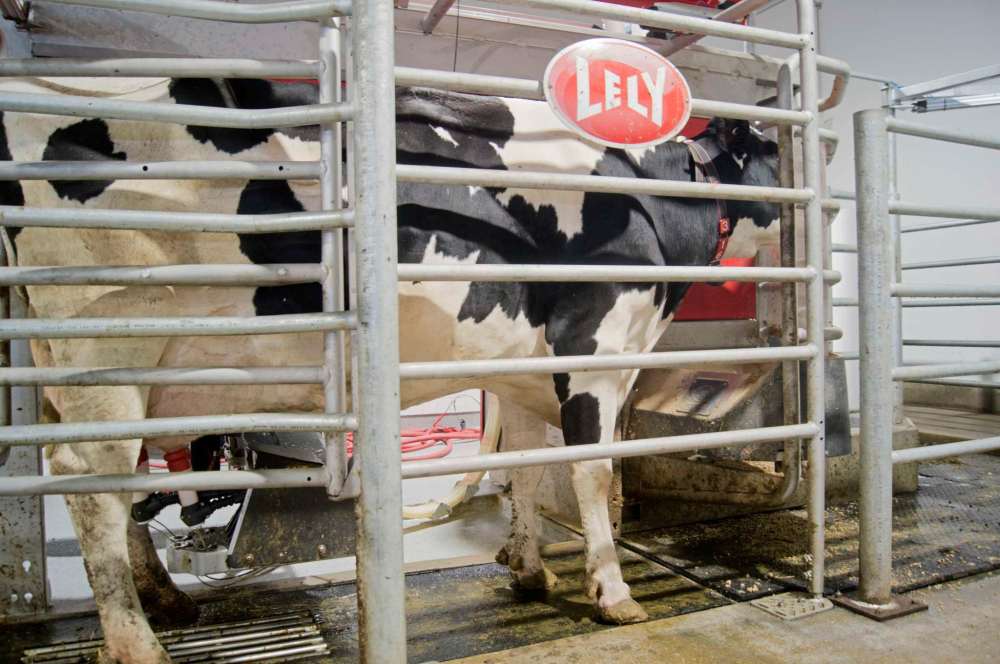
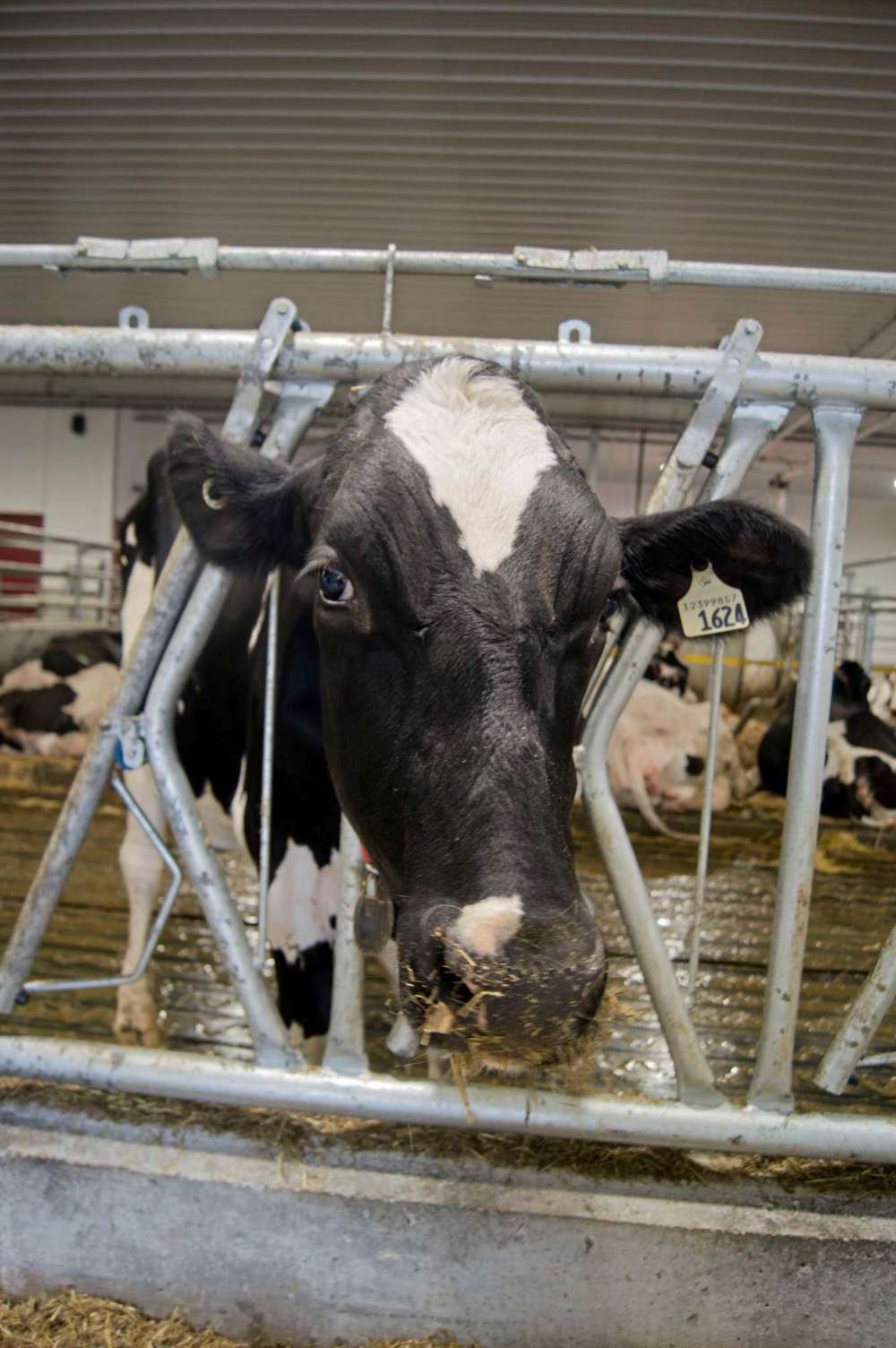
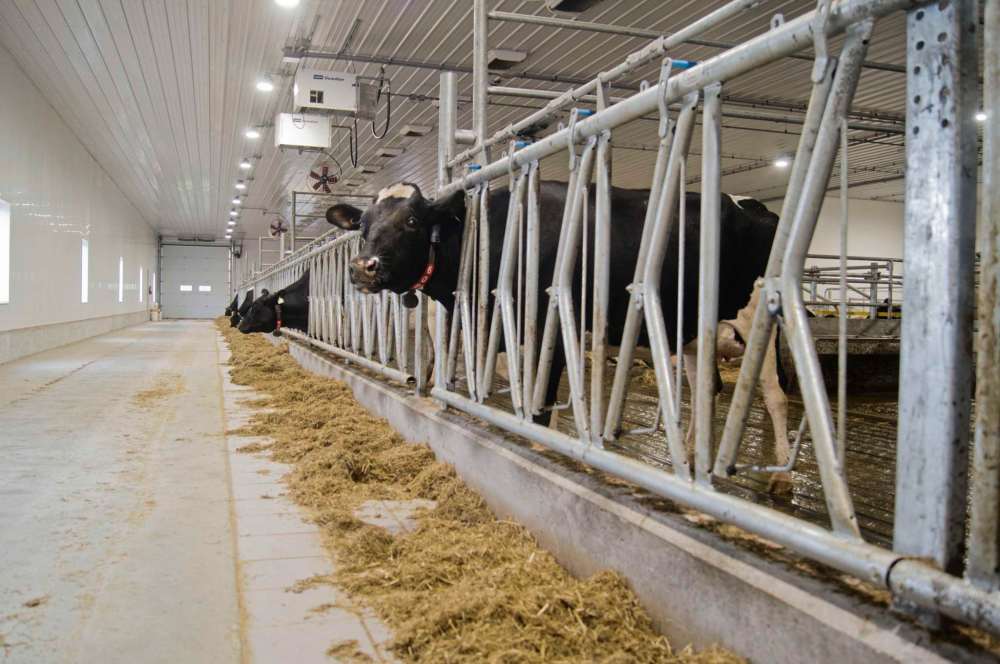
The state of the art facility will house 60 cows, moved over from the station’s former tie-stall barn, and is outfitted with automated milking and feeding systems, a free stall alignment to manage multiple groups, and a “level two” metabolism lab.
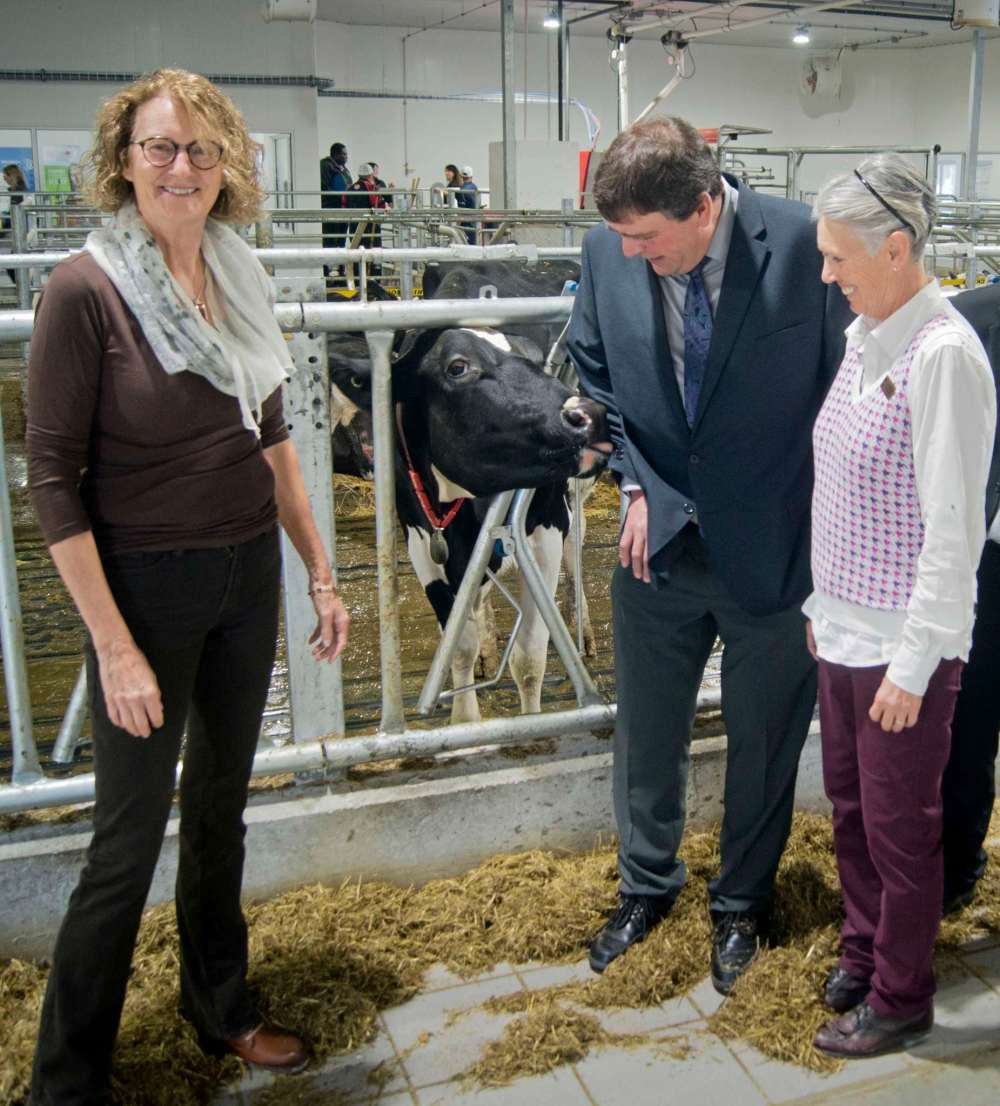
Tracy Gilson, operations manager at Glenlea, said a modernized complex will give scientists new opportunities to investigate improvements to the dairy production system, including enhanced cattle nutrition, greenhouse gas and waste management, and infectious disease control.
“The big interest to the dairy farmers is mastitis: that can be a production limiting problem with dairy cows,” she said. “So we have a level two metabolism unit which really allows us to work with pathogens, like mastitis bacteria, that the researchers will then determine what kinds of treatments serve best to eliminate the problem.”
Cattle at the complex will also be more comfortable and more productive, she noted.
At any time, cows can access an array of enrichment devices, food, and a robotic milking system; the animal simply walks into the machine when it pleases, lasers line up the suction devices with the udders to begin the process, and a computer identifies each cow and records desired data. A second automated milking machine is already on the centre’s wish list.
“We had to work very hard to keep it comfortable in the older system. We had to make sure that we exercised them and such, so the animal care was very good, but it took more effort,” she said.
Funding for the complex was provided by the Dairy Farmers of Manitoba, which contributed $2.2 million to the project. The federal and provincial governments also partnered to provide $1.4 million to the facility.
Scott Gilson, an executive member of the Dairy Farmers of Manitoba, said the province already has a strong contingent of researchers working with the association on its priorities — including animal welfare, environmental stewardship, and milk quality — but the facilities required to carry out the work were lacking.
“It was just the facilities that were creating a bottleneck to their research,” Scott Gilson said. “(The complex) gives us the opportunity to attract new research, it gives us a showcase for the public and schools, so it’s very much an attraction and shows transparency and how dairy cows are looked after on modern day farms.”
The investigations happening inside the complex will inform how the association’s 275 farms should manage its operations, he added.
“That research comes directly back to the farm for helping us improve animal comfort, milk quality and environmental concerns,” he said.