


Imagination takes flight at aviation museum
Advertisement
Hey there, time traveller!
This article was published 08/08/2017 (3362 days ago), so information in it may no longer be current.
Do you know how northern Canada was mapped by photographers on small planes?
Do you know why the Bavarian Motor Works moved from aircraft-engine production to making BMW cars?
Do you want to sit down in an old passenger airliner and be stunned by how much leg room there is, the comfortable size of the washroom, how big the windows are, and see one of the thick ropes in the ceiling that was to be flung out an appropriate window in order to exit in an emergency once the plane was on the ground?
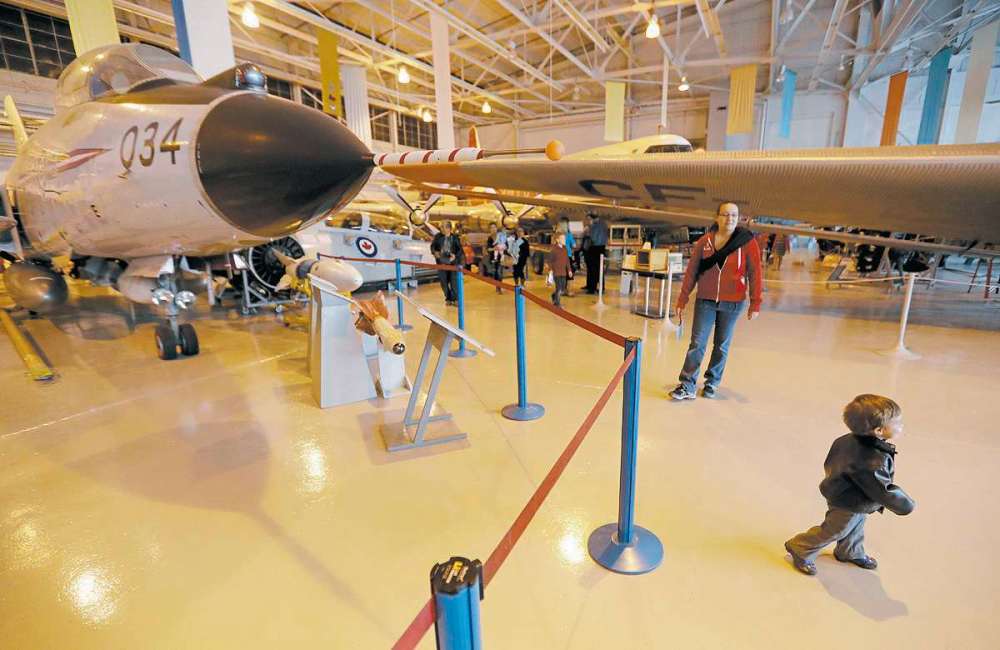
Then visiting the Royal Aviation Museum of Western Canada is the place for you.
On a recent tour, our enthusiastic and knowledgeable guide had a great time touring our group of adults and children from Canada and elsewhere. At one plane, the children were invited to sit in the cockpit and work the controls to show us how parts of the plane were moved. These pretend pilots were then awarded their “wings” via a small sticker.
The airplanes on display varied in size from small to huge, lumbering monsters. We learned what each was used for and what its advantages and disadvantages were.
The bush planes were my favourites. They were the workhorses of northern Canada, providing passenger and freight service to remote areas, especially where roads were inadequate or non-existent.
These planes were equipped with skis, floats, or wheels. No type of landing surface seemed to daunt the adventurous pilots who flew them.
The museum’s website notes that “Canada has been at the forefront of aviation innovation for approximately 100 years. Early bush pilots of the 1920s and 1930s pioneered the frigid Canadian frontier in planes made of wood and cloth and challenged the world to re-imagine the limits of flight.”
The website also says “these aircraft are rare and historically significant” — and were flown hard. Some were retrieved from the bottoms of lakes or the sides of mountains and have been painstakingly restored to showroom condition. Others are on display in their retirement splendour — dented, patched and pranged — souvenirs of a career in Canada’s relentless terrain.
The Royal Aviation Museum of Western Canada is a charitable, non-profit organization that earns or raises 90 per cent of its own revenue. Volunteers are the backbone of this museum.
Guided tours are offered Tuesdays, Thursdays, Saturdays and Sundays at 2 p.m., or other times if booked in advance.
For details on special events, bookings for birthday parties, admission prices and supporting the museum, visit the museum’s website at www.royalaviationmuseum.com
Jeannette Timmerman is a community correspondent for Richmond West.