Hey there, time traveller!
This article was published 23/01/2019 (2765 days ago), so information in it may no longer be current.
When the St. John’s Tigers beat the Elmwood Giants 13-10 on Nov. 8 to win the Winnipeg High School Football League’s Canad Inns Bowl Currie Conference), they capped off a special year for the team and a special journey for head coach Grant McMillan.
The championship was the first for the North End high school in 38 years.
“The group of individuals that we had, we had a really special group of players,” McMillan said.
“When we started training camp I said to the team that my goal, my expectation, was that we would be playing at Investors Group Field on Nov. 8 for the championship.
“At that point in time I knew we had some high-level, talented players, I knew we had some committed players, and I believed at that time that if we worked together and committed to the same goal, we would have the opportunity to do something special.”
The game wasn’t easy. The Giants had beaten the Tigers during the regular season. McMillan said the Giants main offensive focus was to get the ball and do “their thing.” But the Tigers weren’t ready to let their opponents have the trophy.
McMillan explained that his team was able to control the game and limit big plays. He said the Tigers’ defence did a phenomenal job controlling the Giants’ offence.
Asher Wood was one of the Tigers who refused to go home without the championship trophy. He scored every single point for the team during its playoff run.
☐ ☐ ☐
Since 1933, the St. John’s football team has affected the lives of hundreds of players. In the 1990s and early 2000s, a program which had once shaped exceptional players seemed to be on the backburner. The team’s quality of play declined, and St. John’s students weren’t interested in being involved in sports.
Playing sports was also a financial issue. Many families couldn’t afford to put food on their tables, let alone pay for football uniforms and equipment.
But McMillan, who has been coaching the team for 12 years (five as head coach), and assistant coach Brian Marks, who played with the Tigers in 1971-72 and has been with the team ever since, have done their best to instil some football pride within their group.
“What we do at St. John’s is give opportunities for players to play football. Most, I’m going to say 95 per cent, never played football in their lives, and often never played any kind of sports in their lives.
“We give them an opportunity to be on the team, we give them an opportunity to experience success, we give them an opportunity to belong to something meaningful and those bonds that they make in football, those bonds last forever,” McMillan said.
“Football is really unique in that there’s a position for everybody, every body type, every mental capacity… That’s what a football team offers that no other sport does because the kids without the ability can belong and participate and they can change and get better.”
For the coaching staff, being involved with the team goes beyond just teaching the game. The players learn and develop valuable life skills such as teamwork, ethics, discipline, commitment and leadership.
☐ ☐ ☐
Many on the Tigers’ roster have unstable lives and don’t have an example of commitment or leadership in their families. They come from broken homes and many carry the responsibilities of adults.
“The socio-economic basis of the North End changed,” Marks said. “Kids have to make more decisions now. ‘I need to work, I got a part-time job, I need more hours, my dad is not making as much money as we’d like…’”
“Kids have to babysit, there are a lot more single-parent family issues and poverty to deal with… (there was much ) in 1970.”
Former St. John’s player River Nepinak Fontaine said his experience with the team changed his life in many ways.
He said that, before he started playing football, he was “a chubby little kid who didn’t do much.”
River’s brother, Riley Nepinak, convinced him to join the Tigers.
“For students growing up in the North End, we’ve got a lot of challenges to overcome. We are trying to survive and not get jumped on the streets and stay away from the drugs,” Nepinak Fontaine said.
“Lots of people don’t have that opportunity to play football sometimes because they have to get a job to live their lives and survive. Once they actually start playing football, they realize it’s also about their lives, and they don’t have to be worrying about their parents all the time. It changes them and takes them off the streets.”
McMillan and Marks work with the players to ensure that when they graduate, the life skills learned at practice are entrenched forever.
“The fact that we’re there every day and we expect them to be there every day, this is something new to them, the life lessons that are going to hopefully bring success in other areas of their lives,” McMillan added.
“We are role models to our kids, we are mentors, we are often parents to our players. On many occasions, they don’t have any positive male influences in their lives.
“The football is almost secondary to being that stable influence in these young men’s lives and having someone that they can trust and rely on and count that they will be there for them.”
Nepinak Fontaine agrees.
“Not only are they our coaches but they also taught us life lessons,” he continued. “There are different things in the sport you need to learn. I’ve learned how to be disciplined, so I don’t jump the gun and go and hit someone, I’ve also learned how to be agile, fast and how to grow stronger.
“We aren’t only a team, we are a family. It wasn’t only the sport that we enjoyed but also each other’s company. We were like a really tight family, not just a team. That’s one of the biggest things that we loved about the sport.”
☐ ☐ ☐
McMillan and Marks says they have noticed over the years that their players are building strong character and becoming leaders in their school.
“The football team changes the school in a lot of ways. One good season can change the way that a team is portrayed, and so is the school. We face each school in our division, but our football team is also just making an impact on the school division, so people know that St. John’s is not just a ghetto school. We are actually athletes and people who are trying to live,” Nepinak Fontaine said.
McMillan said the entire community, and not just the school and its students supported the Tigers on their championship. Many attended the final and stayed for hours in the snow just to see their team leave with a victory.
“There has been great energy. We had a couple hundred fans come out to the game and the energy that they put out was exceptional,” he said, adding alumni from the 1970s also were at the game supporting the team. “The families, the staff and the students brought great energy.”
Rick Henkewich, WHSFL commissioner, said McMillan and Marks have done a great job leading the team to success.
“The last couple of years, I think they’ve done a great job bridging a lot of gaps. It’s not just the leadership that these young men learn, it’s the leadership that they provide in the school itself. St. John’s is a school that’s had a proud tradition … it goes back to 1933,” he said.
“So it’s got this proud history. It fell at times as the demographics of the area changed, and now, under Grant and Brian, it’s brought back that community pride within the school, within that area.”
The network between teams and divisions that is fostered through the football community shows the players that they are respected by others, Marks said.
“When guys go to camps, and they participate in U16 (camps and workouts)…they are respected because they are part of the league. So if you play football at St. John’s you are seen as a football player and part of that league. And at the end of your career, when you’re picked to got to the senior, and you play your game with the guys from the big schools, you’re looked at as equal,” he said.
☐ ☐ ☐
Nepinak said now that he’s not playing with the Tigers, he can see the lasting effect the team had on him.
“When I first started, I was very shy, but when you start playing with a team, you realize that it’s not just you out there. I realized that I don’t have to be the shy kid anymore because I have someone here looking for my back. It really gets you out of your social bubble and pushes you out there because it really is a community. There are other teams and divisions that you’ll be a part of, and it just gets you out of your comfort zone.”
When the St. John’s Tigers beat the Elmwood Giants 13-10 on Nov. 8 to win the Winnipeg High School Football League’s Canad Inns Bowl Currie Conference), they capped off a special year for the team and a special journey for head coach Grant McMillan.
The championship was the first for the North End high school in 38 years.
Ligia Braidotti
The Times dives deep into the St. John's Tigers football program and learns what ending a 38-year championship drought has meant to the North End team, school and community,
“The group of individuals that we had, we had a really special group of players,” McMillan said. “When we started training camp I said to the team that my goal, my expectation, was that we would be playing at Investors Group Field on Nov. 8 for the championship.
“At that point in time I knew we had some high-level, talented players, I knew we had some committed players, and I believed at that time that if we worked together and committed to the same goal, we would have the opportunity to do something special.”
The game wasn’t easy. The Giants had beaten the Tigers during the regular season. McMillan said the Giants main offensive focus was to get the ball and do “their thing.” But the Tigers weren’t ready to let their opponents have the trophy.
McMillan explained that his team was able to control the game and limit big plays. He said the Tigers’ defence did a phenomenal job controlling the Giants’ offence.
Asher Wood was one of the Tigers who refused to go home without the championship trophy. He scored every single point for the team during its playoff run.
☐ ☐ ☐
Since 1933, the St. John’s football team has affected the lives of hundreds of players. In the 1990s and early 2000s, a program which had once shaped exceptional players seemed to be on the backburner. The team’s quality of play declined, and St. John’s students weren’t interested in being involved in sports.
Playing sports was also a financial issue. Many families couldn’t afford to put food on their tables, let alone pay for football uniforms and equipment.
But McMillan, who has been coaching the team for 12 years (five as head coach), and assistant coach Brian Marks, who played with the Tigers in 1971-72 and has been with the team ever since, have done their best to instil some football pride within their group.
“What we do at St. John’s is give opportunities for players to play football. Most, I’m going to say 95 per cent, never played football in their lives, and often never played any kind of sports in their lives.
“We give them an opportunity to be on the team, we give them an opportunity to experience success, we give them an opportunity to belong to something meaningful and those bonds that they make in football, those bonds last forever,” McMillan said.
“Football is really unique in that there’s a position for everybody, every body type, every mental capacity… That’s what a football team offers that no other sport does because the kids without the ability can belong and participate and they can change and get better.
Ligia Braidotti
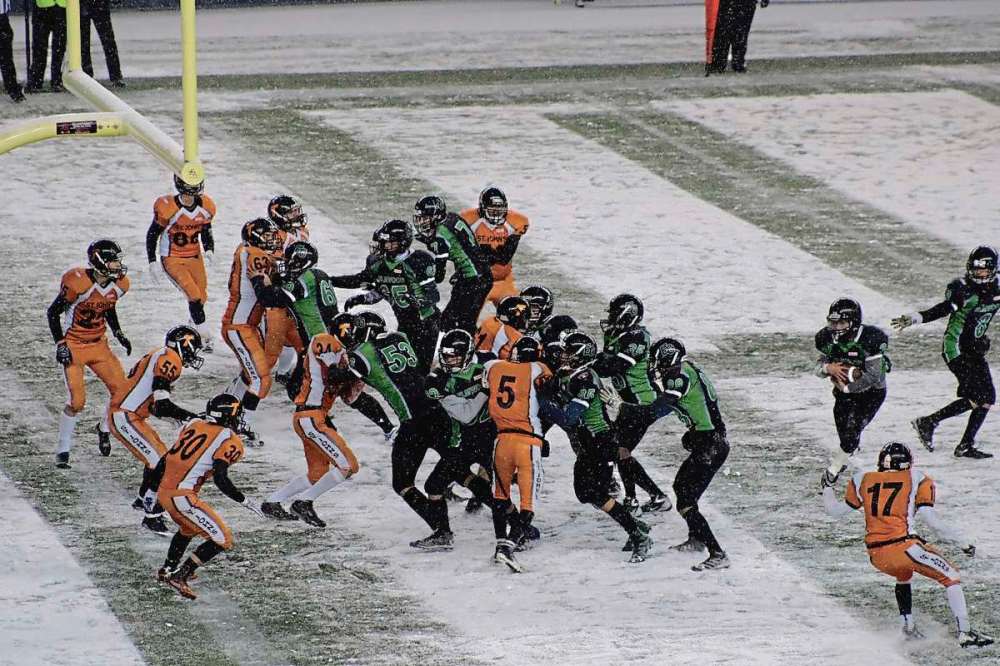
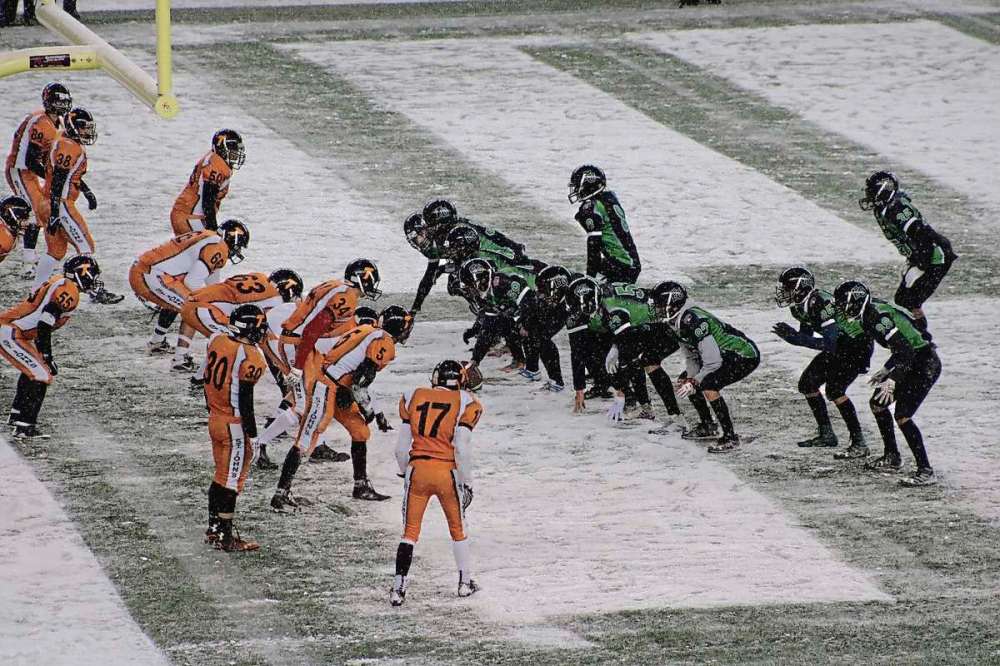
The St. John's Tigers, in black and orange, won the Winnipeg High School Football League's Currie Division championship by beating Elmwood 13-10 on Nov. 8 at Investors Group Field.
”For the coaching staff, being involved with the team goes beyond just teaching the game. The players learn and develop valuable life skills such as teamwork, ethics, discipline, commitment and leadership.”
☐ ☐ ☐
Many on the Tigers’ roster have unstable lives and don’t have an example of commitment or leadership in their families. They come from broken homes and many carry the responsibilities of adults.
“The socio-economic basis of the North End changed,” Marks said. “Kids have to make more decisions now. ‘I need to work, I got a part-time job, I need more hours, my dad is not making as much money as we’d like…’
“Kids have to babysit, there are a lot more single-parent family issues and poverty to deal with… (there was much ) in 1970.”
Former St. John’s player River Nepinak Fontaine said his experience with the team changed his life in many ways. Before he started playing football, he said he was “a chubby little kid who didn’t do much.”
River’s brother, Riley Nepinak, convinced him to join the Tigers.
“For students growing up in the North End, we’ve got a lot of challenges to overcome. We are trying to survive and not get jumped on the streets and stay away from the drugs,” Nepinak Fontaine said.
“Lots of people don’t have that opportunity to play football sometimes because they have to get a job to live their lives and survive. Once they actually start playing football, they realize it’s also about their lives, and they don’t have to be worrying about their parents all the time. It changes them and takes them off the streets.”
McMillan and Marks work with the players to ensure that when they graduate, the life skills learned at practice are entrenched forever.
“The fact that we’re there every day and we expect them to be there every day, this is something new to them, the life lessons that are going to hopefully bring success in other areas of their lives,” McMillan added.
Ligia Braidotti
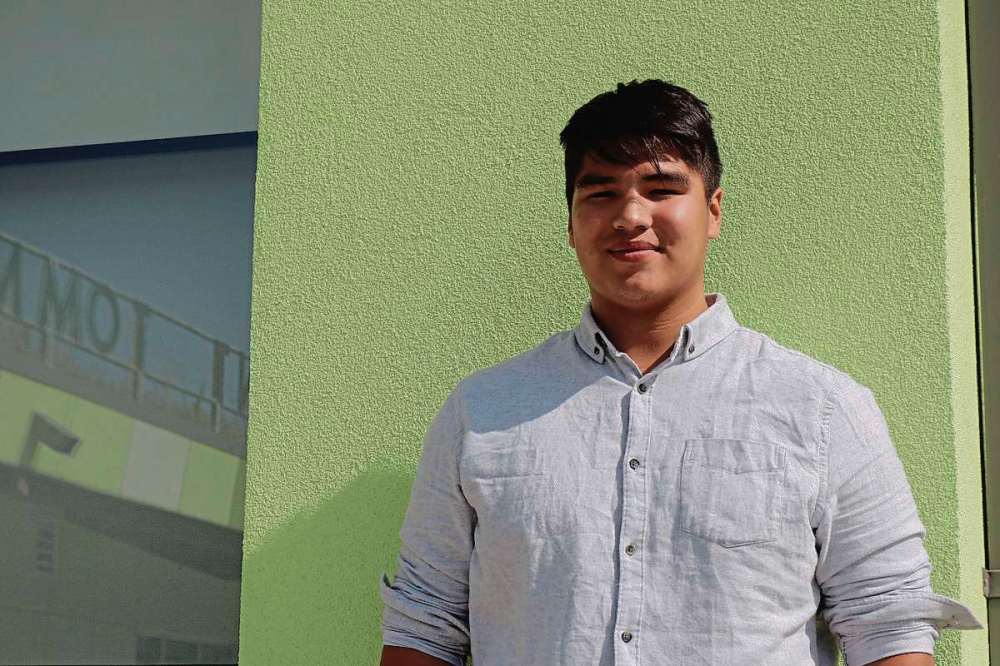
River Nepinak Fontaine, a former St. John's football player, says the school team changed his life for the better.
“We are role models to our kids, we are mentors, we are often parents to our players. On many occasions, they don’t have any positive male influences in their lives.
“The football is almost secondary to being that stable influence in these young men’s lives and having someone that they can trust and rely on and count that they will be there for them.”
Nepinak Fontaine agrees.
“Not only are they our coaches but they also taught us life lessons,” he continued. “There are different things in the sport you need to learn. I’ve learned how to be disciplined, so I don’t jump the gun and go and hit someone, I’ve also learned how to be agile, fast and how to grow stronger.
“We aren’t only a team, we are a family. It wasn’t only the sport that we enjoyed but also each other’s company. We were like a really tight family, not just a team. That’s one of the biggest things that we loved about the sport.”
☐ ☐ ☐
McMillan and Marks says they have noticed over the years that their players are building strong characters and becoming leaders in their school.
“The football team changes the school in a lot of ways. One good season can change the way that a team is portrayed, and so is the school. We face each school in our division, but our football team is also just making an impact on the school division, so people know that St. John’s is not just a ghetto school. We are actually athletes and people who are trying to live,” Nepinak Fontaine said.
McMillan said the entire community, and not just the school and its students supported the Tigers on their championship. Many attended the final and stayed for hours in the snow just to see their team leave with a victory.
“There has been great energy. We had a couple hundred fans come out to the game and the energy that they put out was exceptional,” he said, adding alumni from the 1970s also were at the game supporting the team.
“The families, the staff and the students brought great energy.”
Supplied photo
Former St. John's Tigers quarterback Jordan Thomas died on Dec. 13, 2017, after being stabbed. The high school football team dedicated its 2018 season to honouring his memory.
Rick Henkewich, WHSFL commissioner, said McMillan and Marks have done a great job leading the team to success.
“The last couple of years, I think they’ve done a great job bridging a lot of gaps. It’s not just the leadership that these young men learn, it’s the leadership that they provide in the school itself. St. John’s is a school that’s had a proud tradition … it goes back to 1933,” he said.
“So it’s got this proud history. It fell at times as the demographics of the area changed, and now, under Grant and Brian, it’s brought back that community pride within the school, within that area.”
The network between teams and divisions that is fostered through the football community shows the players that they are respected by others, Marks said.
“When guys go to camps, and they participate in U16 (camps and workouts)…they are respected because they are part of the league. So if you play football at St. John’s you are seen as a football player and part of that league. And at the end of your career, when you’re picked to got to the senior, and you play your game with the guys from the big schools, you’re looked at as equal,” he said.
☐ ☐ ☐
Nepinak said now that he’s not playing with the Tigers, he can see the lasting effect the team had on him.
“When I first started, I was very shy, but when you start playing with a team, you realize that it’s not just you out there. I realized that I don’t have to be the shy kid anymore because I have someone here looking for my back. It really gets you out of your social bubble and pushes you out there because it really is a community. There are other teams and divisions that you’ll be a part of, and it just gets you out of your comfort zone.”
The 2018 St. John’s High School football team was deeply affected by the death of one of its members in December 2017.
Jordan Thomas was the team’s quarterback when he was stabbed to death in the Lord Selkirk Park area by a 17-year-old boy and two 14-year-old girls. Police found Thomas and his brother Brandon bleeding near David Livingston School.
He was a tremendous loss to the team, McMillan said.
When the Tigers started the season in the summer, they held a remembrance service on their field which was attended by all his family members. The team had number ‘7’(Thomas’ jersey number) painted at centrefield, where it stayed throughout the season.
The team was constantly reminded what a large extended family the football program can be.
“Jordan was a symbol of our mantra ‘Once a Tiger, always a Tiger,’ and how as a team, we support each other, look out for each another, and in the end the game is so much bigger than one person because we are always playing for one another,” McMillan adedd.
At the beginning of the season, the team promised each other that they would bring the title hometo honour Thomas.
“Every player that has ever worn a Tiger football jersey, ever stepped on our field, was a part of our victory. Our championship was made extra-special because of the journey that we were taken on due to Jordan’s passing and his spirit being constantly with us but it is also a testament to the power and commitment of a dedicated group of young men and women unifying as one family and all striving toward the same goal.”
Thomas was also involved with rugby and basketball.
The young man who murdered Thomas was sentenced by provincial court judge Lee Ann Martin to a maximum youth term of seven years for second degree murder, as well as three years for attempting to kill Brandon.
—Braidotti
The 2018 St. John’s High School football team was deeply affected by the death of one of its members in December 2017.
Jordan Thomas was the team’s quarterback when he was stabbed to death in the Lord Selkirk Park area by a 17-year-old boy and two 14-year-old girls. Police found Thomas and his brother Brandon bleeding near David Livingston School.
He was a tremendous loss to the team, McMillan said.
When the Tigers started the season in the summer, they held a remembrance service on their field which was attended by all his family members. The team had number 7 (Thomas’ jersey number) painted at centrefield, where it stayed throughout the season.
The team was constantly reminded what a large, extended family the football program can be.
“Jordan was a symbol of our mantra ‘Once a Tiger, always a Tiger,’ and how, as a team, we support each other, look out for each another, and in the end the game is so much bigger than one person because we are always playing for one another,” McMillan adedd.
At the beginning of the season, the team promised each other that they would bring the title home to honour Thomas.
“Every player that has ever worn a Tiger football jersey, ever stepped on our field, was a part of our victory. Our championship was made extra-special because of the journey that we were taken on due to Jordan’s passing and his spirit being constantly with us but it is also a testament to the power and commitment of a dedicated group of young men and women unifying as one family and all striving toward the same goal.”
Thomas was also involved with rugby and basketball.
The young man who killed Thomas was sentenced by provincial court judge Lee Ann Martin to a maximum youth term of seven years for second-degree murder, as well as three years for attempting to kill Brandon Thomas.