


AED effort was led by Manitoba hockey hall
Advertisement
Hey there, time traveller!
This article was published 24/03/2020 (2366 days ago), so information in it may no longer be current.
The next time you’re in a hockey arena, a curling club or a community centre, see if you can spot the automated external defibrillator (AED) machine that should be in plain sight.
The importance of AED machines was in the news after NHL defenseman Jay Bouwmeester of the St. Louis Blues collapsed on the bench during a game with the Anaheim Ducks on Feb. 11. An AED machine that is kept close to the bench during NHL games was used to save his life. A couple of days later, the Winnipeg Free Press ran a story about Manitoba Moose goaltending coach Rick St. Croix going into full cardiac arrest in the Winnipeg International Airport on Dec. 10. As part of the effort to save his life, an AED machine was employed.
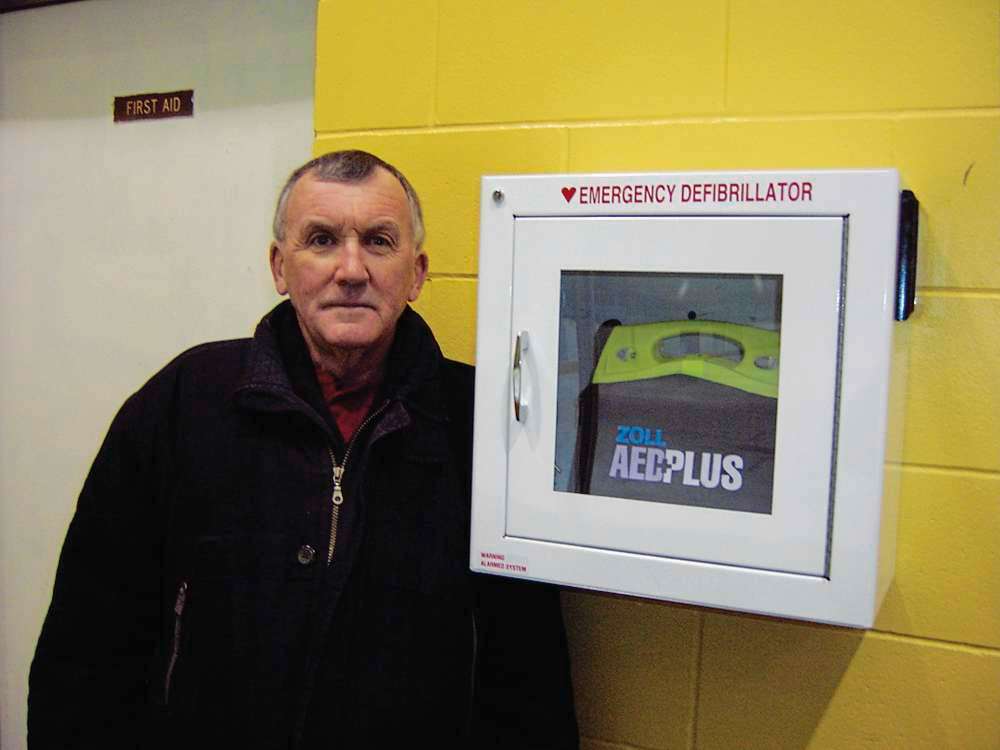
The Manitoba government’s Defibrillator Public Access Act legislated that AEDs must installed in designated public premises by Jan. 31, 2014. Several years earlier, the Manitoba Hockey Hall of Fame, headed at the time by president Gary Cribbs, took a leadership role in getting AEDs into Manitoba rinks.
While the HOF is best known for its biannual induction of individuals and teams into its shrine, which is located in the MTS Iceplex, the organization takes on a number of other projects in support of the community, such as scholarships, awards and grants. In the spring of 2008, the HOF directors approved a program to increase awareness of the need to have AEDs in rinks. The HOF purchased machines for the Billy Mosienko and Terry Sawchuk rinks in Winnipeg, as both players were in the first group of HOF inductees in 1985. Recognizing the importance to the public of seeing the project stretch beyond the Perimeter Highway, a third unit was donated to the Whitney Forum in Flin Flon, where many HOF-inducted individuals or team members had played.
The HOF committee met with the City of Winnipeg and lobbied for AEDs to be placed in all city rinks. At the beginning there was reluctance from city officials but the hockey team won the battle and machines were installed in all city-operated rinks. Next up were discussions with the General Council of Winnipeg Community Centres to get machines into the facilities falling under its umbrella. Funding from the Pan-Am Clinic Foundation paid half the cost, which was about $1,250 per unit. That led to an AED being installed in the Gateway, Notre Dame, River Heights and Transcona East End arenas.
The committee also worked with recreation groups across the province to encourage them to purchase AEDs for their local facilities. In November and December 2008, an AED Challenge initiative developed by the Heart and Stroke Foundation of Manitoba, which offered a special purchase price and training, resulted in more than two dozen rural communities obtaining units.
Players also recognized the need. Current HOF president Don Kuryk, a retired referee, spearheaded a project by his Winnipeg Clubs old-timers team to fund an AED for the Pioneer Arena where they played. At the Keith Bodley Arena, home to several 55-plus groups, former Red River Rebels coach and retired college instructor Barry Smith and retired city cop Bob Essery headed a similar initiative. Players also took training on the use of the defibrillator from the HSFM.
Another story illustrates the value of having an AED machine nearby. In November 2009, Perry Batchelor was refereeing a game in Altona, Man., when he collapsed on the ice. An AED helped save his life. Key to the story is that Batchelor had lobbied to get a machine in the rink and had led the fundraising project to make it happen about a year earlier.
Memories of Sport appears every second week in the Canstar Community News weeklies. Kent Morgan can be contacted at 204-489-6641 or email: sportsmemories@canstarnews.com