



Breaking the silence

Advertisement
By the time you read this, it will be a couple of days past International Holocaust Remembrance Day, established by the United Nations to be observed annually on Jan. 27, the anniversary of the liberation, in 1945, of Auschwitz-Birkenau, the most notorious of the Nazi death camps.
It has now been 81 years, and almost everyone who remembers that time is gone. Thankfully, many of them committed their memories to paper and film, so we have records of what happened, despite many attempts to deny or diminish the atrocities. The word “holocaust”, which originally meant “wholly burnt offering” and was first used to describe a fiery massacre in 1833, has become synonymous with the Nazi genocide of Jews specifically, although of course the Nazis murdered many other people – the Roma, LGBTQ+ people (especially gay men and trans people), Soviet prisoners of war and disabled people. The shocked world declared “Never again!”, and many school systems include Holocaust curricula specifically to instill the importance of never allowing genocide again.
And yet – genocide happens again, and again, and again, and the world is silent. Does “never again” apply to everyone, or only to those we like? The philosopher Judith Butler introduced the concept of grievability – that some people deserve to be mourned and grieved, and other people less so. It seems to be a universal human trait, and a depressing one.
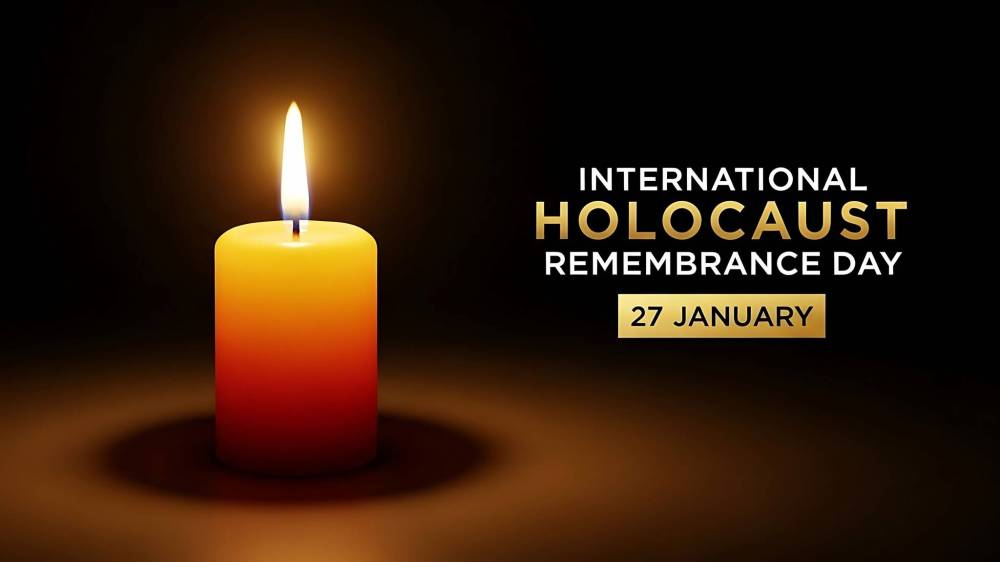
Adobe Stock image
Let “Never again for anyone” be our watchword.
Still, there is hope. Many traditions endorse the idea of universal human dignity and worth – as the Talmud says, one who destroys a single soul is as if they have destroyed a whole world, and one who saves a single soul is as if they had saved an entire world. Every human is worth as much as any other human. Can we grieve for those we don’t know in the same way we do for those who look like us? How many of us could honestly answer in the affirmative? Are we doomed to repeat the atrocities of the past?
Maybe it doesn’t have to be all or nothing. Maybe we can declare the grievability of every human soul, everywhere on earth, regardless of the colour of their skin or their manner of belief, while acknowledging that as humans, our imagination and empathy may be limited. We are not perfect, after all.
But we can break the silence. We can speak out on behalf of those who are not heard, who are not grieved, who disappeared into the atmosphere through the chimneys of the crematoria, Jews and Roma and others who were considered less than human. We can speak out on every atrocity that is happening in our world, and let “Never again for anyone” be our watchword.
It is not an easy task – fear and shame may make it hard for us to raise our voices. But as the last witnesses of the atrocities in Europe fade away, it is our duty to remember, and to speak.
Emèt Hadass Eviatar
West Kildonan community correspondent
Emet Hadass Eviatar is a community correspondent for West Kildonan. Find her at Substack.com/@emetshethey
Our newsroom depends on a growing audience of readers to power our journalism. If you are not a paid reader, please consider becoming a subscriber.
Our newsroom depends on its audience of readers to power our journalism. Thank you for your support.
Emèt Hadass Eviatar
West Kildonan community correspondent
Emet Hadass Eviatar is a community correspondent for West Kildonan. Find her at Substack.com/@emetshethey
Our newsroom depends on a growing audience of readers to power our journalism. If you are not a paid reader, please consider becoming a subscriber.
Our newsroom depends on its audience of readers to power our journalism. Thank you for your support.
Advertisement Advertise With Us