


The definition of ‘upstander’
CMHR calls on student voices

Advertisement
Hey there, time traveller!
This article was published 27/03/2024 (849 days ago), so information in it may no longer be current.
The Canadian Museum for Human Rights has been taking to classrooms in recent weeks, bringing its annual Be an Upstander program to Winnipeg schools.
On March 19, the doors to General Byng School — a kindergarten to Grade 9 school in the Pembina Trails School Division — opened its doors to the public for a showcase of three examples of Be An Upstander projects done by students over the course of the last month.
Students were tasked to pick a human rights or humanitarian topic that interested and/or concerned them and, through that, to create an informative diagram and presentation. The final projects also included ways to help mitigate the problem and educate others.
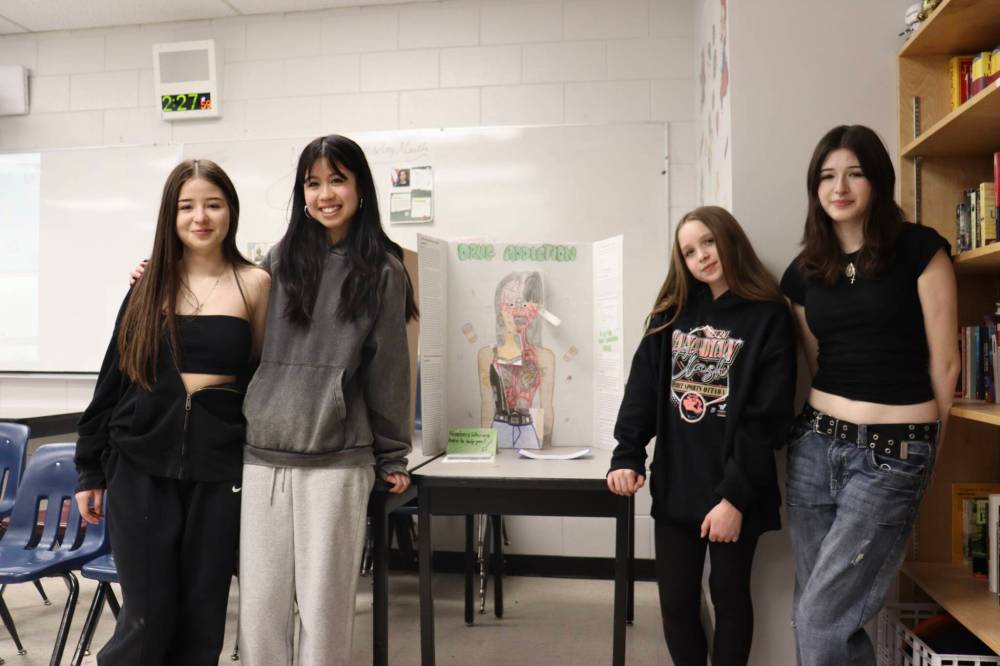
All the Be an Upstander projects — from General Byng and other schools around the city — will be displayed at the CMHR in May, aligning well with the ongoing Beyond the Beat exhibit, which is on display until September.
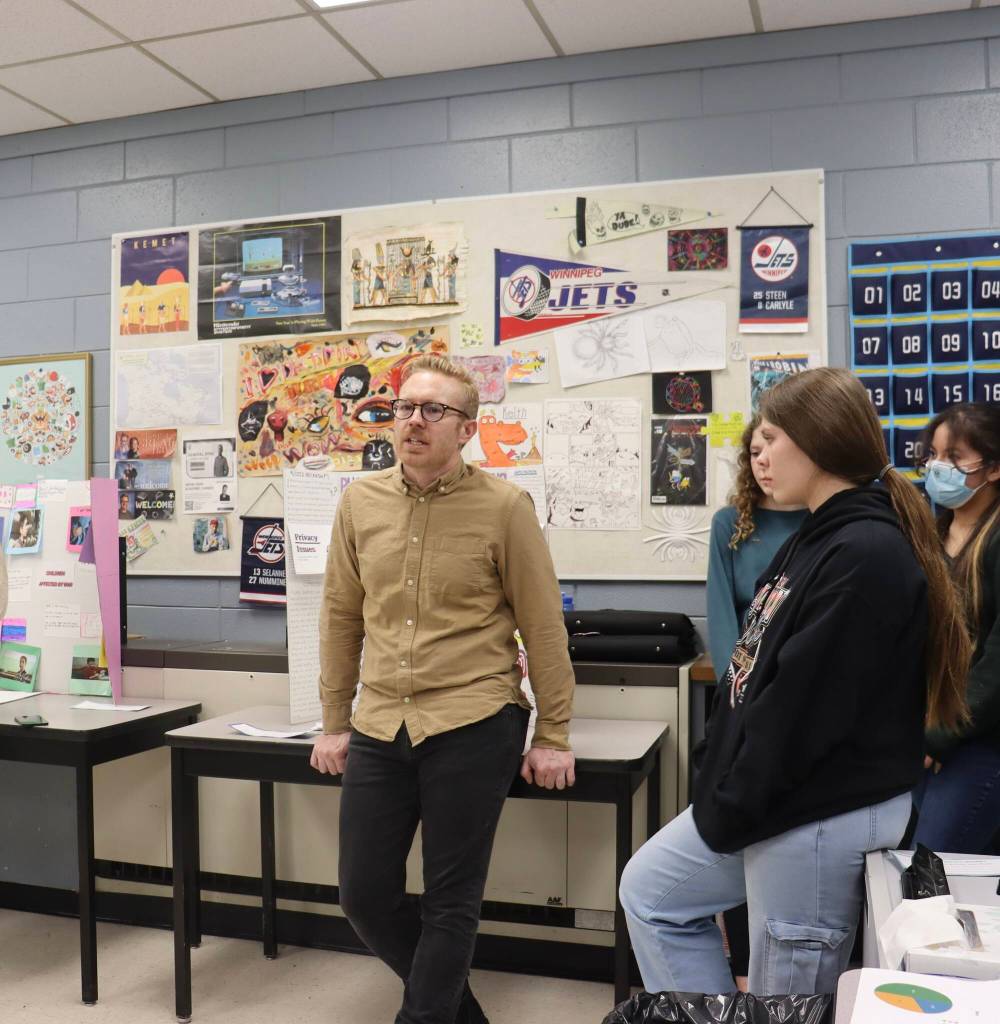
“It was really three full weeks of work,” said Matt Reimer, a teacher at General Byng. He said the work was done both in and out of the classroom.
Be an Upstander aims to give young students a reminder of the power and choice that they have in their respective communities, especially when dealing with what can be scary and overwhelming issues that can affect people far outside of their circles.
“It gives kids agency,” Reimer said. “I think it provides them with a sense of, they can do something about the problems that they see. And I think the mechanism that we’re giving them, of a showcase like (today), they take pride in that, too. To be able to share their opinions and their beliefs … They don’t always get to do that, and so this is an opportunity for them to show hope and to show their passions.”
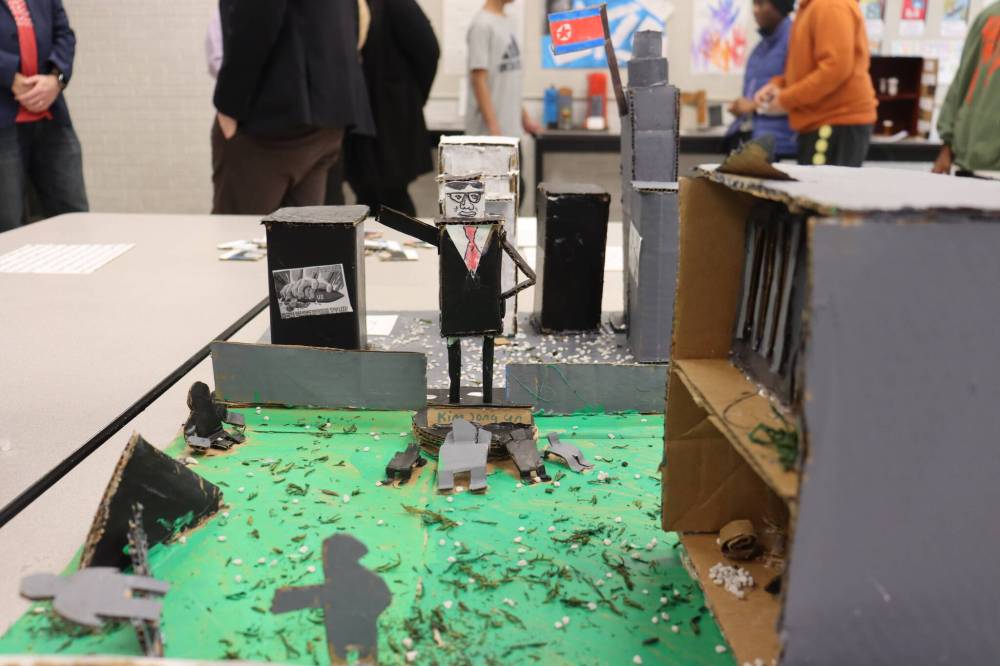
Although the project subjects are common humanitarian issues — at General Byng the chosen topics were drug addiction, phone dependency, and poverty — students came away with new knowledge and possible solutions. The latter were incorporated in their final diagrams, and will serve as a real support for those who may be passing by the projects in the form of an exhibit.
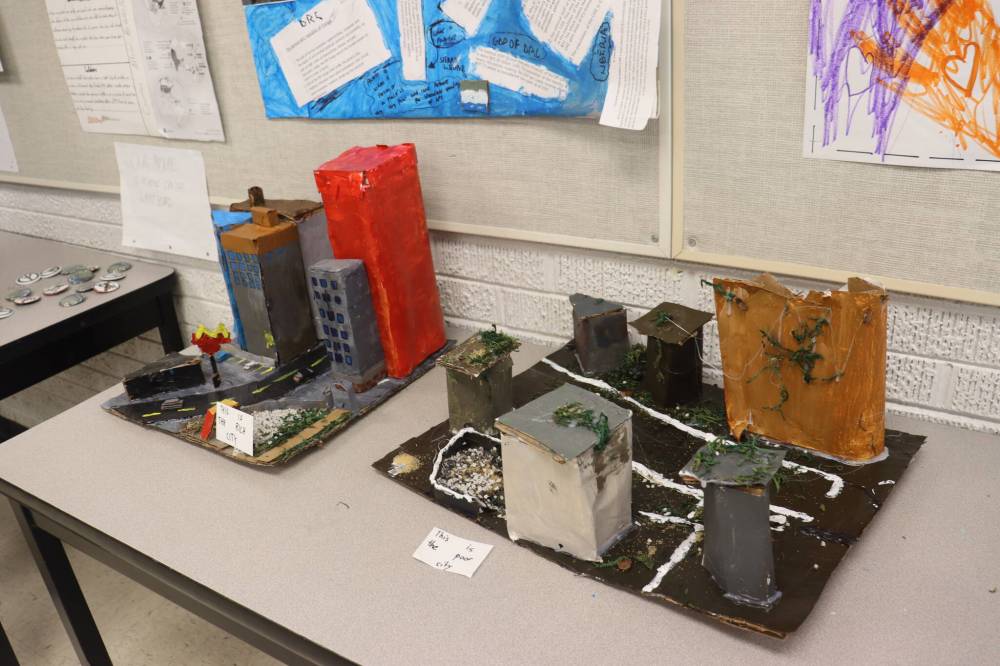
“What really affected me, when I was doing it, was the amount and the size (of the issue),” said Jacob Monteclaro, a student in the group of four focused on poverty. “When you’re really small, you don’t realize how (big) it all is. But when you start growing, you start learning more about the world. How corrupt it is, and how much injustice there is.”
The group created two model cities, one depicting a ‘rich’ area and the other a ‘poor,’ to create a visual depiction from their point of view.
“The rich cities are still poor, but they find a way to cover it up,” said Inioluwa Olushjola-Ojo, another student in the group. “The poor cities, they can’t really do anything.”
“It’s so important to give them the voice and the power, and help them realize that they have a say, and have things that they can do,” said Thea Wortley, an interpretive program developer at CMHR. “They have skills, they have strengths that can lend themselves to making the world a better place.
“On the flipside of that for the public, for adults to come in and see that, I think it brings in a lot of people,” Wortley said. “These kids are doing such great things … So I think it does bring a big sense of community, as well.”
For more information, visit humanrights.ca/school-program/be-upstander
Our newsroom depends on a growing audience of readers to power our journalism. If you are not a paid reader, please consider becoming a subscriber.
Our newsroom depends on its audience of readers to power our journalism. Thank you for your support.
Our newsroom depends on a growing audience of readers to power our journalism. If you are not a paid reader, please consider becoming a subscriber.
Our newsroom depends on its audience of readers to power our journalism. Thank you for your support.
Advertisement Advertise With Us
Advertisement Advertise With Us