


Help for injured wildlife now available at Assiniboine Park Zoo
Assiniboine Park Zoo wildlife drop-off site, in partnership with Wildlife Haven, open for business

Advertisement
Hey there, time traveller!
This article was published 11/06/2025 (346 days ago), so information in it may no longer be current.
People living in Winnipeg now have a place to drop-off injured or orphaned native wildlife — one much closer to home.
A new rescue and drop-off centre at Assiniboine Park Zoo (2595 Roblin Blvd.) is officially open for business. It’s a collaboration between Assiniboine Park Conservancy and Wildlife Haven Rehabilitation Centre, a wildlife rescue, rehabilitation and release centre located in Ile des Chênes.
The new drop-off site, located on the west side of the main Zoo parking lot, off Corydon Avenue, accepts injured or distressed animals and transports them directly to Wildlife Haven. Staff will also have the capacity provide immediate medical care to those which may be in life-or-death situations.
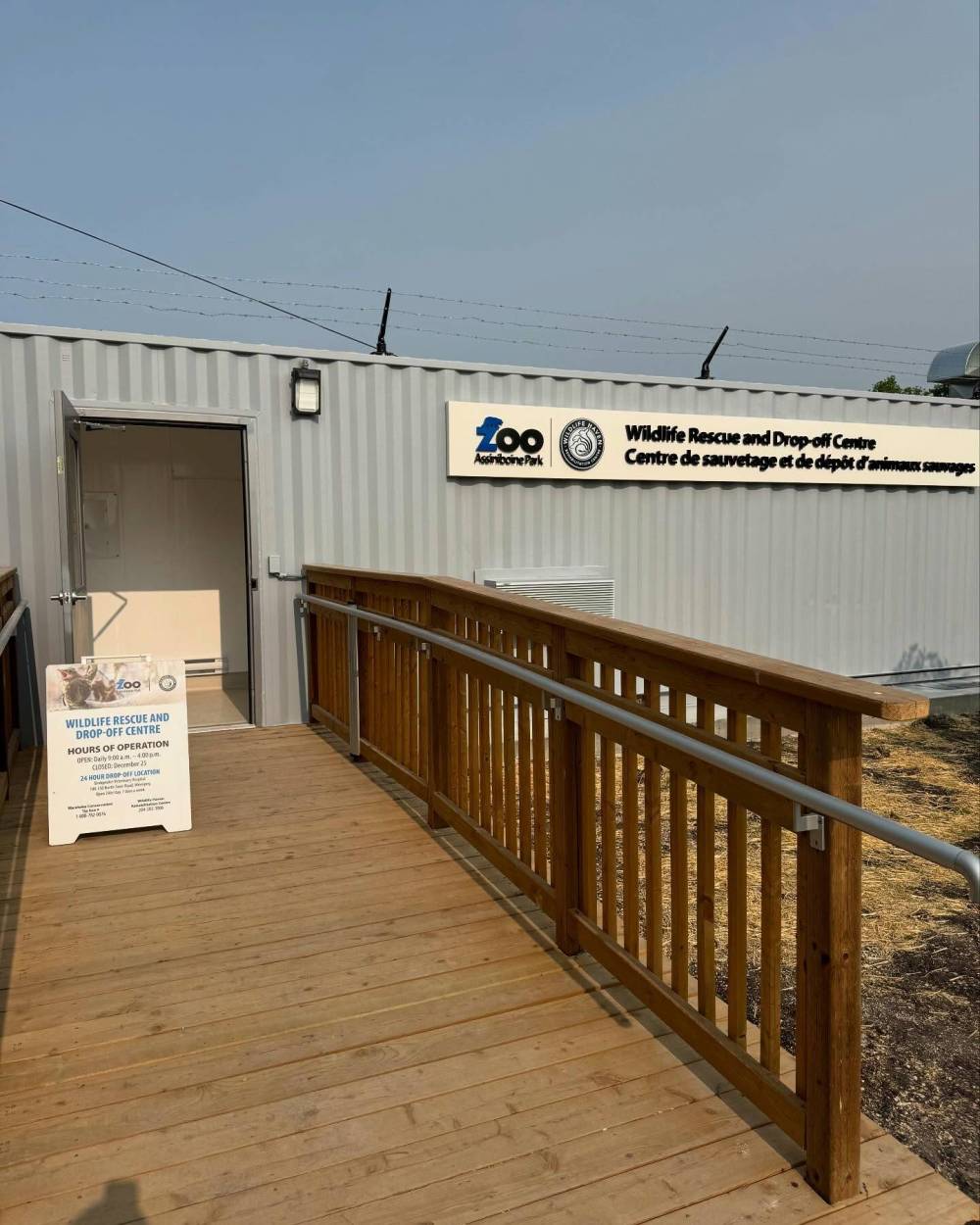
Supplied photo
The new drop-off and rescue centre at Assiniboine Park Zoo is located just west of the parking lot at 2595 Roblin Blvd. There, wildlife receive critical medical care and are shuttled to Wildlife Haven Rehabilitation Centre in Ile des Chênes.
“It’s really a win-win, where folks are getting faster access to dropping off that animal, (and the) animal is getting faster access to care when it’s required,” said Zoé Nakata, Wildlife Haven executive director. “So it’s just a phenomenal initiative. I’m so proud that we’ve been able to open this and launch it… it feels like (we’ve been) building up to this moment, and so we’re just thrilled to have it open.”
“Assiniboine Park Zoo, especially the veterinary team (and) the animal health teams, have had a really strong relationship with Wildlife Haven for some time now,” said Dr. Charlene Berkvens, director of animal health and nutrition at the Zoo.
Assiniboine Park is home to many species of native wildlife, which Wildlife Haven specializes in. The drop-off centre accepts any species except bears, raccoons, skunks and wolves or hooved animals such as deer, elk and caribou. It also won’t accept any invasive species, such as stray cats.
“The hope was that this would sort of fill a bit of a void that the community currently experiences, when they’re finding sick, injured or orphaned wildlife within Assiniboine Park. But of course, there’s also the potential for people to drop off from anywhere in Winnipeg,” Berkvens said.
If you come across an injured or orphaned wild animal, Nakata said the first thing you should do is remain calm and try not to panic or frighten it. Second, keep your distance to avoid the risk of injury — both to yourself and the animal. Injured animals can be unpredictable, Nakata said, because they’re scared and vulnerable, and baby animals may have a parent hidden just out of sight.
It’s then recommended that you call Wildlife Haven’s hotline, 204-202-3806, between 9 a.m. and 5 p.m.
“We can work with you on the phone to really try to decipher that situation. And we might ask you to try a few things, like putting a baby bird back in its nest, or giving that mama bunny a bit more space so she can come back and feed her babies. Because really our goal is, in fact, to have no animals come to Wildlife Haven. The human care of wild animals is really the last resort,” Nakata said. “I think we can all agree on that.”
Assiniboine Park and Wildlife Haven receive many calls from those concerned about potentially orphaned animals, but sometimes things can be resolved in nature, as geese will foster lost goslings and baby rabbits can survive on their own for up to 24 hours.
If animals do need to be brought to the drop-off site, Berkvens recommends handling them with care, placing them inside a kennel or secure box (darkened or covered with a blanket, if possible), and limiting loud conversation or radio music during the drive over.
Wildlife Haven is a not-for-profit organization which receives no government funding. At this time of year, it rescues approximately 700 animals of varying species. It accepts monetary and physical donations — such as food, kennels, blankets — but these must be dropped off on-site in Ile des Chênes, rather than at the rescue site at Assiniboine Park.
“I think this collaboration is a great extension of all the great work that we’re already doing together, and we’re just really looking forward to seeing how many cases go through it, and how many animals and people we help out with having it in-place,” Berkvens said.
For more information, visit wildlifehaven.ca
The non-profit will host an open house on Sept. 20 and 21.
Our newsroom depends on a growing audience of readers to power our journalism. If you are not a paid reader, please consider becoming a subscriber.
Our newsroom depends on its audience of readers to power our journalism. Thank you for your support.
Our newsroom depends on a growing audience of readers to power our journalism. If you are not a paid reader, please consider becoming a subscriber.
Our newsroom depends on its audience of readers to power our journalism. Thank you for your support.
Advertisement Advertise With Us
Advertisement Advertise With Us