


Wearable heritage
Local woman selling traditional Filipino clothing, accessories

Advertisement
A 77-year-old Filipino-Canadian woman sells traditional Filipino clothing and accessories from her small home on Spruce Street.
Lolina Monte’s heart lies in helping her fellow Filipinos in Canada and, especially, back home in the Philippines.
“It’s the Filipino craftsmanship that we have to promote,” Monte said.
She arrived in Canada in 1973, moving to Winnipeg in 2009. She started her small clothing business three years ago when her younger brother was looking for a traditional barong tagalog to wear.
“That’s when I thought of bringing barong and Filipiniana here,” Monte said.
A barong is a sheer, embroidered, long-sleeved formal shirt for men. It’s one of the national garments of the Philippines, along with the Filipiniana with the pleated butterfly sleeves.
A more affordable version, made from organza (a cotton-silk blend fabric), is what most clients buy, according to Monte.
It’s only when a client requests the traditional barong, made from actual pineapple leaf fibres — which is more expensive — that she brings it out for them
Each piece starts at around $70 and are made in the Philippines, with a portion of the proceeds going to the women and seamstresses who make them in Lumban, Laguna.
“It’s for those women back home to have a job,” Monte said.
Lumban is a city in the Philippines known for handmade, intricately embroidered barong and Filipiniana designs.
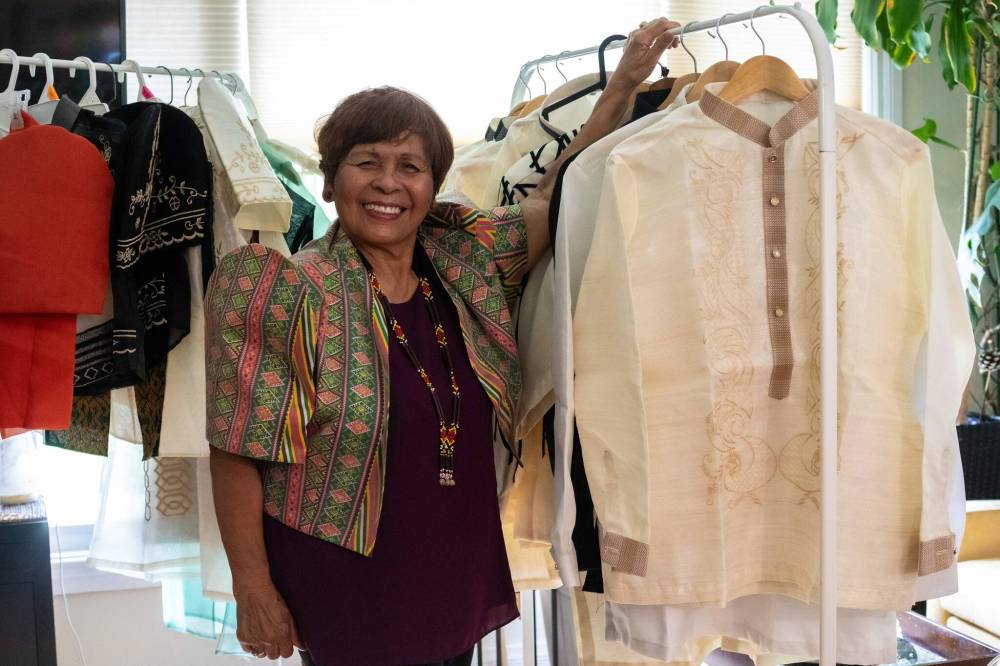
Photo by Maryrose Villena
Lolina Monte, 77, is a Filipina-Canadian who sells traditional Filipino clothing and accessories in the city.
Photo by Maryrose Villena
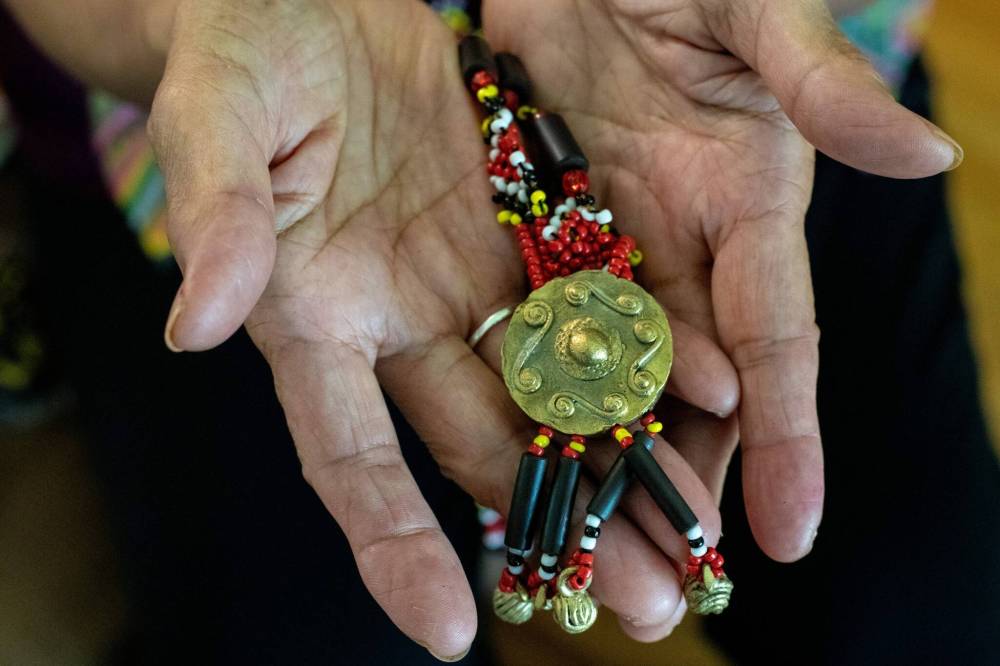
A handmade bead necklace with a gold/ brass element.
Monte partners with her aunt, who runs a bespoke tailoring shop in Lumban. She hires women and housewives there to make the clothing — giving them a livelihood while promoting Filipino handcraft traditions.
Shipping costs Monte around $500 to bring in a large box of goods to Canada. But, for her, it’s worth it.
“It’s the contribution I make to the community,” Monte said.
She remembers a time when a 50-year-old Filipino man came to buy a barong from her. He got teary-eyed trying one on for the first time in his life, despite being born in the Philippines. He’d spent his whole life believing the barong was reserved for dignitaries and politicians.
“I had to tell him that you don’t need to be a dignitary to wear your heritage,” Monte said.
Barongs and Filipinianas are traditionally worn in the Philippines for special occasions — weddings, birthdays, or formal events like business conventions.
Monte’s heart also swells with pride when non-Filipino clients come by. Once, she was at a local cultural event when an Egyptian woman stopped her to compliment her outfit — and ended up buying three pieces.
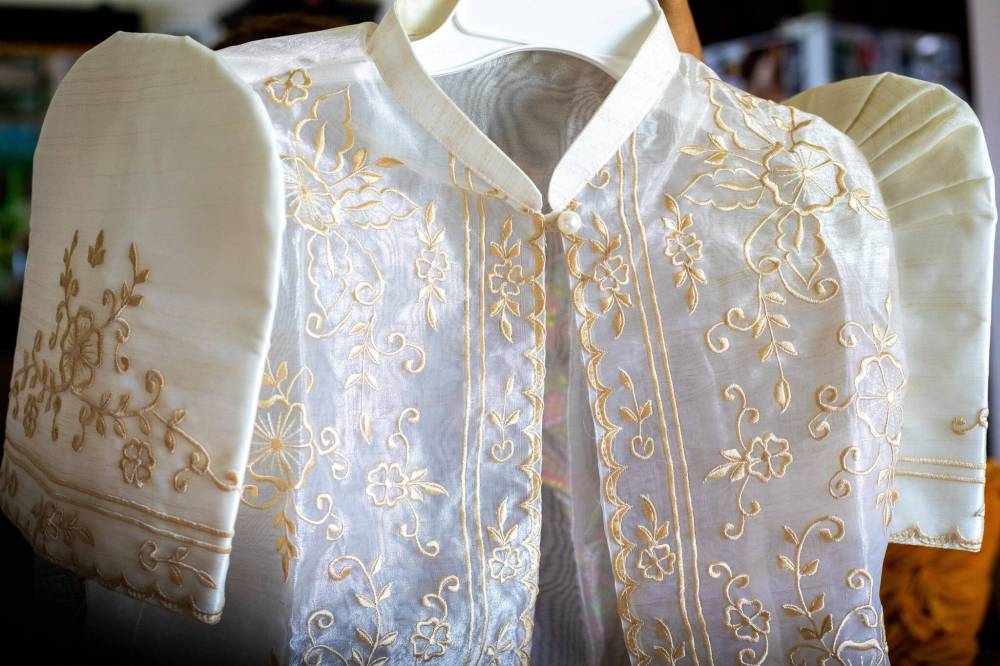
Photo by Maryrose Villena
A Filipiniana bolero that has embroideries of the Sampaguita, the national flower of the Philippines.
“I am not traditional,” Monte said. Her mission is to share Filipino culture with everyone, and she doesn’t gatekeep her traditions from others who want to enjoy and wear them.
There are more than 80,000 Filipinos in Winnipeg, according to Statistics Canada, and as the city’s Filipino diaspora grows, Monte increasingly sees parents buying traditional clothing for their children.
“It makes me feel good to see parents help their children get in touch with their roots,” Monte said.
Monte’s shop, which is by appointment only, can be viewed on Facebook as Lolina’s Fashion and Uniforms. For more information, or to book an appointment, call 204-698-3198.
Maryrose Villena
Our newsroom depends on a growing audience of readers to power our journalism. If you are not a paid reader, please consider becoming a subscriber.
Our newsroom depends on its audience of readers to power our journalism. Thank you for your support.
Maryrose Villena
Our newsroom depends on a growing audience of readers to power our journalism. If you are not a paid reader, please consider becoming a subscriber.
Our newsroom depends on its audience of readers to power our journalism. Thank you for your support.
Advertisement Advertise With Us
Advertisement Advertise With Us