



How did plastic flamingoes land here?

Advertisement
Hey there, time traveller!
This article was published 25/06/2014 (4308 days ago), so information in it may no longer be current.
I have often wondered why Transcona is associated with the pink flamingo and where it all began.
My quest for knowledge began with Peter Martin, Jr. because his family has lived in Transcona since 1907 and he just knows a lot of things. Peter referred me to Alanna Horejda, curator at the Transcona Museum and she was happy to share all the info she had. I did have to do some work to come up with the remaining info.
Real flamingoes are speculated to have been on this earth for at least seven million years, which is way longer than Transcona has been around. There are four different species and some of the birds can grow up to five feet tall.
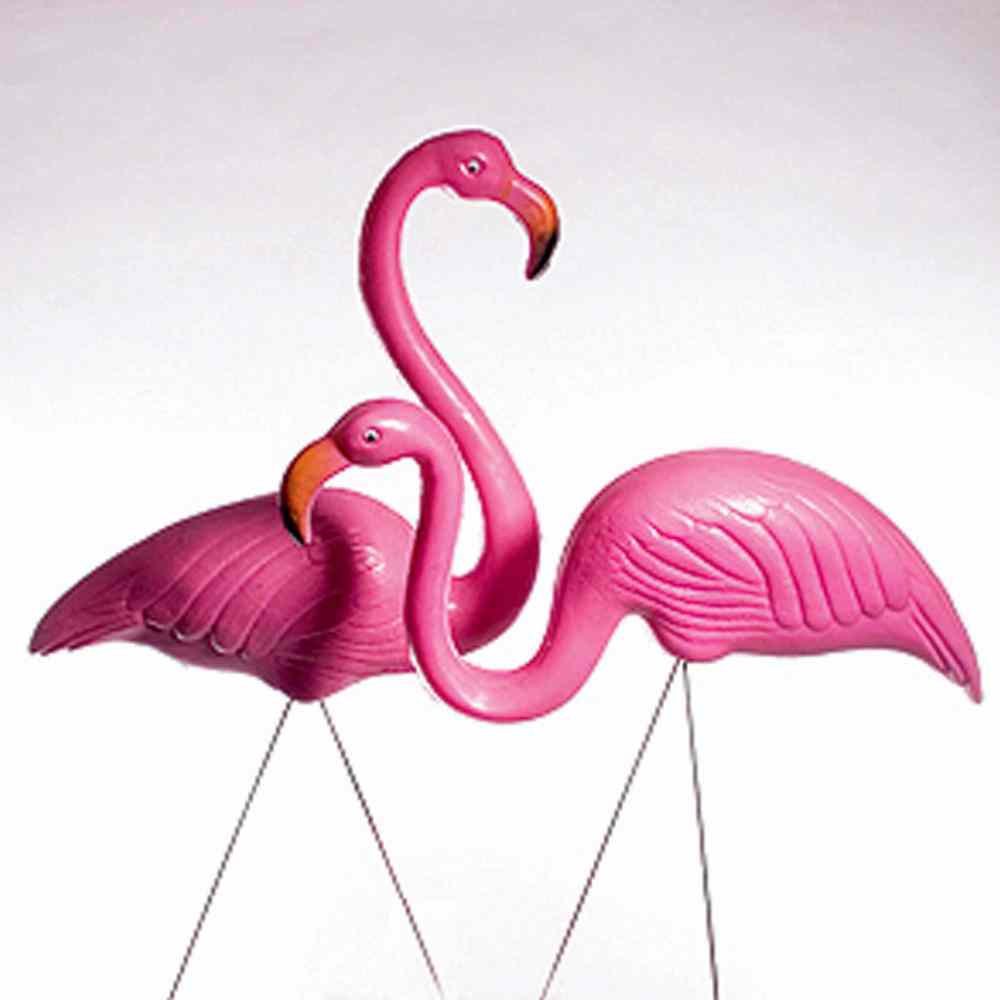
The direct correlation to Transcona is that they are a social bird and like to hang out in groups of 50 into the thousands, with many subgroups being formed. When they are not with the group, they are eating or making themselves look good.
The plastic flamingo came to life in 1957. An art school graduate, Don Featherstone, from Lesminster, Mass. designed the birds for Union Products. Featherstone won an IG Nobel prize — a parody of the Nobel Prize that is awarded each year to 10 unusual or trivial achievements in scientific research. The birds caught on in the southern States, and affluent tourists began to return home with them.
We can’t be 100 per cent certain, but the Transcona connection may have begun when one of our affluent families began to travel down to St. Petersburg, Fla., in the 1950s.
Dr. & Mrs. MacKay returned home from a winter vacation with a pair of cast concrete flamingos with metal legs, and placed them in the front yard at 108 Victoria Ave. E. They created a desire and before Transcona knew it, there was an invasion.
In the 1980s, the TV show Miami Vice featured flamingoes in its opening credits and caused the sales of the plastic flamingo to soar.
In 2006, Union Products faced financial hardship and when word got out of the potential final run of the plastic pink flamingo, public frenzy spurred HMC Int. to purchase the original molds and save their pretty little pink butts. In 2010, Cado Manufacturing purchased the entire Union line and continues to produce the original Don Featherstone designed birds. (To ensure you have an original, turn it upside down and take a look for Don’s signature on the tail end.)
So there you have it, a brief glimpse into where pink flamingoes came from and how they got here.
Long live the pink flamingo in Transcona. I am pretty sure Hi Neighbour Sam would love to hold a flag with Pinky on it!
Louise Hedman is a community correspondent for Transcona.
Louise Hedman
Transcona community correspondent
Louise Hedman is a community correspondent for Transcona.
Our newsroom depends on a growing audience of readers to power our journalism. If you are not a paid reader, please consider becoming a subscriber.
Our newsroom depends on its audience of readers to power our journalism. Thank you for your support.
Louise Hedman
Transcona community correspondent
Louise Hedman is a community correspondent for Transcona.
Our newsroom depends on a growing audience of readers to power our journalism. If you are not a paid reader, please consider becoming a subscriber.
Our newsroom depends on its audience of readers to power our journalism. Thank you for your support.
Advertisement Advertise With Us