


Why Louis Riel has a holiday named for him

Advertisement
Hey there, time traveller!
This article was published 16/02/2016 (3747 days ago), so information in it may no longer be current.
We just observed Louis Riel Day here in Manitoba.
If a holiday is named for someone, that person must be very famous. So just who was Louis Riel?
Riel is considered as one of the most fascinating and controversial political leaders in Canada.
As historian J.M. Bumsted writes, “No other figure in Canadian history has been the subject of more biographical study than Riel.”
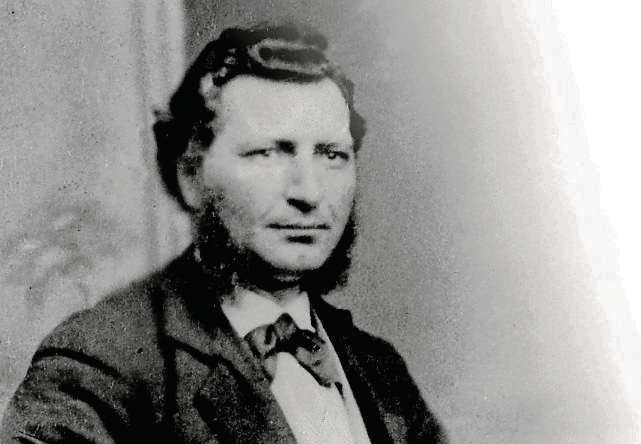
Louis Riel was born in St. Boniface, on Oct. 22, 1844, into one of the community’s leading Métis families. He was considered a brilliant student and, at age 14, he was sent to Montreal to be trained for the Catholic priesthood.
Ten years later, though, he left school and return to St. Boniface to support his recently widowed mother and his younger siblings.
Riel soon found that the Red River Métis settlement was distressed, with many fearing that the new confederation of Canada would annex their traditional lands and they would lose their livelihoods.
He formed a militia, turned back federal surveyors and began what is known now as the Red River Rebellion.
In 1869, at just 25 years old, Riel established a provisional government and negotiated and presented Canada with a bill of rights that became the Manitoba Act of 1870, admitting our province to confederation.
However, while negotiations with Canada were ongoing, a Protestant man named Thomas Scott, who had been active in resistance to Riel’s government, was tried and executed by the Metis government in March 1870.
After Manitoba became a province, Riel learned that soldiers sent to establish Canadian sovereignty in the area meant to lynch him because of Scott’s execution. He fled to the U.S., where he lived in exile.
In 1884, Riel was raising a family in Montana when the Saskatchewan Métis asked him to negotiate for them as he had done at the Red River Settlement.
This grew into a resistance known as the North-West Rebellion which was crushed at Batoche, Sask. in May, 1885. Riel was found guilty of high treason and hanged in Regina. His body was later interred in St. Boniface Cemetery.
There are 51 communities of Métis in Manitoba, a distinct society of mixed First Nations and European descent who share their ancestry with Manitoba founder Louis Riel.
Derek Dabee is a community correspondent for The Maples. You can contact him at ddabee@mymts.net
Our newsroom depends on a growing audience of readers to power our journalism. If you are not a paid reader, please consider becoming a subscriber.
Our newsroom depends on its audience of readers to power our journalism. Thank you for your support.
Our newsroom depends on a growing audience of readers to power our journalism. If you are not a paid reader, please consider becoming a subscriber.
Our newsroom depends on its audience of readers to power our journalism. Thank you for your support.
Advertisement Advertise With Us