


Young people get involved with agriculture
SOMS student and teacher attend international food conference
Advertisement
Hey there, time traveller!
This article was published 31/10/2017 (3258 days ago), so information in it may no longer be current.
There’s a significant need to get youth involved in agriculture, said Seven Oaks Met School teacher advisor Jean McLeod.
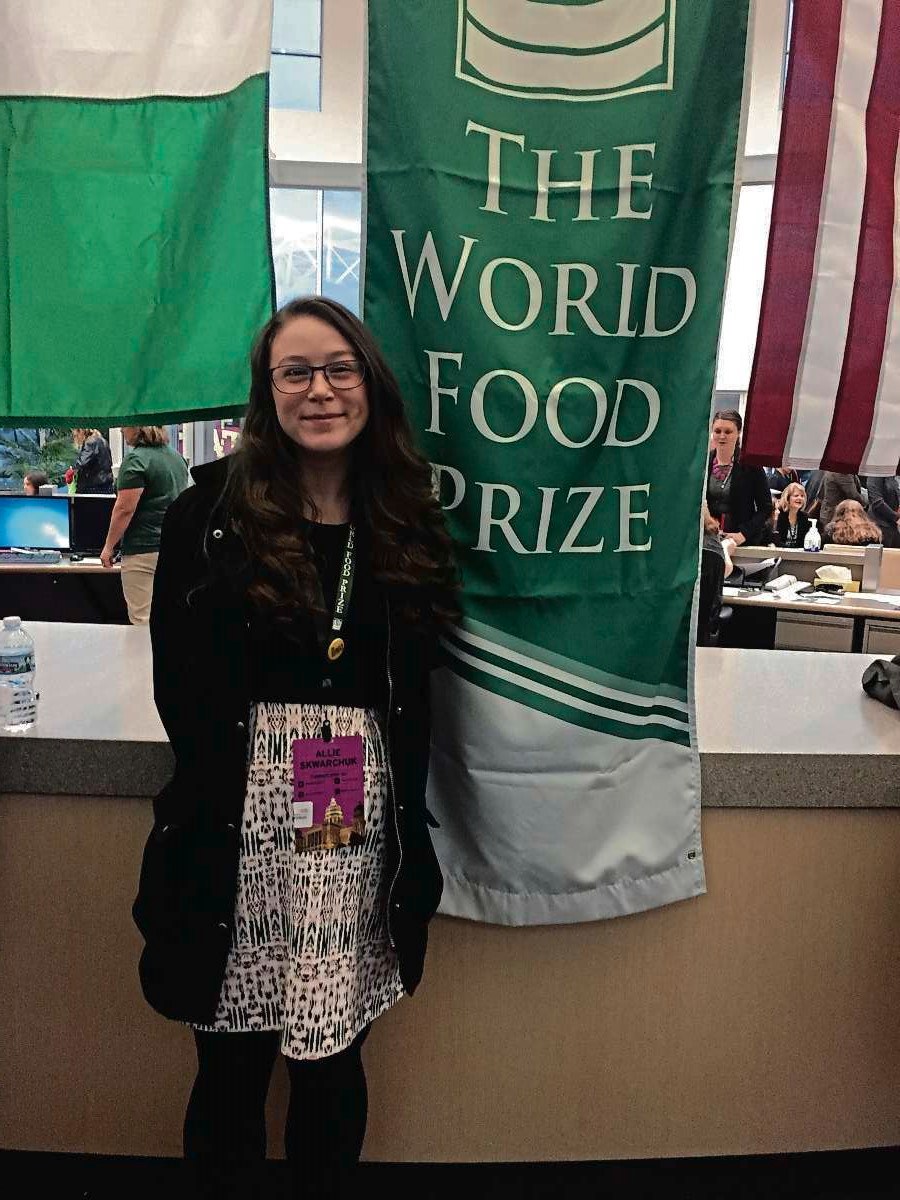
According to Statistics Canada, the average age of farmers rose from 47 to 54 in 2011. To spark the interest of youth, SOMS Grade 12 student Allie Skwarchuk and McLeod were invited to attend the World Food Prize Foundation’s Global Youth Institute conference in Des Moines, Iowa, from Oct. 19 to 21 with 200 other students and teachers to discuss world food security and agricultural issues.
Before attending the event, Skwarchuk did extensive research on the pineapple industry in Costa Rica and the issues with pesticide leaching into the soil. During the event, she presented her paper, and discussed it with students who had similar ideas and interests as her, as well as with global leaders who had attended GYI and had extensive international experience in the agricultural department.
“I was interested in sharing my research and what I learned from doing the paper, but I wanted to go to GYI to learn about food security and agriculture,” she said, adding agriculture wasn’t a topic she was very familiar with. “I wanted to deepen my knowledge and to be able to learn something that I could bring back to my community and my country.”
“I’ve come to realize that are many levels to these agricultural problems and there are many other places where a solution can be implemented in many different shapes and forms.”
In addition to learning from organizations that are interested in solving the food inequality in the world, students tour innovative industrial and research facilities, get hands-on experience through guided team projects, participate in the Borlaug Dialogue and come back with new ideas to contribute to their communities.
Attending the event was essential for the 17-year-old student learning experience as SOMS has an alternative education model. Students engage in a project-based learning combined with internships. This allows student-driven and personalized education.
“You learn from people in the field, you learn from experts. As a teacher I could’ve received the package of information and shared it with my students and taught the textbook approach,” McLeod explained.
“Skwarchuk heard from people who are actively trying to solve world hunger problems. She learned about the interdependence of non-government organizations, government organizations and corporation whose interest is supporting these world markets.”
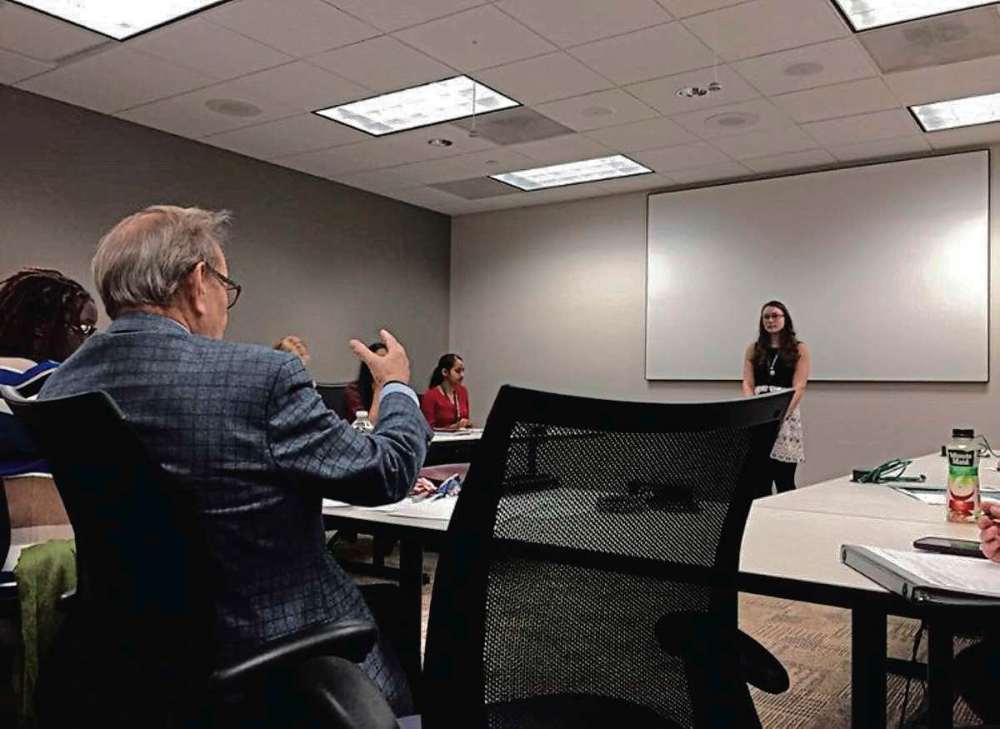
Skwarchuk said she would be replicating the activities she participated in her school and other schools in the Seven Oaks School Division. She said she learned that food security is not just about not making ends meet, but about nutrition security.
“People need to realize that food security is a global problem, not just elsewhere, but elsewhere and here and there are people that you know that are affected by food security, and there are people you don’t know, and there are things that you can do to combat food and security in your community and globally,” she said.
McLeod added the experience was also significantly beneficial to her teaching experience. She was able to broaden her views of global food issues and said she would be applying it in her classroom.
“We tend to become isolated in learning about our country or community, and that’s important… and going out to GYI, for me it reset my mind on that global focus,” she continued. “It was eye-opening for me that we all should be talking more globally about the importance of educating people and particular farmers and the importance of getting youth into agriculture.”