



The art of adaptation
Creative changes made to arts programs in schools
Advertisement
Hey there, time traveller!
This article was published 21/09/2020 (2031 days ago), so information in it may no longer be current.
Barbara Hamilton, a music teacher at Amber Trails Community School, spent the better half of summer brainstorming with her colleagues how to teach music during a pandemic.
Normally, students would share instruments for music class. But this school year, those instruments are considered vectors for COVID-19.
“It’s like having the carpet pulled out from underneath you,” Hamilton, who teaches grades 3,4 and 5, said. “It’s like saying to a teacher: you can teach reading but you can’t have any books.”
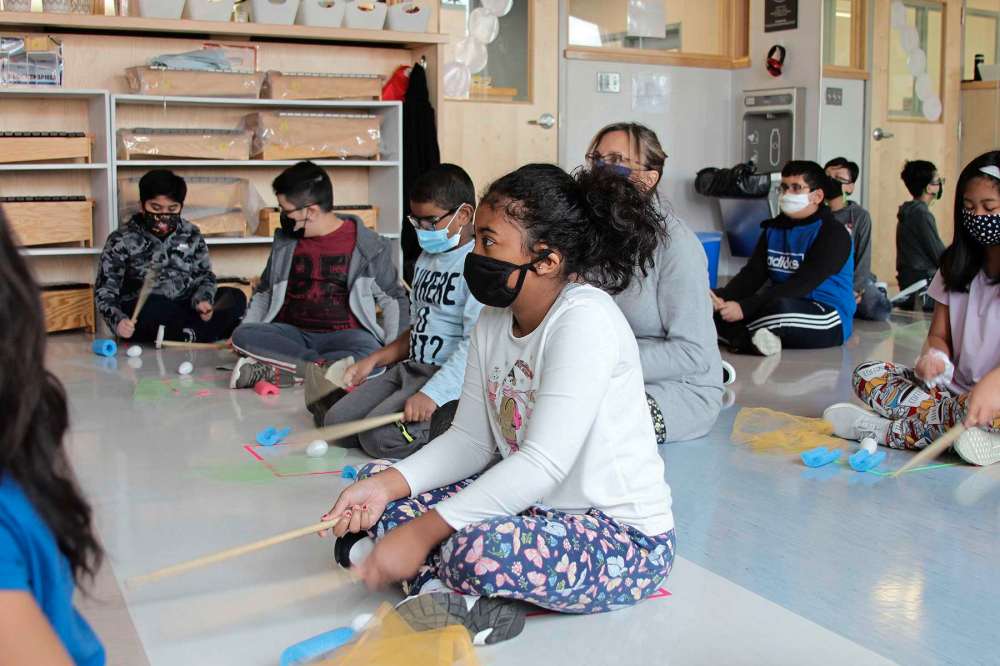
Knowing their options were limited, Hamilton and her colleagues prepared 300 musical kits for students containing homemade instruments for each individual.
Students are not allowed to play recorder indoors. Instead, each kit includes a laminated paper recorder which students can use to practise finger motions. There is also an egg-shaped shaker for percussion lessons, scrapers made from dissected pool noodles, and drum sticks. Clapping to music has also become a staple to learning rhythm and beats.
Though students will not be playing the traditional instruments, such as ukulele, drum, violin or xylophone — they’re not allowed to sing, either — Hamilton said a potential silver lining is that they will learn to be better listeners.
“What I think is really going to benefit kids is we’re going to spend a lot more time listening (to music) than doing,” she said. “I think our kids will become better listeners, perhaps a more appreciative audience.”
Students said although the curriculum hasn’t changed much, they’re enjoying the alternative approach to music.
At École Rivière-Rouge, students sit six feet apart on X’s taped to the floor of the gymnasium, where they now learn about music instead of athletics, which have been pushed outdoors for the remainder of the school year.
After class, the students turn in their xylophone mallets to be wiped and sanitized for the next users. At the end of the day, the music instructor rummages through all the instruments, cleaning each one by one.
Though choir and recorder lessons have been suspended, students are learning to adapt to this new style of music education, according to Cheryl Gaudet, principal of the K to 5 French immersion school.
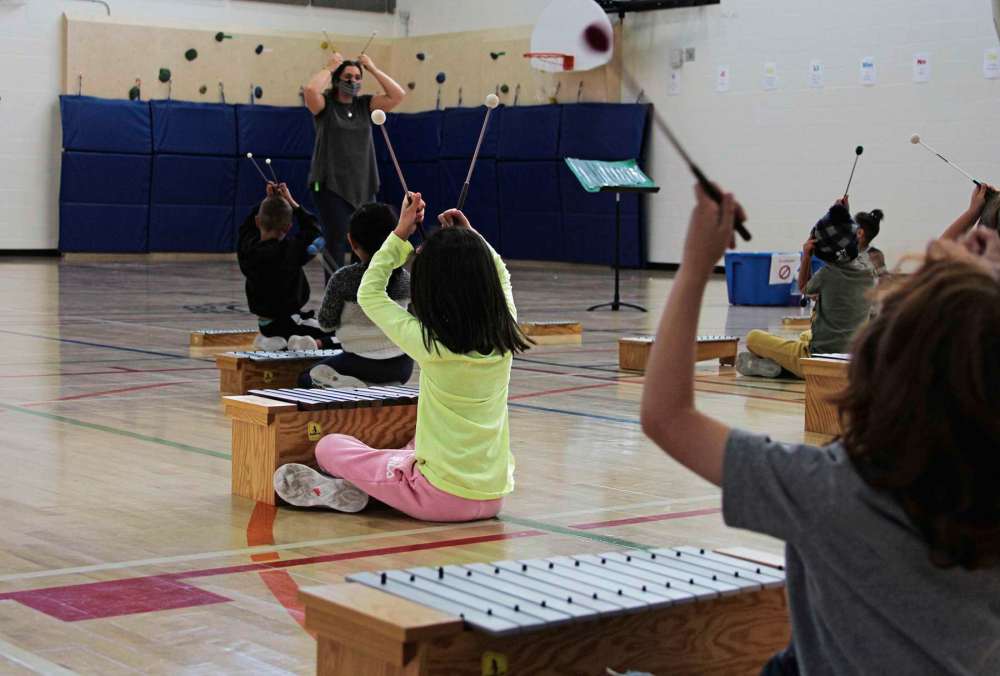
“They come in and hand sanitize (before class), then they clean their instrument before they hang it up (after class),” Gaudet said.
The school also purchased hard-surface chinrests to attach to violins, which are easier to clean than the sponges students previously used, Gaudet added.
As a school division widely known for its arts programming, Seven Oaks is demonstrating its ability to pivot under pressure, said Matt Henderson, assistant superintendent of curriculum and programs.
“It’s been really neat to see teachers think creatively and with intention,” he said. “They’ve been really diligent about taking extraordinary caution.”
In its approach to accommodating COVID-19 health and safety protocols, Henderson said, the division has been more focused on what it can do rather than what it cannot.
This includes shifting away from wind instruments and purchasing equipment, such as guitars, horn covers and spit collectors; expanding existing programs, like fiddle and ukulele, to new schools, and adding news ones such as tap dance.
Henderson said these expenses are being covered by the budget savings the division acquired when schools shut down in spring.
The school division will also be expanding its use of Channel 7 Oaks, a broadcast media program at Maples Collegiate, often used to stream events at the Seven Oaks Performing Arts Centre.
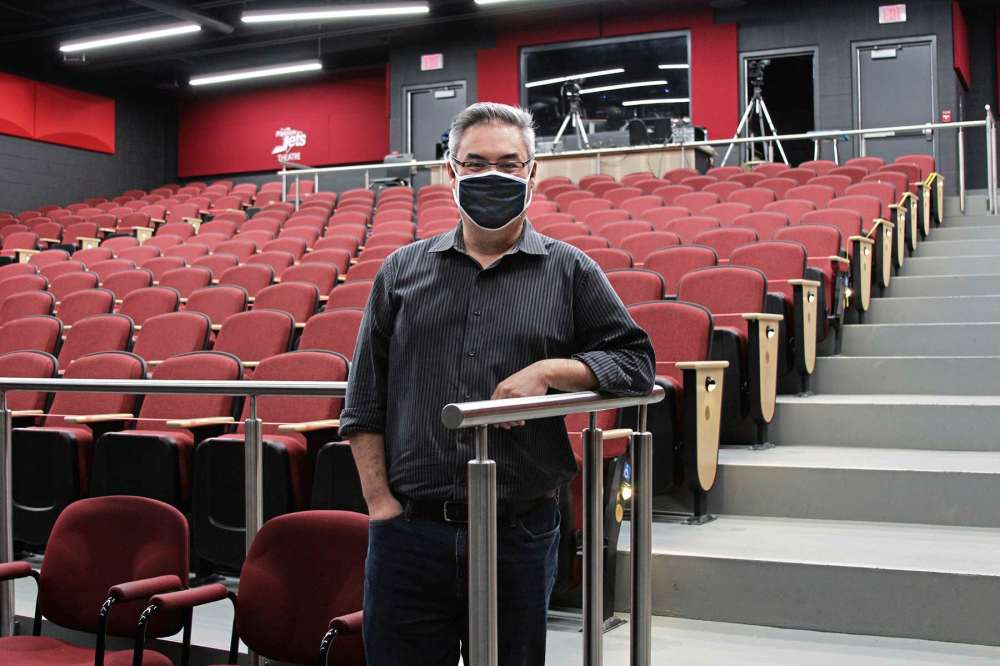
SOPAC will look different this year, as well. Masks are mandatory in the theatre and the maximum capacity has been reduced from 526 to 100.
Performances will continue to happen, though they will be downsized, according to Tyler Yip, the divisional teacher team lead for music and the arts.
He added that the division has been following guidance from the Manitoba Music Educators’ Association.
“I am hopeful that it doesn’t impact (students) in a negative way. Because for me, as a music leader in our division, I think it’s important that we are doing music,” Yip said.