


Graffiti Art founders receive national awards
Organization has provided arts programs to inner-city kids since 1999
Advertisement
Hey there, time traveller!
This article was published 05/03/2021 (1970 days ago), so information in it may no longer be current.
When Stephen Wilson and Pat Lazo started Graffiti Art Programming and Gallery, they were simply trying to create a space where graffiti artists could paint on canvas. What the pair didn’t realize at that time was how the organization would grow into a creative refuge for inner-city kids.
“There was a lot of really bad media stories about illegal graffiti at the time, because it was still fairly new in Winnipeg, and people were trying to figure it out,” Wilson, the executive director, said. “(Our) focus was just on the illegal graffiti writers, and getting them to put their work on canvas, and just explore what it’s like to be an artist. There was no thought at all as to what we are today.”
They opened the gallery at 109 Higgins Ave., where it remains today. “We came to do a … mural job for this building. And the owner said, ‘You might be interested in this space.’ We looked inside, and it was rough — bunch of tires piled up and pigeon poop. It hadn’t really been used for very much for a lot of years. Until we opened it in the spring of ‘99 and had our first exhibit here as Graffiti Gallery,” Lazo, the artistic director, said.
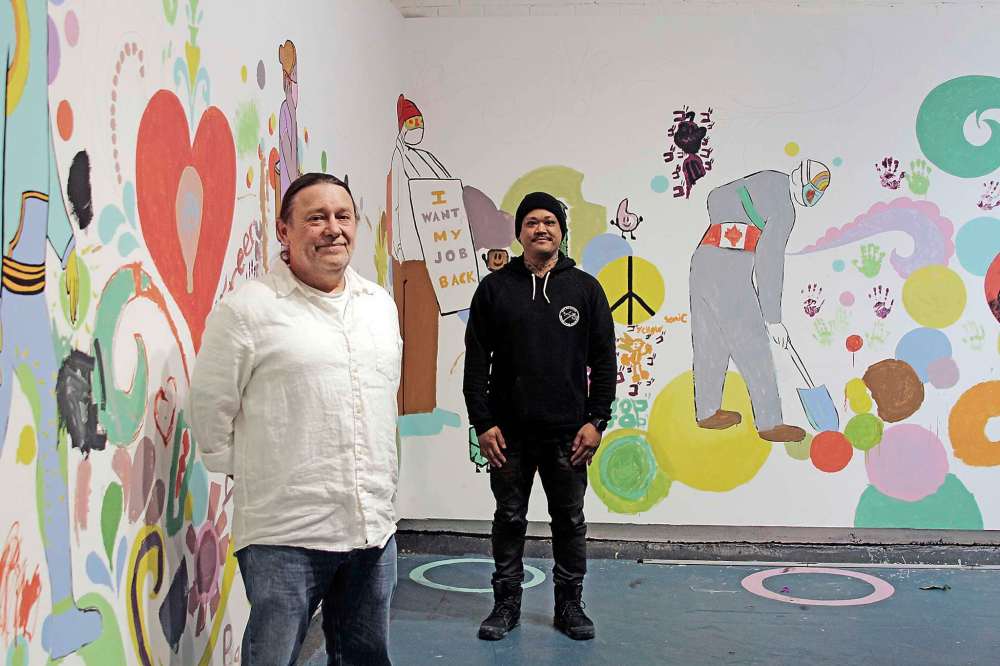
Graffiti Art eventually became an organization and exhibition space that aims to support youths’ education through positive art programs. But this didn’t happen overnight.
“Because we would have these young graffiti artists working here, painting outside, inside, and tunes … young kids and teenagers in the area heard about us, found out about us real quick. And they started to come and hang out,” Wilson recalled.
Day after day, youth from the community would go to the gallery after school, spending entire evenings observing working artists and asking questions, which prompted the artists to draw up lesson plans for the kids to keep them occupied while they continued their own projects.
Organizations like Graffiti Art were rare back then, except for Art City, a not-for-profit focused on accessible arts programming that was just getting started in West Broadway around the same time.
It dawned on Wilson and Lazo that youth were hungry for an outlet, so they began offering free, formal art classes. Over the years, music, dance and art shows became regular happenings at the gallery. On an average year, 5,000 youth would pass through the space.
This was before the COVID-19 pandemic halted all in-person programming.
“It’s all gone. And we worry about those … youth because we’re not finding them out there; because so many of them don’t have access to social media, so many of them don’t have access to Zoom,” Wilson said.
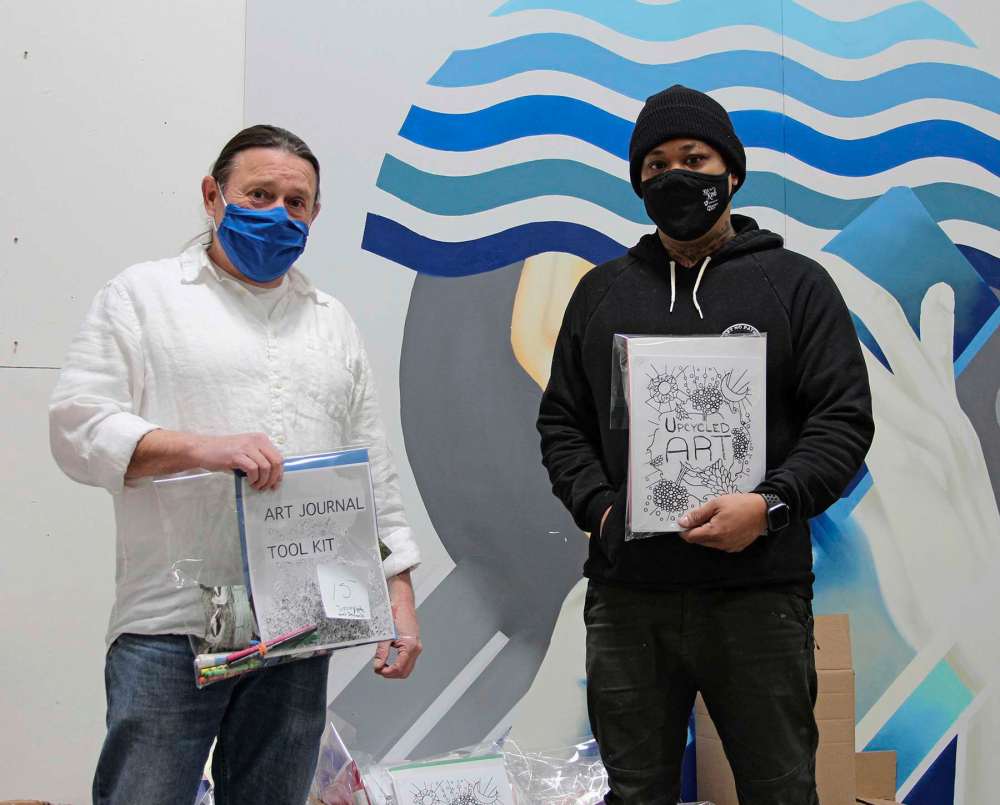
Since March 2020, Graffiti Art has assembled and distributed around 9,000 art kits across the community and has been offering virtual classes through its satellite initiative, Studio 393.
The founders aren’t sure what Graffiti Art will look like once it re-opens to the public, but it won’t be business as usual, Wilson said. “Certainly, throughout history, people look to the arts to bring them out of these scenarios, these crises.”
The organization will have a “prominent role to play” when the time comes, but it’s clear that work has already been underway for the last two decades. For their contributions to the community, Wilson and Lazo are being honoured with Meritorious Service decorations. “It’s very humbling,” Lazo said.
Ninety-eight individuals across Canada received the award from the Governor General this year. It’s given to individuals to recognize “exceptional deeds.”