



Garbage problem piling up
Residents want sustainable solution to litter issue
Advertisement
Hey there, time traveller!
This article was published 30/07/2021 (1611 days ago), so information in it may no longer be current.
Almost every week for a year, a handful of North End youth have been gathering at Ralph Brown Community Centre, dressed in safety vests and armed with trash bags.
They’re volunteers with Anishiative, a grassroots organization that started last summer.
Anishiative’s main focus is supporting the community and promoting safety, and it achieves this by ridding the streets of litter and sharps, among other things.
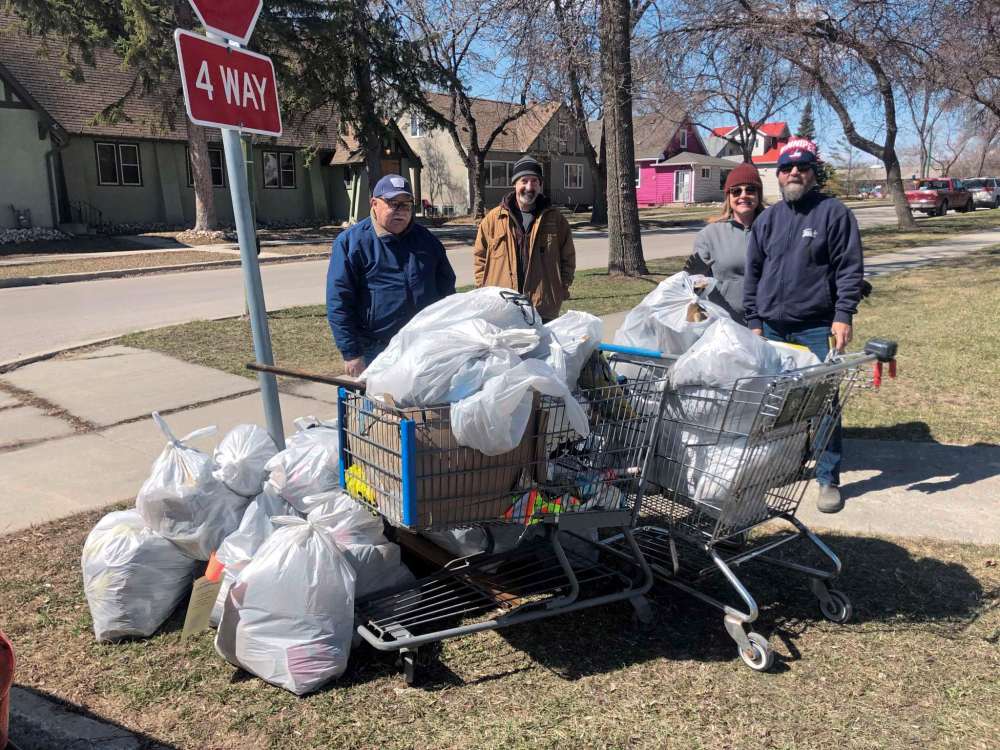
Between 10 and 20 volunteers meet Tuesdays and Thursdays, filling at least 10 bags of waste each week, explained Anishiative founder Rylee Nepinak.
“I think, overall, in the pandemic we’ve seen (litter) get a lot worse,” he told The Times. “But we do notice a difference … that (volunteers) are making when they come out on our walks; we do notice that we are helping the community be a lot cleaner.”
Nepinak said the group could be more effective if they received funding and support from the City of Winnipeg. That way they could increase the number of hands picking up trash.
“We all want to have a safe, clean community,” he said. “Right now, it’s a lot of volunteers — just shows how passionate people really are to do this, that they’re willing to just come out and do it on their own free time.”
In March, Take Pride Winnipeg released its annual litter report, in which areas of the city are ranked from dirtiest to cleanest. Northwest Winnipeg placed fourth-cleanest out of the 12 areas listed; however, a third of the “worst streets” were located in that corner of the city.
Under the city’s neighbourhood liveability bylaw, littering on a street, in a public place or on a private property is prohibited. Property owners and occupants are responsible for ensuring the public sidewalk and boulevard in front of the property and the back lane are kept free of garbage. Residents can file complaints with 311.
Seven Oaks Residents’ Association chair Steve Snyder has noticed this hasn’t prevented his community from filling up with refuse. In April, the association held a community-wide cleanup. Volunteers collected more than 40 bags of waste in a single day.
“Honestly, that one-day blitz just didn’t do much, because it seems like (litter) just comes back after a week or two,” Snyder said.
He agreed with Nepinak, saying there needs to be more funding opportunities for groups minding the mess.
“We need systemic change. It can’t just be a one-shot thing like our community cleanup.
“It needs to be long-term and it needs to be sustained. It’s a huge issue and it’s just been getting worse and worse.”

Coun. Ross Eadie (Mynarski) called the issue a “local emergency,” owing to the fire, health, and safety risks associated with litter.
There have been more than 300 trash or bin fires in Winnipeg so far this year, according to the city. There were 334 in all of 2020.

Last year, Eadie worked with city administrators to organize Operation Clean Sweep in North End neighbourhoods. The fire department scanned for fire hazards; bylaw enforcement handed out fines to property owners with disorderly yards; and public works collected refuse. The operation was a one-time project.
“The thing is you (have) to find the money in the budget to clean it up,” Eadie said.
In the 2021 budget, the city allocated to Take Pride Winnipeg $231,700 for cleanup programs and other initiatives. This funding included $55,000 to hire 10 students and a supervisor to tidy parts of Winnipeg.
But there isn’t always enough money available, Eadie said. This is why he’s attempting to develop a long-term, sustainable solution.
“We need a different system and I’m working on that this summer,” he said, declining to reveal any further details.