



Get a new leash on life

Advertisement
Hey there, time traveller!
This article was published 29/09/2020 (2014 days ago), so information in it may no longer be current.
The phrase “a new lease on life” is always said in a positive way; it implies that a fresh start has been made, with hope for things to come.
Change a letter in ‘lease’ and it works in the pet world, too. Getting a new leash can change the way you and your pet enjoy your time together. There are many versions of leashes, many with specific applications or designed to correct certain issues.
A standard leash is either four or six feet long, has a handle or loop at one end and a clip at the other. They are usually made of nylon webbing, in a width appropriate for the size of dog.
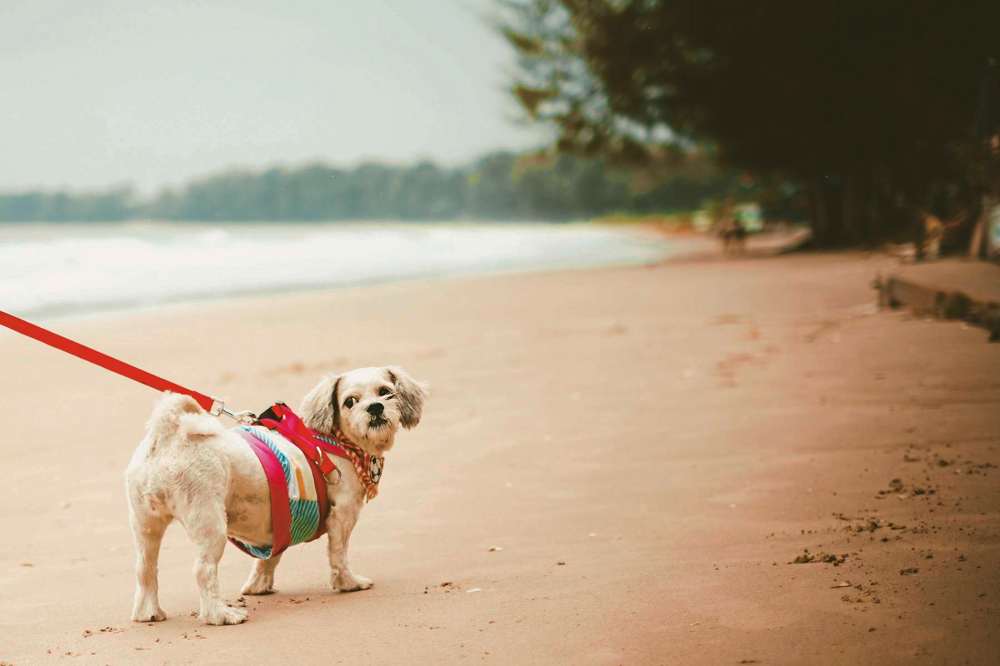
Some may have padded handles, some may be made of chain or a natural fibre like hemp or cotton but, basically, a leash is a rope with a clip.
Some handles have buckles, allowing the lead to be hooked though a belt loop, or around a pole, for short periods of time.
A four-foot leash allows you to keep the dog closer at hand and more under control, while six feet gives them a little more room. There are leads that are one or two feet long, for close training or instances where a dog needs to be “on lead” but can be let roam free as well.
Many six-foot leads will have a second handle that is like a one-foot lead, known as the traffic lead, that allows walkers to hold animals close when at a traffic light or in other situations where they need to restrict movement. Sure, you can loop a normal six-foot lead around your hand in a pinch but a traffic lead is much more secure.
For training retrieving dogs, there are also “lunge leads” — leashes that are 15 feet, 25 feet, 50 feet or longer. These are also called recall leads and are used while training young dogs to return once they have accomplished their tasks during training, and to prevent them wandering off or being distracted.
Extendable leads, also called retractable leads, are also very popular. They allow the convenience of a four- or six-foot lead while offering more distance when appropriate.
We do not recommend these in many cases, especially with dogs that can be unruly or aggressive, as they can reduce your control and increase the opportunity for misadventure. They must also be inspected regularly for wear, as they can easily be damaged and weakened.
Some people will use the retractable leads as temporary tie-outs, which is asking for trouble as they are not designed for that purpose and dogs can easily chew through the nylon if they want. This is why dog tie-outs are made of chain or metal cable.
There are various jogging leads, some that strap to the wrist or hand, some that loop around the waist or clip to a special belt that may have pouches for treats and baggies. If a dog is well-trained and well-behaved, these leashes can make jogging with your pet a lot more enjoyable.
There are leads that have clasps on either end, and grommets all along the lead, to make them more versatile. They can be used conventionally or looped around the waist and used as a jogging lead. In a pinch, for a short time, they can also be used to secure a pet while you run into a store where they are not allowed.
Show leads are for extremely well-trained animals, in a show ring. Barely a piece of string, they are not meant as a restraint but rather a guide tether to link dog and trainer during a session. They are not for general use.
There are also a lot of different training leads, based on a number of different concepts. Finding one that does the job for your specific need can make a difference in your training, but not all work with all dogs in all situations.
Just because Fluffy down the street reacts well to “lead x” doesn’t mean Spike will have the same result.
Finding and choosing a lead is more than just finding a colour that complements the pet’s coat and matches the collar. The right one can make the walking experience a lot more enjoyable.
Contact Jeff with your questions or ideas at thrivepetfoodmarket@shaw.ca or visit www.thrivepetfoodmarket.com
Jeff McFarlane
Pets Are People, Too
Jeff McFarlane is the owner of Thrive Pet Food Market. Contact him with your questions or ideas thrivepetfoodmarket@shaw.ca or visit www.thrivepetfoodmarket.com
Our newsroom depends on a growing audience of readers to power our journalism. If you are not a paid reader, please consider becoming a subscriber.
Our newsroom depends on its audience of readers to power our journalism. Thank you for your support.
Jeff McFarlane
Pets Are People, Too
Jeff McFarlane is the owner of Thrive Pet Food Market. Contact him with your questions or ideas thrivepetfoodmarket@shaw.ca or visit www.thrivepetfoodmarket.com
Our newsroom depends on a growing audience of readers to power our journalism. If you are not a paid reader, please consider becoming a subscriber.
Our newsroom depends on its audience of readers to power our journalism. Thank you for your support.
Advertisement Advertise With Us
Advertisement Advertise With Us