


The ins and outs of trimming your pets’ nails

Advertisement
One of the most important grooming tasks we need to do with our pets is also one of the simplest, once you get the hang of it.
Yes, we’re talking about nail trimming.
Whether you have a bird, a cat, a dog or any other pet, proper nail trimming is essential to a pet’s well-being. One of the easiest things to overlook, and one of the most painful issues a pet can have, is overgrown nails. They hurt when a pet walks, much like us trying to walk in shoes that are too tight in the toe. Every step can be painful. Nails can even grow to the point at which they can damage the paw pads, especially dew claws, which never get worn down.
Adobe Stock photo
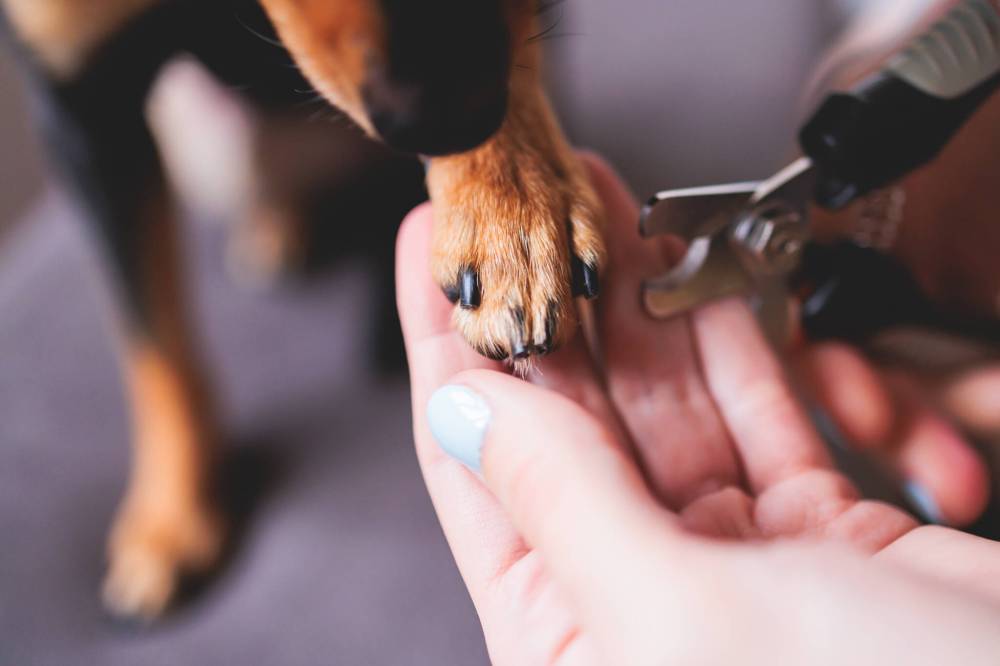
Trimming the nails and claws of your pets is a necessary habit made easier with the proper tools and training (for the pet, that is).
And yes, I did mention birds. Many bird cages employ perches that are sand covered, or are made of cement, to help trim birds’ claws naturally. Most of the time these work, but sometimes a bird’s claws will overgrow to the point at which it can be difficult for them to grasp the perch, or they are forced to do it in a way that can cramp or even damage their feet.
Bird nails can be very simple to trim. Small nail scissors can nibble off the excess, and the veins are usually very easy to see. However, unlike dog or cat nails/claws, if you do hit a bleeder, it’s much harder to stop with the standard Quick Stop powders, so it’s always a good choice to have a styptic gel available. To properly hold birds while clipping, wrapping them in a towel is a great way to immobilize them.
Cat claws can also be easy to clip, as long as the cat co-operates. Getting them started early is your best bet, as they quickly learn both that it isn’t traumatic, and that it’s going to get done whether they like it or not. Most cats learn to suffer the indignity. I find that it’s best done as a team, with one person holding the cat by its front paws, facing away from you. The other person can take one paw at a time and clip the tips off the nails. If the cat is less co-operative, the swaddling method used for birds works for cats as well. (Editor’s note: We call it the ‘cat burrito’.)
With a cat all you need to remove is the pointy part of the claw, back to where the nail thickens, taking care to avoid the vein. Cats need this done more often than dogs, as their little nails grow quickly, and most don’t wear them down on anything. You can get abrasive scratching posts that can help a cat self-trim, but getting a cat to use it isn’t the easiest task.
Dog claws and nails present us with different issues. Whether you have a tiny Yorkie or a Great Dane, they need regular maintenance. Sometimes, especially during summer, the action of walking on pavement or concrete will trim their nails naturally. In the winter, that doesn’t usually open.
Having the appropriate tools available is the first step. If the dog has dark nails, the chances of accidentally hitting a vein increase dramatically. Regardless, it’s important to have a “blood stop” powder on hand. Probably the best insurance for never having to use it is to buy it, as it always seems that you need it most when you don’t have it. In a pinch, starch or flour can help, but it takes forever to clot and requires supervision. Blood stop powders have clotting and/or styptic agents that will stop the flow almost immediately.
Having the right size and type of trimmers means the job will be easier. Fron tiny nail scissors for rabbits, cats and tiny dogs, through groomer-strength large trimmers, the right choice is available from your favourite shop. Just as with cats, it’s best to start early you’re your dogs will used to it. It is important to do it in a place you don’t play in, otherwise they may think it’s a game. I like using the washing machine or freezer, with a mat on top. It is also important that once you start the task, you finish it. If the dog struggles and gets you to stop halfway through, they will struggle every time.
Use of a rotary tool like a Dremel with a large sanding drum has become a preferred method. Some dogs freak out at the sound and vibration, so it may take some getting used to. But if you can, this method allows for better control and a smoother nail once you are done.
If using nail scissors or a slicing trimmer, you can take off any sharp edges with a standard nail file. Be sure to go over the job after completing it to make sure none of the nails have started to bleed, or that any bleeders have been properly stopped.
Starting early, and doing it regularly makes the job easier, and keeps your walks with the pet pain-free.
Jeff McFarlane
Pets Are People, Too
Jeff McFarlane is the owner of Thrive Pet Food Market. Contact him with your questions or ideas thrivepetfoodmarket@shaw.ca or visit www.thrivepetfoodmarket.com
Our newsroom depends on a growing audience of readers to power our journalism. If you are not a paid reader, please consider becoming a subscriber.
Our newsroom depends on its audience of readers to power our journalism. Thank you for your support.
Jeff McFarlane
Pets Are People, Too
Jeff McFarlane is the owner of Thrive Pet Food Market. Contact him with your questions or ideas thrivepetfoodmarket@shaw.ca or visit www.thrivepetfoodmarket.com
Our newsroom depends on a growing audience of readers to power our journalism. If you are not a paid reader, please consider becoming a subscriber.
Our newsroom depends on its audience of readers to power our journalism. Thank you for your support.
Advertisement Advertise With Us
Advertisement Advertise With Us