


Building bikes and forming bonds
Work at WRENCH bringing people together
Advertisement
Hey there, time traveller!
This article was published 07/10/2014 (4291 days ago), so information in it may no longer be current.
On the surface, WRENCH is just another busy bike shop, its workers fixedly focused on wheel truing and changing brake cables, but what it’s really peddling is public health programming.
Located in the basement of 1057 Logan Ave., beneath the city’s Animal Services Agency, WRENCH (Winnipeg Repair Education and Cycling Hub) is a registered charity dedicated to creating “stronger, healthier communities by removing barriers to building, repairing and maintaining bicycles — with a focus on educating youth,” according to www.thewrench.ca
“Give a person a bike, that’s one thing, but teach a person how to build and fix a bike, that’s another,” said WRENCH executive director Pat Krawec, who is joined on staff by mechanical director Geoff Heath.
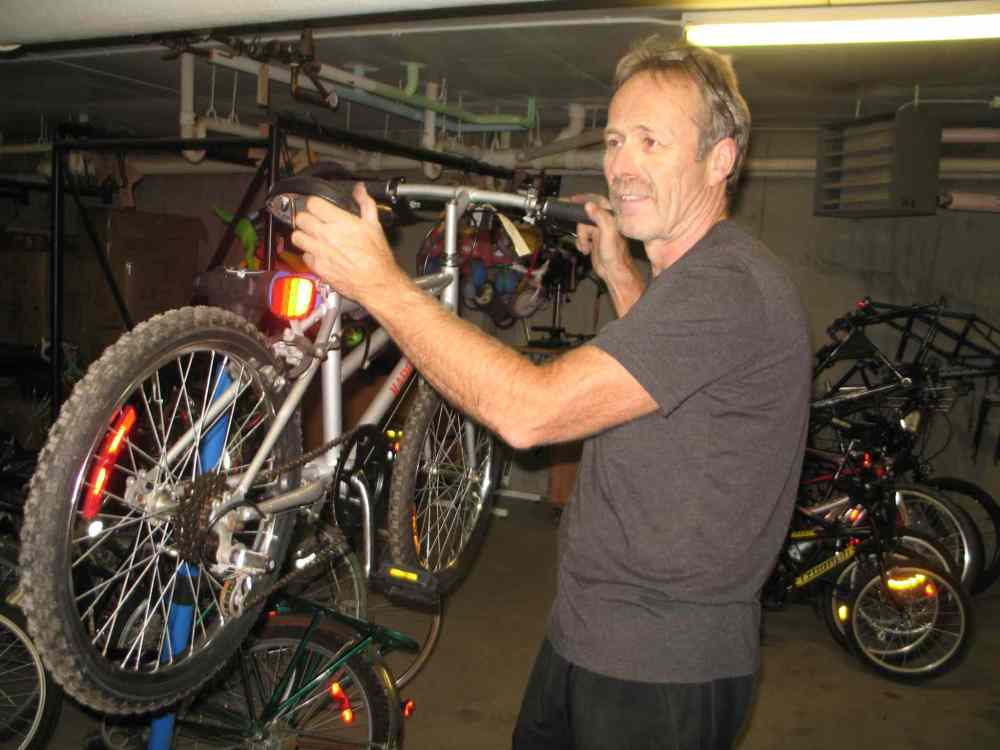
“We’re a teaching shop. We’re not so much about bikes but the process of getting together with your neighbors, reusing discarded material and then redistributing the product locally. That process is really what we’re about as a community health organization because there’s so much benefit in it. We’re bridging community divides, creating a safe space and decreasing isolation. You’re getting to learn from and teach something to your neighbour.”
Opened in summer 2011, the WRENCH shop features four workstations, with two bicycle repair stands at each station, plus all of the necessary tools and consumables at each station.
Surrounding the work stations are a plethora of bikes and bike parts, many of which come from the Brady Road Landfill bicycle compound. Krawec said in 2013 WRENCH had almost 5,000 participants visit and remove over 26 metric tonnes of material from the landfill.
Fixing up the bikes is a variety of volunteers from all walks of life, including newcomers to Canada (WRENCH partners with Hospitality House Refugee Ministry), the underemployed and unemployed and at-risk youth. For instance, WRENCH runs an Earn-a-Bike program, where over the course of eight to 12 workshops, youth participants rebuild a bike from the rubber up.
“They start by picking a bike out of the landfill,” Heath said. “Sometimes it’s rusty, sometimes it’s dusty, sometimes it’s kind of ugly and really broken down, and over the weeks they polish it up and service all the systems and in the end they have a bike that works. They also get a lock and a helmet.
-Oct8.jpg?w=1000)
“When you put that much elbow grease, pride and work into a project, it’s something they really want to hang on to. We usually go on a bike ride after and getting to see them on their new bikes is always the most gratifying thing for me.”
Krawec said WRENCH relies heavily on time-limited project grants and donations, but it does build a portion of its bikes for sale. The WRENCH has a service contract with the city to repair bikes for the annual bicycle auction. Working on those bikes are members of WRENCH’s Upcycle Program, which provides paid skills training and casual labour for people with barriers to employment.
“It’s a great way to ease them into a more traditional job structure or if that’s not a possibility in their life at that moment, at least allow them to generate some income,” Krawec said.
However, it’s not just marginalized people working on bikes at WRENCH. The shop is open to absolutely anybody who wants to fix or build a bike.
Dave Elmore, 60, retired in June and has since been volunteering at WRENCH on a regular basis. He said he’s amazed by the condition of the bicycles from the landfill.
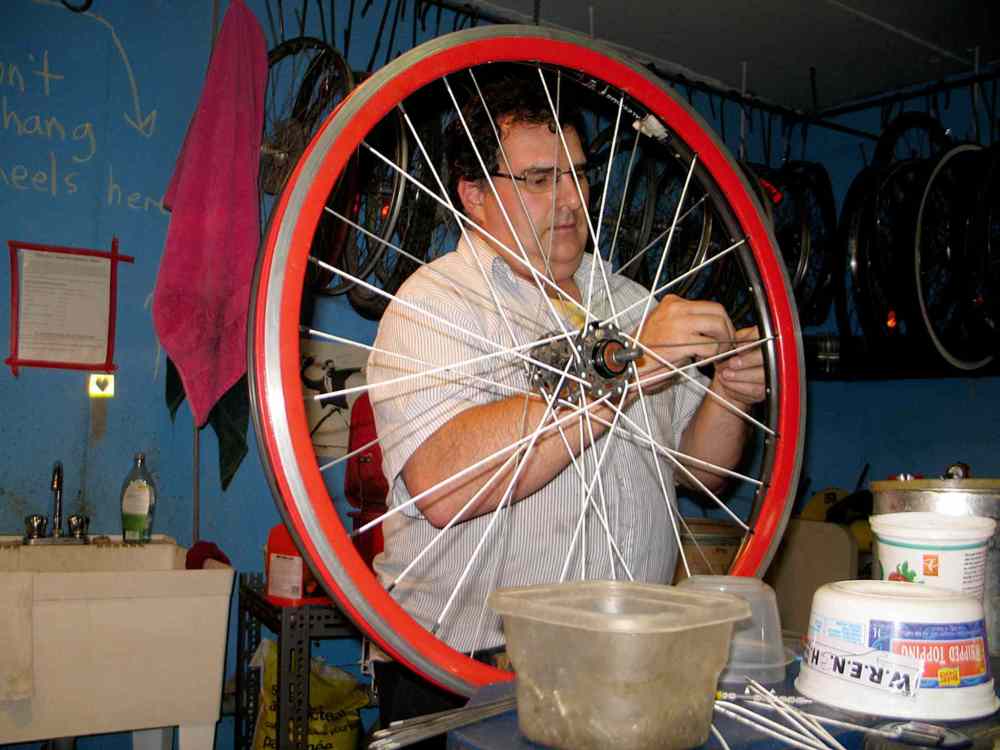
“Some of the bikes that come in, they’re almost flawless. You could almost ride them out the door if you just pump up the tires,” Elmore said. “Other times the bikes just need a little work and sometimes they’re not worth saving but you can save parts that can be used on other bikes. One man’s trash is another man’s treasure and some of it is an absolute treasure.”
Gonzalo Agrimbau, 28, an immigrant from Argentina and a manager at Corrientes Argentine Pizzeria, said he enjoys volunteering at WRENCH because it’s an opportunity to get his hands greasy.
“Too much computers sometimes really hurts you. To be hands-on, especially now, since everything is so digital, to be able to work on something, to restore something, I’m a little romantic in that way,” Agrimbau said.
Krawec said it’s “so heartwarming,” to see people of diverse ages, backgrounds and social statuses help each other to bring bicycles back to life.
“You see such lovely sights like an eight-year-old kid from a refugee camp teaching a 50-something computer engineer from Fort Garry something they didn’t know. Normally these people wouldn’t even meet.
-Oct8.jpg?w=1000)
“It’s kind of like learning the lesson that no bikes are garbage, well, no people are worthless either. You can come here and realize both of those things.”
WRENCH holds an open shop drop-in from noon to 5:30 p.m. every Thursday. For more information visit www.thewrench.ca
-Oct8.jpg?w=1000)