


Following Polish pioneers’ path through the province
Advertisement
Hey there, time traveller!
This article was published 21/07/2015 (4020 days ago), so information in it may no longer be current.
Lech and Grazyna Galezowski are passionate about preserving our province’s Polish past.
The West Kildonan couple created In the Footsteps of Polish Pioneers in Manitoba, an exhibit currently on display at the Keystone Art Gallery in the Manitoba Legislative Building.
The exhibit, on display until Aug. 28, is composed primarily of photos of churches and chapels built by Polish pioneers. Lech and Grazyna take the photos on their many trips through rural Manitoba.
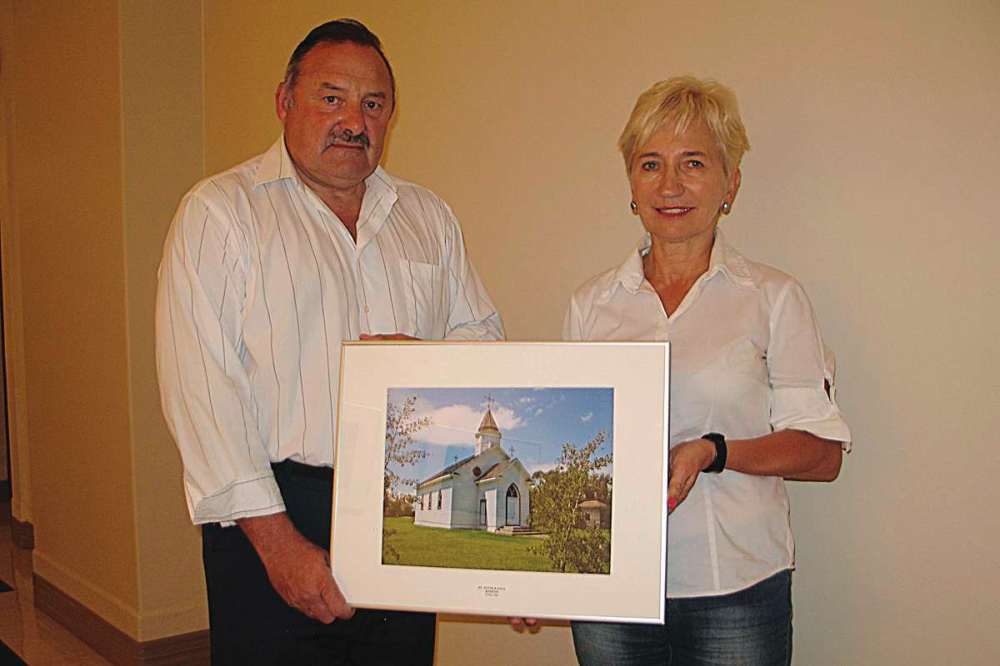
“That (churches and chapels) was the first thing the pioneers built, because they needed it for different reasons, to come together, to be able to use their language, for social gathering, for just interacting with each other,” Lech said.
“These (the churches in the photos) are the ones that are still standing. Some are
active, some are not.”
The exhibit was created in partnership with the Canadian Polish Congress
Manitoba Branch, of which Grazyna is the president.
Lech, 62, immigrated to Winnipeg from Poland in 1970, with Grazyna doing the same in 1980. Lech said he started his research about 20 years ago, inspired by conversations with Edward Hubicz, the author of the book Polish Churches in Manitoba.
Lech said he and his wife have discovered 95 Polish settlements in the province. Their research is concerned with two waves of Polish immigration, that of the mid- to late 1890s and that between the First and Second World Wars.
-July22.jpg?w=1000)
“After that, the pioneer era basically came to an end,” Lech said. “New technology came into play, there were roads, cars, machinery, so the pioneer era was closed.
“The Polish immigrants who came at the end of the 19th century and the start of the 20th century, they helped to build and shape this province. They have a large contribution, especially economically as farmers. The times in which they came were very hard. What they were told and what they found were two different things, and there were some great hardships.
“I think by looking at the pioneers we can appreciate what we have now. They came with nothing, in search of better living conditions and freedom of worship and they had to work hard for it. It didn’t come easy.”
In addition to photo of churches and chapels, Lech and Grazyna collect information from cemeteries, as well as descendants of the Polish pioneers, items such as diaries, photos and newspaper clippings.
“The (Manitoba) Archives has pretty good information, that will always be here, but the information in the province may not,” Lech said. “The descendants of the pioneers have information but sometimes they will dispose of it, so we want to get to these sources first.”
-July22.jpg?w=1000)
Grazyna said the people they meet throughout the province are mostly eager to share any information. She said rural Manitobans have a history of friendliness, as helping each other and sharing resources was important in pioneer times, and that tradition lives on.
“The character of people on the farm is still the same,” Grazyna said. “They’re very friendly and they love the place where they live. We’re always grateful for the hospitality. They open their doors. They’re never locked.”
For more information on In the Footsteps of Polish Pioneers in Manitoba, go to
www.studiogl2.ca
-July22.jpg?w=1000)