

Exploring identity through others’ identities
Human books share their struggles with students
Advertisement
Hey there, time traveller!
This article was published 31/10/2016 (3446 days ago), so information in it may no longer be current.
Since the start of Everybody has the Right program on Oct. 18, more than 70 schools have gathered to learn from “human books.”
Everybody has the Right (EHTR) was created by the Winnipeg School Division’s human rights resource group committee when the Canadian Museum for Human Rights opened in 2014. The whole division worked on an art piece that was placed in the museum during opening week.
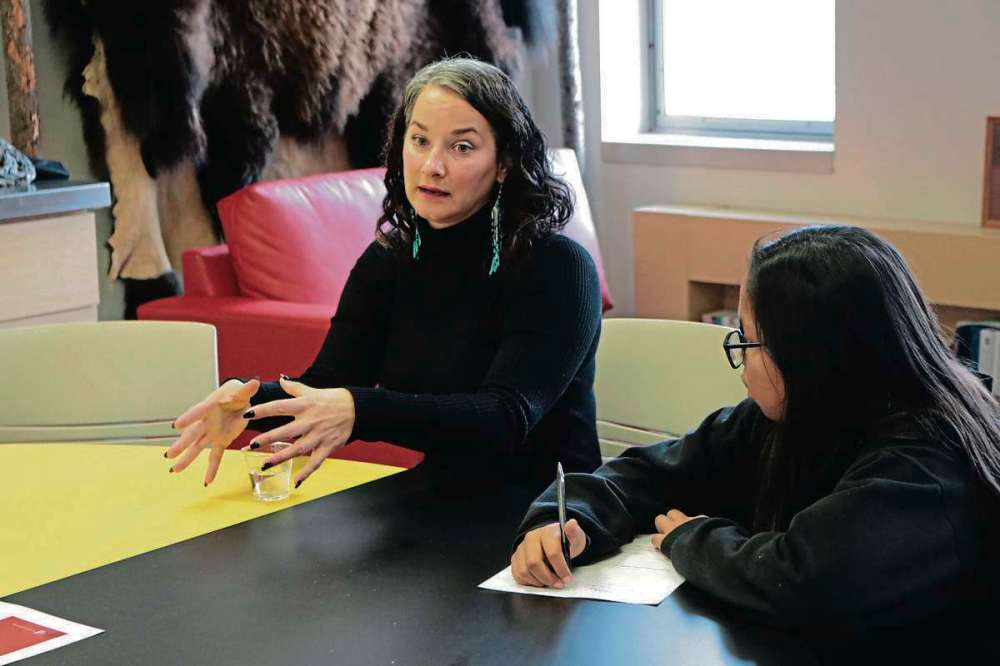
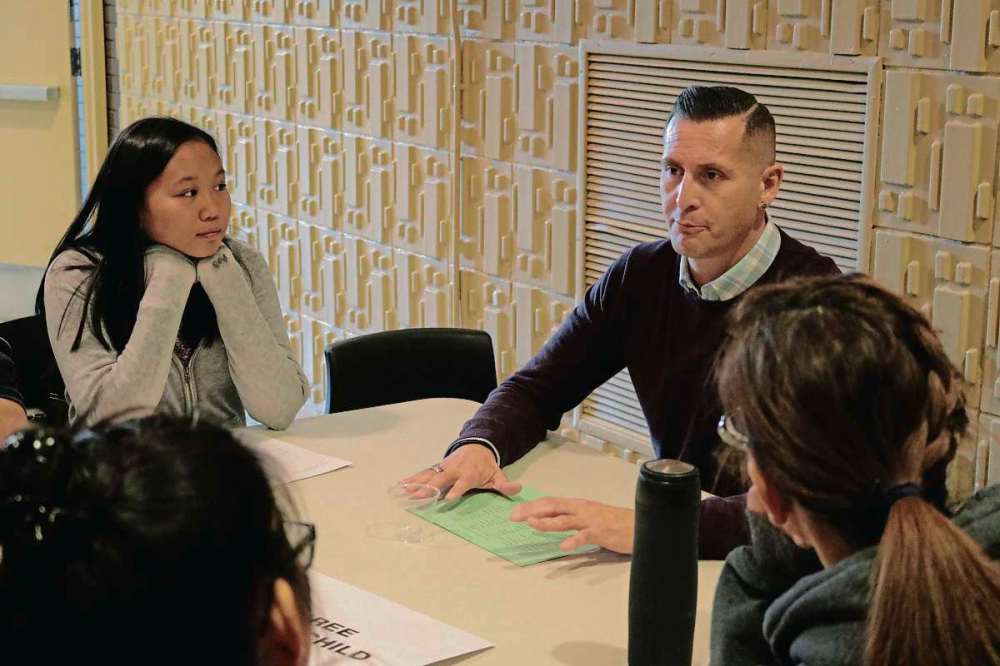
Oct. 25 was Grades 7 to 12 students’ turn to listen to life stories from human books — local individuals who have experienced hardship and were asked to tell the students their stories — for EHTR’s latest Learning from our Human Library event.
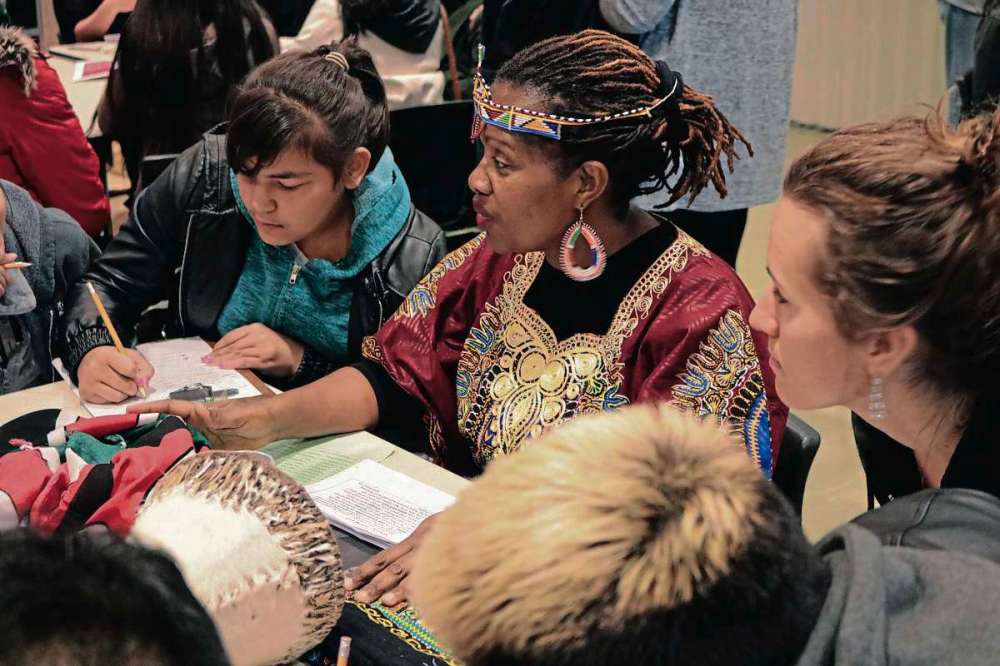
According to the event’s organizers, Chantelle Cotton, education for sustainable development consultant in the Winnipeg School Division and Rob Riel, director of Aboriginal education and newcomer services, the goal is to help students learn about themselves by listening to others’ stories.
“If we tell each other stories, we’ll never be enemies because we’ve had that relationship,” Cotton said, referring to a quote by Arthur Mauro. “I know that the Human Library was a way of sharing multiple people’s (stories) and kids just listening to all these other stories and that it would allow them to heal. They would pull out something they hear about themselves.”
Students engaged in a storytelling session with “human books” to explore the theme identity. Cotton and Riel have been organizing this event since June, approaching people who were willing to volunteer their time and share their stories with the students. Cotton said the division is looking at identity from a personal, cultural, global and national perspective.
“We are focusing on understanding who the other person is, who they are, to make them well-accepting citizens. The importance is building social skills and understanding that we all have a place here in Winnipeg,” Riel said. “I think it’s vital to understand that acceptance and understanding are key ingredients in being successful in today’s society.”
“Human book” MLA for St. Johns Nahanni Fontaine has been sharing her childhood story for years. She told The Times she never misses the opportunity of spending time with youth because she knows she can have a positive impact on their lives.
Fontaine said caring for youth rejuvenates her spirit and gives her purpose.
“I want people to understand that we all go through the same struggles,” she said. “I can’t stress enough how important youth are. If you don’t invest your time and your spirit, and your energy and your heart into youth, I think we’re not engaging them, nurturing them, and we’re not guiding and showing what it can be.”
Grade 8 student Kyla Pablo, from Isaac Brock School, said she learned about being strong and not giving up when struggles come in the way.
“It was emotional because I connected to some of them. It shows me how they faced their challenges, all differently, and how everything relates and how it comes to an end,” Pablo said.
Cotton said all people have burdens to carry and sometimes it’s hard for youth to understand that. Listening to adults share their experiences opens their minds to better understand what’s happening in the lives of others.
“We all have something. We all have a burden to carry, and I think sometimes kids feel like they are all alone, and they look at us as adults as totally put together, and they don’t see the road that we took to get there,” Cotton said.
Cotton and Riel are planning another Learning from our Human Library event for February, which is recognized as Aboriginal Storytelling Month, with a series of traditional Aboriginal stories.