

Taking pride in Filipino roots
SOSD considers Filipino bilingual program
Advertisement
Hey there, time traveller!
This article was published 24/04/2018 (2903 days ago), so information in it may no longer be current.
The Seven Oaks School Division may be breaking ground nationally with a Filipino bilingual program.
Kindergarten to Grade 3 children can now register to have 50 per cent of their studies taught in Tagalog next fall. The SOSD needs all registrations in by April 30 to decide on whether or not they will run the program.
The division currently runs Ukrainian and Ojibwa bilingual programs while other Manitoba school divisions offer German, Cree, Hebrew and Spanish bilingual programs.
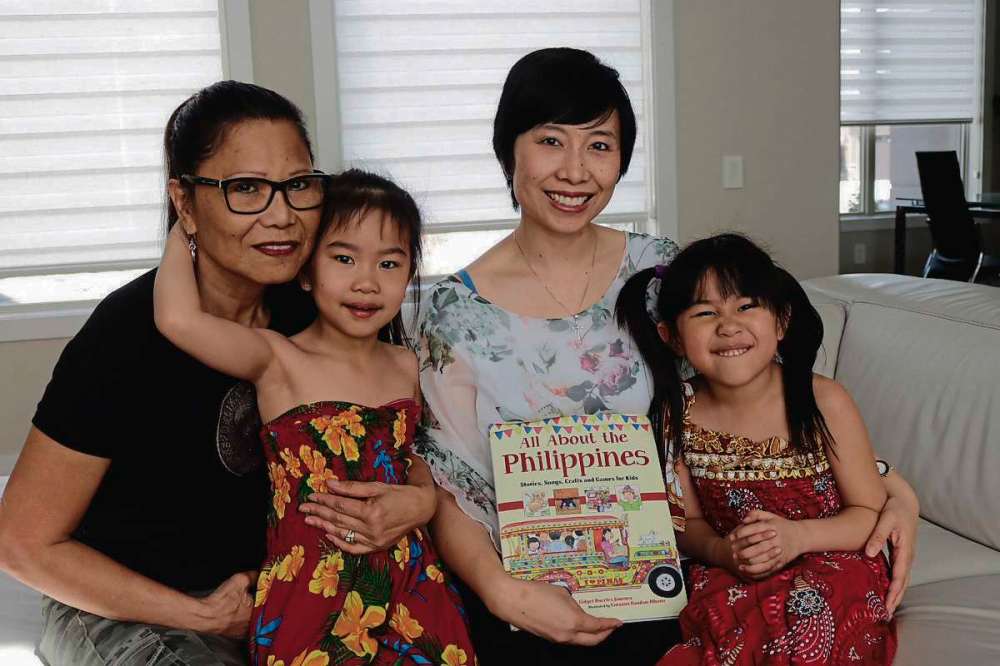
Rivergrove resident and parent advocate Ivy Lopez Sarmiento said this program is a chance for her five-year-old twin girls, Isabel and Anabel, who were born and raised in Winnipeg, to learn about their heritage.
According to the 2016 census, Tagalog was the fastest-growing language. The number of people speaking it had grown by 32.9 per cent since 2011.
Sarmiento is a second-generation Canadian and said she can understand her mother’s native language, but can barely speak it. Together with other parents and Filipino teachers, Sarmiento has been rallying for this program for the last three school years.
“Why is it that Filipino youth know so many other languages except their own language?” she quoted a comment she saw on Facebook. “This happens to lots of cultural backgrounds. It becomes a loss of identity.”
“This is a good way for the second- or third- generation (Canadian) to feel more connected to their culture and even understand the history of their heritage.”
Also, the benefits are extended to newcomer students as well, who won’t quickly forget their own language and culture after they arrive in Canada while still learning English. The program’s curricular outcomes will be based on the Manitoba Education Curriculum. Filipino will likely be used for the teaching of social studies, music, arts and physical education. English will be used for the remaining courses.
The division already has a Heritage Language program that runs three times a week for an hour bu said they will only implement the bilingual program if they can fill a class of 18 students for each grade.
“Children are natural language learners. In a bilingual or heritage language program they learn an additional language and learn about the culture expressed through that language,” SOSD superintendent Brian O’Leary said. “The challenge is simply having sufficient registrations to ensure that the program will be viable.”
“The bilingual program, they would be really immersed and integrated and they would expand more on the cultural studies,” Sarmiento explained, adding that even non-Filipino students can register and learn about a new culture.
But most importantly, all Sarmiento wants for her children and for all the students who may enrol in the program is to feel proud of their roots. She didn’t have the opportunity to learn Tagalog in school, but now other kids can.
“As a second-generation Canadian-born Filipino, this program allows me to give my kids the opportunity to learn about their heritage and the history of the Philippines, something that as a second-generation Filipino-Canadian-born person wouldn’t easily be able to teach them,” she added.
“It’s about embracing the fact that you are Canadian, and embracing the fact that you are able, in this country, to proudly live your own heritage.
“I want them to take pride in their Filipino roots and take pride in being Canadian at the same time.”
Registration forms are available at every neighbourhood early years school in the SOSD catchment area.
For more information, go to www.7oaks.org