


Remembering the General Strike, 100 years later

Advertisement
Hey there, time traveller!
This article was published 11/03/2019 (2672 days ago), so information in it may no longer be current.
This year marks the 100th anniversary of the Winnipeg General Strike of 1919. The huge labour uprising is considered the most significant event in the history of our city, when nearly 30,000 workers went on strike for better wages, working and social conditions.
After the end of the First World War, work was scarce for soldiers returning from France and families struggled to make ends meet. Yet, Winnipeg’s wealthy merchants and business establishments were thriving.
When labour negotiations between management and workers in the building and metal trades were suspended in May 1919, a general strike was called on May 15 by the Winnipeg Trades and Labour Council, the central union body. All the civic unions, many non-union workers and supporters walked off their jobs, with the goal of shutting down the city’s public utilities, closing its factories and bringing the city to a standstill.
Opposing the strike were the majority of the city councillors and the well organized Citizen’s Committee of 1,000.
Labour organizations in Canada and abroad poured in to support and, on June 9, the city police commission dismissed almost the entire police force for refusing to sign a pledge of fealty.
Many Canadian and global newspaper correspondents were present, so the world was watching.
Determined to crush the strike, City Hall brought in untrained ‘special constables,’ the Royal Northwest Mounted Police (later renamed the RCMP) and the army.
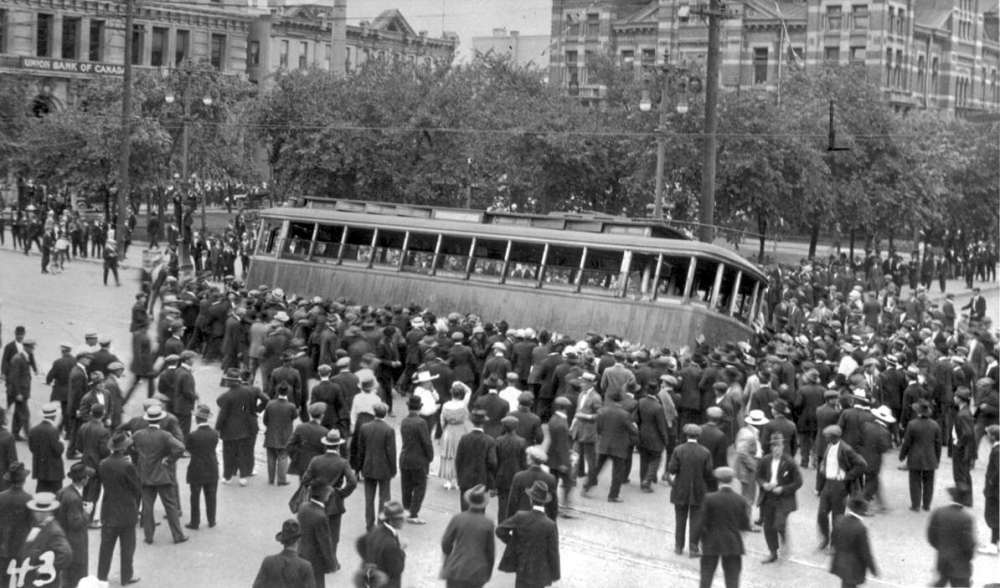
On June 17, 10 leaders of the strike were arrested. On June 21, also known as Bloody Saturday, Winnipeg mayor Charles Frederick Gray read the Riot Act and ordered mounted policemen to ride into a crowd of 30,000 unarmed strikers, prompted supposedly by a streetcar being rocked and/or tipped over. Police fired into the crowd. Mike Sokolowski and Steve Szczerbanowicz were killed and dozens more were wounded.
The Central Strike Committee called off the strike on June 25. The strike had been crushed but labour certainly won sympathy from the public and several strike leaders went on to become labour leaders and politicians at all levels of government.
The Winnipeg General Strike has influenced labour rights in Canada and North America.
Derek Dabee is a member of the board of trustees of Seven Oaks School Division and a community correspondent for The Maples. You can contact him at ddabee@mymts.net
Our newsroom depends on a growing audience of readers to power our journalism. If you are not a paid reader, please consider becoming a subscriber.
Our newsroom depends on its audience of readers to power our journalism. Thank you for your support.
Our newsroom depends on a growing audience of readers to power our journalism. If you are not a paid reader, please consider becoming a subscriber.
Our newsroom depends on its audience of readers to power our journalism. Thank you for your support.
Advertisement Advertise With Us