


IRCOM’s head elected to Canadian Council for Refugees
Advertisement
Hey there, time traveller!
This article was published 13/12/2019 (2362 days ago), so information in it may no longer be current.
Dorota Blumczynska was eight years old when her family fled Poland in 1989 to seek a safer life.
The country was in the midst of dissolving its Communist government when her parents, along with their five children, left the country under the guise of going on holiday. The holiday, however, was a refugee camp in East Germany.
Leaving nearly all their possessions behind, the Blumczynska family eventually arrived in Canada with the help of a Winnipeg church’s sponsorship.
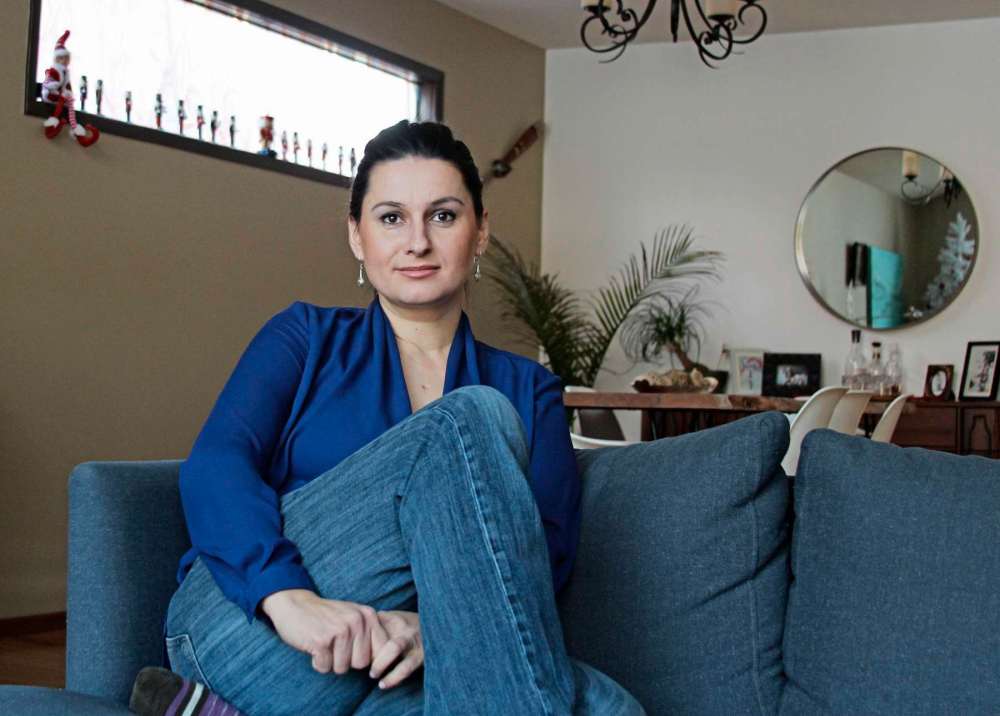
Blumczynska, now 38, said this lived experience will be one of her greatest attributes as she transitions into her role as the new president of the Canadian Council for Refugees (CCR), for which she served as vice-president from 2017 to 2019.
“I know first-hand what displacement feels like. I know how hard it is to feel like you belong,” she said.
But her lived experience isn’t the only thing that has prepared her for this role. The Charleswood resident is the executive director of Immigrant and Refugee Community Organization of Manitoba (IRCOM), an organization she has been involved with for almost 12 years after leaving her career in banking and becoming a volunteer English instructor.
IRCOM is a non-profit organization that operates two transitional housing complexes in Winnipeg, one on Isabel Street and another along Ellen Street. Apartments are available to newcomer families for up to three years after their arrival.
“In these 12 years at IRCOM, the organization has changed enormously. It has grown tremendously. I’ve been riding that wave together with my colleagues and it has made me comfortable with uncertainty and every single day being different. And what I expect at the CCR is that there will be an enormous amount of uncertainty, and that every day will be different, and that every day I’m going to have to rise to whatever occasion presents itself,” she said.
IRCOM is one of 200 member groups of the Canadian Council for Refugees, a national non-profit which works for the rights and protection of refugees and vulnerable migrants in Canada and around the world. Members are organizations that are involved in the settlement, sponsorship, and protection of refugees and immigrants.
“My work at IRCOM strengthens my ability to be an effective president and my presidency will shine a light on the incredible work that we do at IRCOM,” she said, noting that she will maintain her role with IRCOM.
This year the CCR concluded its most recent three-year plan, so developing a new one will be on its agenda moving forward.
Among the organization’s upcoming priorities, she said front and centre will be calling on Canada to increase the number of government-assisted refugee settlements to 20,000, up from the current number which sits below 10,000.
“Government-assisted refugees are the absolute most vulnerable refugees globally who are identified by the United Nations High Commissioner for Refugees for resettlement, and Canada’s commitment has for many, many years been embarrassingly low,” she said.
Blumczynska has been president for less than three weeks, following the election at the annual general meeting on Nov. 30, but has already been meeting with politicians and stakeholders.
“I think to the best of their capacity the president is really intended to advance the core priorities of the Canadian Council for Refugees and be a strong advocate, have the courage to say difficult things or unpopular things or things that need to be said that people are uncomfortable saying. It’s an opportunity, I think, to create change if one has the backbone to do that.
“I’m going to find that backbone,” Blumczynska said. “I think when it comes to fighting for vulnerable people, that is the moment I find that I have the greatest courage.”