


North End legend Mosienko honoured in new book

Advertisement
Hey there, time traveller!
This article was published 19/11/2021 (1709 days ago), so information in it may no longer be current.
If you drive down Main St. often enough, you’ve surely seen it — the mural of Winnipeg hockey legend Billy Mosienko sprawling across the side of a bowling alley that, surprise, bears Mosienko’s name.
The painting depicts Mosienko in his most famous moment, from a game in 1952. In one hand, he’s holding three pucks, each of which he’d just potted past the New York Rangers’ third-string goaltender, Lorne Anderson, in the fastest flurry of three goals ever recorded in NHL history. It took him just 21 seconds. The record stands today.
“Another thing people don’t know is he almost had a fourth goal about 20 seconds later… he slipped the puck just past the post, or else he would’ve had four goals in about 45 seconds,” said Ty Dilello, author of Mosienko: The Man Who Caught Lightning in a Bottle, a biography of the Chicago Blackhawks hall of famer, released Oct. 22 by Winnipeg publishing company Great Plains Publications.
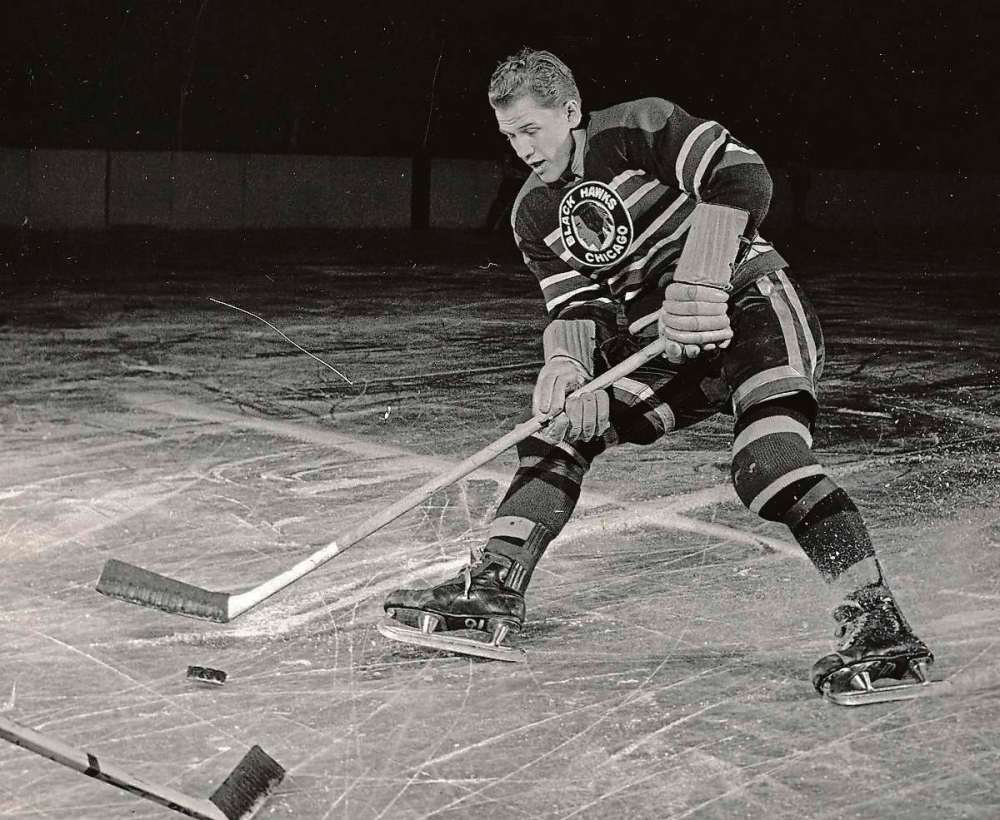
Dilello said Mosienko’s feat demonstrated what kind of player, and person, he was.
It was the last game of the season, and the Blackhawks and Rangers sat in the two last place spots in the standings. The game was ultimately meaningless; neither team was moving on to the playoffs.
But with the Blackhawks down 6-2 going into the third period, Mosienko refused to quit. He rallied the team back single-handedly, almost tying the game with a fourth goal.
“Never giving up was a big thing for Mosienko,” Dilello said.
Life in the NHL was very different in the 1940s and 50s than it is today. Players cramped into trains for long trips between games and effectively lived with each other during the season. And salaries, while still good money for the time, were nothing like the multi-million dollar contracts that bulge the eyes of mere commoners these days.
“So they worked summer jobs and then when they retired, they didn’t really retire, but they had to get a full time job and work that for 30 years,” Dilello said.
For Mosienko, that next job was bowling — or rather, he and former teammate Joe Cooper (also a Winnipegger) opened up Cooper-Mosienko Lanes, the bowling alley where Mosienko’s mural gazes onto passersby. It’s now called Billy Mosienko Lanes.
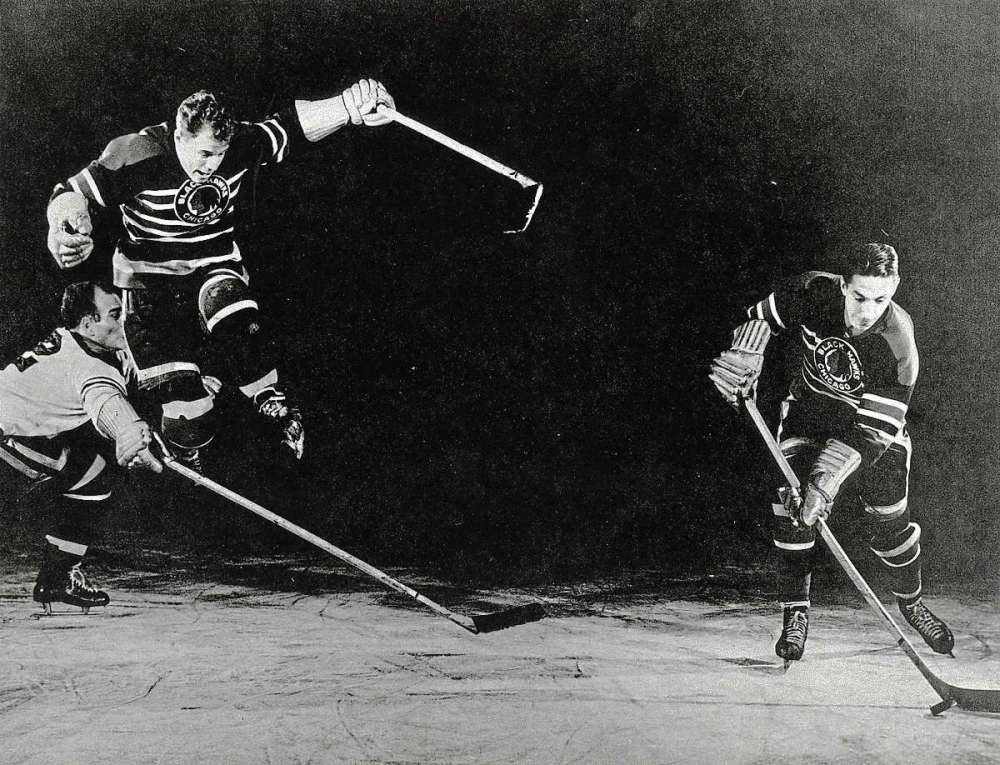
“A big part of his life became bowling,” Dilello said. “He was just a regular guy behind the till there. Fans would see him nightly playing in the men’s leagues or whatever was going on. It was kind of a way to stay connected with the people that had watched him play hockey for so long.”
Dilello said Mosienko was always a great ambassador for the game, and he worked to make the game better, particularly in his childhood neighbourhood.
“Even after he played, there was a hockey tournament in his name, the Billy Mosienko Minor Hockey Tournament, that was played at different North End rinks,” Dilello said. “And while Bill was still alive, he played a good role in that and helping promote the game and being around youngsters.”
Most Winnipeg-born NHLers don’t stick around the city after their careers, Dilello said. That’s one thing that makes Mosienko so special to the city. He was not only an ambassador for hockey; he was an ambassador for Winnipeg, and for the North End.
Cody Sellar
Cody Sellar was a reporter/photographer for the Free Press Community Review.
Our newsroom depends on a growing audience of readers to power our journalism. If you are not a paid reader, please consider becoming a subscriber.
Our newsroom depends on its audience of readers to power our journalism. Thank you for your support.
Cody Sellar
Cody Sellar was a reporter/photographer for the Free Press Community Review.
Our newsroom depends on a growing audience of readers to power our journalism. If you are not a paid reader, please consider becoming a subscriber.
Our newsroom depends on its audience of readers to power our journalism. Thank you for your support.
Advertisement Advertise With Us
Advertisement Advertise With Us