|
We’re having a fall supper and you’re invited!
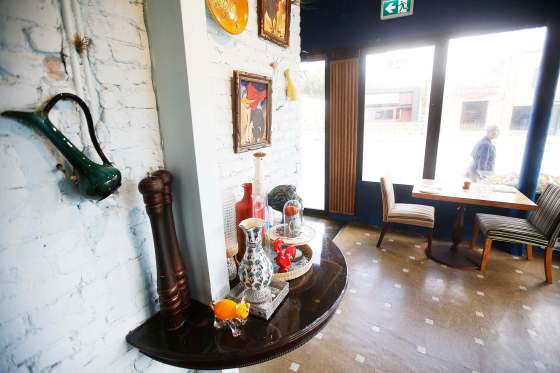
The first-ever Free Press Fall Supper takes place Oct. 17 at Whitetail Meadow — a rustic barn-turned-wedding-venue near Niverville — and features a made-in-Manitoba menu by chef Matty Neufeld of Prairie Kitchen Catering. Tickets are available on Eventbrite and all proceeds will be donated to Harvest Manitoba.
But this is more than an evening of good food. There’s a story behind this event — one that’s been months in the making and has taken myself and colleagues Randall King, Alan Small, Ben Sigurdson, Ben Waldman, Jill Wilson and Jen Zoratti across the province and into farmers’ fields, forests, cheese-making facilities and chicken coops.
Advertisement

Our farm-to-table feature hits newsstands Saturday. I’m proud of this work and I want to tell you a little bit about how it came to be.
We started by working backwards: asking chef Neufeld way back in February to come up with a fall-inspired dish that would serve as the basis for this project (the same dish he’ll be serving at our fall supper). When the weather warmed, we set out to track the origin story and life cycle of each ingredient.
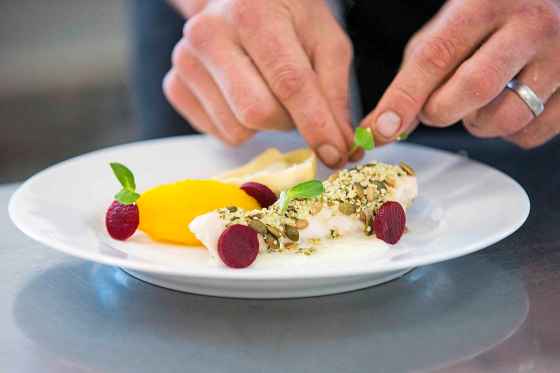
Chef Matty Neufeld’s fall dish of sunflower-oil-poached chicken breast with confit chicken leg and chanterelle tortellini, golden prairie cheese fondue, butternut squash, beets, toasted hemp seeds and sunflower shoots. (Mikaela MacKenzie / Winnipeg Free Press)
Included in this feature are locally produced chicken, eggs, flour, sunflower oil, cheese, foraged mushrooms, hemp seeds, beets, butternut squash and sage.
I was on chicken (and egg) duty, which meant following a flock of 800 birds from their first day at Zinn Farms to their last day on earth. The farm, located 30 minutes southwest of Winnipeg, is run by Andreas Zinn and his mother Monika. After decades of running a commercial chicken operation, the pair now practise free-range, regenerative animal agriculture.
Baby chicks are undeniably cute and while I was standing in the barn with hundreds of small yellow birds scurrying about, I wondered how readers would react to their death. It’s a necessary part of meat production, but an aspect the general public is shielded from through marketing and distance from agrarian life. Prior to this project, I had never seen an animal slaughtered.
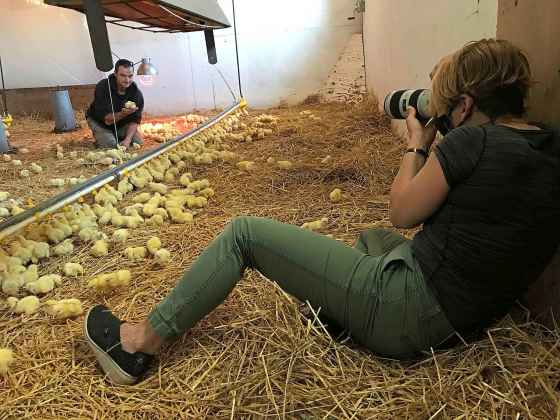
Photographer Ruth Bonneville photographs Andreas Zinn and his flock of day-old chicks.
In August, myself and photographer Mikaela MacKenzie were invited to document the process at Waldner’s Meats, a small, family-run slaughterhouse in Niverville. I was surprised how eager owners Sandra and Angela Waldner were to have us. It’s near-impossible to get into most large slaughterhouses and the sisters welcomed us with open arms, hairnets and freshly laundered (but still slightly blood-speckled) smocks. They’re really proud of what they do.
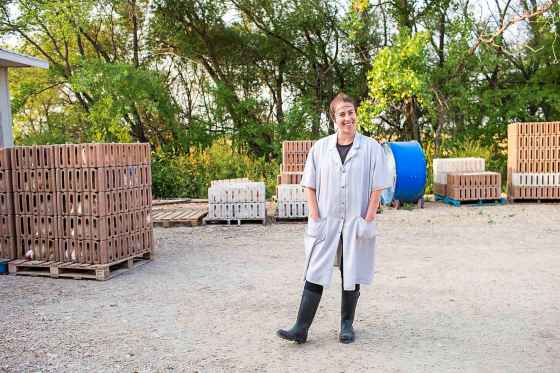
Reporter Eva Wasney waits anxiously for the chicken slaughter to begin at Waldner’s Meats near Niverville. (Mikaela MacKenzie / Winnipeg Free Press)
Going in, I was nervous. As a former vegetarian and animal lover, I wasn’t sure how I would react to watching chickens get killed. As a current omnivore and nosy journalist, I was intrigued by the process and honoured by the access.
My takeaway from the experience: yes, it’s tough to watch an animal die, but it’s something more meat-eaters should probably bear witness to in order to understand everything that goes into producing the food we eat. I hope my contribution to our farm-to-table feature does just that.
Here are a few more behind-the-scenes details and fun farm facts from my colleagues:
Jill Wilson on Loaf and Honey: When husband and wife Dustin Peltier and Rachel Isaak started learning about the process of making Trappist cheese, Isaak was unable to see it first-hand because, as a woman, she was not allowed in Notre Dame des Prairies monastery, near Holland.
However, cheesemaker Brother Alberic did sneak her in one day after the monastery had permanently stopped producing Fromage de la Trappe. “It was minus 40 out and Brother Alberic said, ‘None of the other monks will be out — do you want to come in?’” Peltier says. She did, of course, and got to see at least part of the process that Peltier had been relaying to her while he apprenticed with Brother Alberic, whose recipe for unpasteurized cheese originated with 18th-century monks in Yugoslavia and made its way to the Quebec monastery he joined at age 16 by way of a French monk’s Christmas gift in 1918.
Brother Alberic retired in 2018; Notre Dame des Prairies was sold in 2020, the last bastion of the Cistercian Order of Strict Observance in Manitoba.
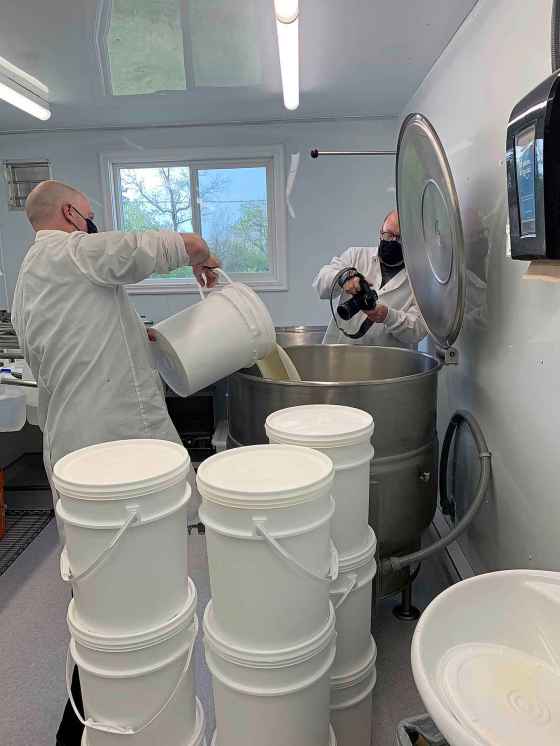
Winnipeg Free Press photographer Mike Deal documents Dustin Peltier making cheese at Loaf and Honey.
Ben Sigurdson on Wild Earth Farms: This is the second year my household has been signed up for Wild Earth’s weekly community supported agriculture (CSA) boxes, and we’ve absolutely loved it. Every week we get an email from Jeff Veenstra and his team about what to expect in our weekly CSA box, how the growing season has been going and a recipe or two based on what’s coming our way. Wild Earth has seven CSA box pick-up locations throughout the city; we grab our box of delicious, local, pesticide-free produce from the front porch of a house in Wolseley every Wednesday. It has truly changed how and what we eat for the better; if you’ve ever considered signing up for such a program, I’d highly recommend it.
Ben Waldman on Wildland Foods: One of my proudest moments of the year? Finding this morel while out foraging with David and Caitlin Beer. It was going to be a long ride home if I went all that way and came home without spotting one measly morel.
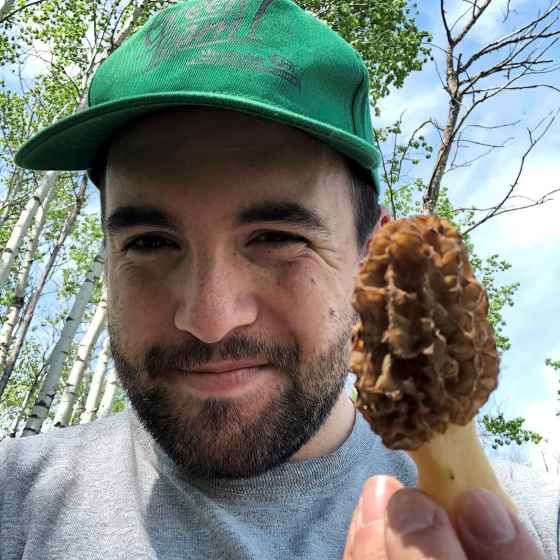
Reporter Ben Waldman holds a morel he found while foraging.
I hope you spend some time with our farm-to-table feature this weekend. And I hope you’ll join us at the Free Press Fall Supper, where you can taste all of the pieces of this project in a real-life feast.
Again, tickets are available here and proceeds go to Harvest Manitoba. There will be door prizes, beer and spirit sampling and more. (Hot tip: tables of eight are being offered at a discounted price of $125 per person.)
|