|
Every so often, one of my favourite newsletters, New Music for Olds, features a section called News to Me, in which writer Christian Finnegan focuses on a band or artist he’s recently discovered, despite them having been around for ages.
This week his revelation was L.A. singer-songwriter Judee Sill, of whom he writes: “I’m sure I’d scanned past Judee Sill’s name over the years, blithely lumping her in with Judy Collins, Joan Baez and other female-folkies-who-are-not-Joni-Mitchell. With all due respect to those artists, Sill exists in a realm of her own.”
I had done exactly the same thing; like Finnegan I came to a full appreciation of Sill’s artistry only after seeing the new documentary about the troubled artist, Lost Angel: The Genius of Judee Sill.
Advertisement

However, I was at least aware of Sill before doing a deeper dive into her oeuvre. My own recent News to Me discovery has been sampled by so many hip-hop artists there’s a whole Apple Music playlist devoted to songs with his hooks (including Eminem’s My Name Is), but I’d never heard his name before last week.
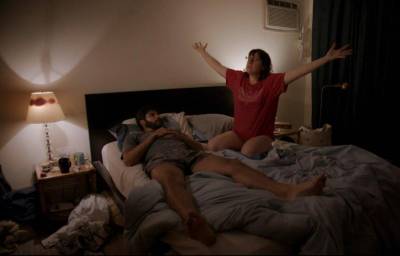
I was watching the final episode of Season 3 of HBO’s Hacks (the best season so far, IMHO) when a cascading acoustic guitar and a breezy but plaintive voice had me reaching for my phone to identify the track.
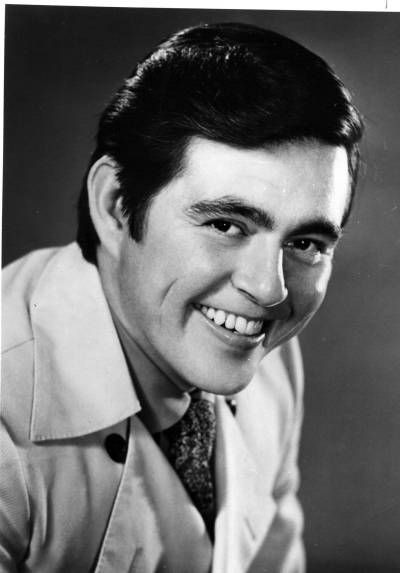
The song was Cannock Chase and the artist was Labi Siffre, a British singer-songwriter who released six albums between 1970 and 1975, and four between 1988 and 1998.
I’ve since realized that his songs have caught my ear on other soundtracks when I didn’t have Shazam at hand. Recent Oscar nominee The Holdovers used Crying, Laughing, Loving, Lying prominently, and his compositions have turned up on episodes of Better Call Saul and This Is Us.
He wrote It Must Be Love, which was later a hit for the band Madness (Siffre even appears in the video).
We also share a birthday (June 25; keep those cards and letters coming), which always makes me feel a certain kinship, and he’s a fascinating person — a Black gay man who, even in the ‘70s, didn’t hide his sexuality in his lyrics or kowtow to what record labels wanted.
“I went in believing that the music business would be run by — who else? — musicians,” he told the Guardian this year. “But you don’t blame a rattlesnake for biting you. A rattlesnake is a rattlesnake, and you’re stupid to wander around in sandals and no socks in a rattlesnake-infested area.”
He met his partner Peter Lloyd in 1964 and was with him until Lloyd’s death in 2013 (the two were also part of a longtime relationship with another man, whom Siffre married after Lloyd died).
He’s a poet and a playwright and just a stunning songwriter in genres that span folk, soul, R&B and funk, with a pure, effortlessly expressive voice and a political passion. I can’t wait to explore his catalogue further; something about him turned me into an instant evangelist.
Once again, I have to tip my cap to the music supervisors of the world, without whom I’d never have been introduced to some of my favourite music.
What are some artists you’ve discovered thanks to their placement on a TV or movie soundtrack?
|