A multi-purpose natural fertilizer
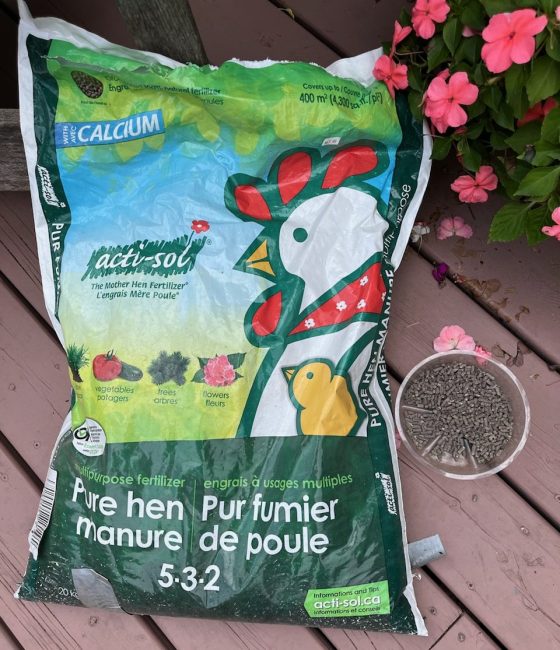
Acti-sol pure hen manure. (Audrey McPhadden photo)
What can pure hen manure do for plants? To find out, Winnipeg gardener Audrey McPhadden purchased a bag of Acti-sol Pure Hen Manure 5-3-2 in spring. She used it to amend the soil around Rosa F.J. Grootendorst, an old-fashioned hardy shrub rose that stubbornly refused to bloom in her garden.
To her delight, her rose produced blooms for the first time in many years.
Purely anecdotal? Perhaps. But hen manure has long been used as a natural fertilizer in gardens. Rich in organic matter, it is high in nitrogen, phosphorus and calcium. Acti-sol can be used for all types of plants, including fruits and vegetables.
How easy is it to use? Just sprinkle a small quantity of the pellets onto your soil. The company website says that the nutrients are released slowly and gradually. You can even use it for houseplants.
Acti-sol is safe for children and pets. Intriguingly, pure hen manure is said to repel squirrels. I would like to see that!
Acti-sol is available at local retail stores. Learn more on their website.
New for 2025: Kitchen Minis Basil Bonsai
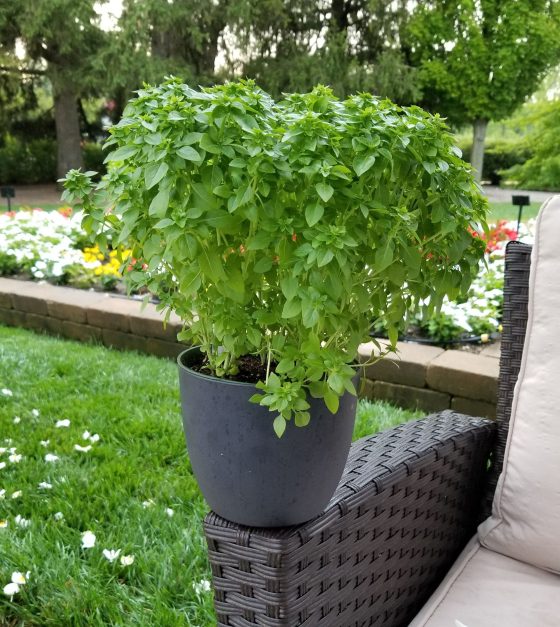
Kitchen Minis Basil Bonsai. (Colleen Zacharias phhoto)
In 2021, when the folks at PanAmerican Seed introduced the Kitchen Minis collection, it threw the door wide open for any consumer who would like to grow fresh veggies but lacks even a speck of outdoor garden space.
The Kitchen Minis collection is a line of small potted edible veggies that can be grown indoors on sunny windowsills, balconies, or patios. The collection keeps expanding and today includes three varieties of tomato, nine pepper varieties, one cucumber — and now they’re adding culinary herbs.
While attending the garden party at Ball Horticultural in Chicago this summer, I had a chance to see the latest addition to the Kitchen Minis collection: Basil Bonsai. It’s a beauty. New for 2025, Basil Bonsai will be available in pots as small as 4 inches or 10 cm. Quick-growing, Basil Bonsai is a fine-leaf basil that doesn’t need to be chopped. Just sprinkle the fresh tiny leaves right over your favourite dishes.
But what I fell in love with is Basil Bonsai’s ever-so-tidy habit and mini-boxwood look, which can be clipped into a perfect circle or square. Basil Bonsai will be an attractive, delicious accent to windowsills or patio tables and especially your food of choice.
And now for something completely different

Perennial Plant of the Year for 2025: clustered mountain mint. (Gardenology.org)
The much-anticipated Perennial Plant of the Year for 2025 has recently been announced by the Perennial Plant of the Association: Pycnanthemum muticum clustered mountain mint.
Native to woodlands and meadows in the eastern United States, clustered mountain mint is hardy to Zone 4. A member of the mint family, it has tiny, light pink flowers accented by silvery bracts (small, leaflike structures beneath the flowers).
Clustered mountain mint is a tough perennial that spreads by shallow rhizomes, however, it is less aggressive than other mint varieties. Its aromatic leaves are not favoured by deer or rabbits.
It remains to be seen how tall and wide clustered mountain mint will grow in our cold climate but expect a size and habit similar to that of larger varieties of Nepeta catmint, which grow in spreading clumps up to 24 inches tall and wide (60 cm).
Clustered mountain mint is a highly fragrant pollinator magnet. It is recommended to plant it in fertile, moist to medium moist, well-drained soil in full sun to part shade.
The merits of growing in cracks and gravel
The term “ruderal” originates from the Latin word rudus, meaning “rubble”. Ruderal plants are plants that grow where the natural vegetational cover has been disturbed by humans.
How often do you come upon a flowering plant that gives a so-so performance in a well-tended garden bed but then thrives between cracks in the pavement? What audacity.
Dietmar Straub and Anna Thurmayr are exploring the potential of ruderal in landscape design and the results are beautiful.
Professional landscape architects and professors in the department of landscape architecture at the University of Manitoba, Straub and Thurmayr designed the Science Courtyard on the Fort Garry Campus, which recently received an international award.

Ruderal plants in gaps of the gravel at the University of Manitoba Science Courtyard. (Dietmar Straub photo)
This must-see garden features a wide range of perennials and ornamental grasses — but when you visit, look closely at the plants that Straub and Thurmayr installed in gravel between the joints of massive slabs of limestone.
Varieties include Aquilegia canadensis Wild Columbine, Iris sibirica Caesar’s Brother, Siberian Iris Flag, Zizia aptera Heartleaf Alexander and Zizia aurea Golden Alexander, and a surprising but strangely wonderful choice – tall Verbascum Thapsus Mullein.
The magic and possibilities of ruderal is gaining ground. A new book, A Field Guide to Urban Plants: The Flora of Pavements, Walls and Waste Ground by Alexandra-Maria Klein and Julie Krohmer (Pelagic Publishing) will be released on September 20.
Eggplant… meatballs?
Regan Tataryn is an avowed foodie who grows a range of fruits and veggies in her south Winnipeg backyard. Tataryn loves the beauty of a vegetable garden and says that anything roasted is delicious.
She roasts carrots whole for roasted carrot soup and layers beets with fontina cheese and walnuts which she bakes in the oven.
She grows Carmine Jewel sour cherries in her backyard and makes sour cherry vodka which packs a real punch – I know, I sampled it on a memorable visit to her garden.
Now Tataryn is looking forward to making eggplant recipes. She grows just enough eggplant to make baba ganoush. In previous years, she has grown Little Finger eggplant, but this year, she grew Black Beauty, a large glossy heirloom variety.
“Last year, we had more heat, and my eggplants did really well,” says Tataryn. But this year, Tataryn found that her heat-loving plants – eggplants, peppers, and tomatoes – did not do as well.
“I would say they had their worst year, mostly due to the cold, wet first half of the summer.” Only recently have her eggplants started to flower.
“I have grown eggplants in the past but didn’t know what to do with them,” says Tataryn. “There are some delicious Sri Lankan and Indian recipes which I have used eggplant for.”
Below, Tataryn shares an Italian recipe for eggplant meatballs which is her top favourite:
- Roast eggplants until soft and then scoop out the meat.
- Add fresh or roasted garlic, chopped parsley, basil, salt and pepper to taste.
- Add just enough breadcrumbs (panko is best) until the ingredients come together.
- I also add some Italian sausage seasoning which has fennel seeds, smoked paprika, garlic powder, onion powder, and oregano.
- Fry in extra virgin olive oil, using a generous amount on each side.
“You can serve this recipe with pasta and sauce of your choice or eat it like a burger in a bun. I’ve also used eggplant chopped up as a layer in a vegetable lasagna,” says Tataryn.
“I really enjoyed these Italian eggplant meatballs,” she says. “I will definitely try growing eggplant again next year and make sure that they are not obstructed by plants that self-seed and block out the light and that I don’t plant them too early before the weather is warm enough. This can set them back.”
How to use a stirrup hoe
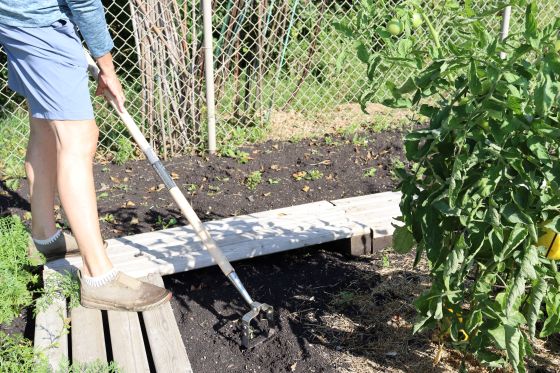
The stirrup hoe is Jennifer Dumore’s favourite tool. (Colleen Zacharias photo)
Got weeds? Then you need a stirrup hoe, says Jennifer Dumore. The stirrup hoe goes by a few different names including hula-ho, push pull hoe, or oscillating hoe but whatever it is called, Dumore would not be without this handy tool.
She lives in Headingley on a 1.3 acre (0.5 hectare) property and uses a stirrup hoe to weed between the rows in her vegetable garden.
“Oscillate” means to move or swing back and forth and that’s exactly how this long-handled tool with a double-edged forged steel blade works as it slices weeds off at the root just below the soil surface with an easy push-pull motion.
“Just pull the stirrup hoe through,” says Dumore who demonstrated the stirrup hoe for me. “It’s more for shallow-rooted weeds but if you keep on top of them, they don’t get bigger.”
Dumore bought her stirrup hoe at Lee Valley Tools for $39.50.
Community organizations: want trees?
Does your non-profit community organization have a community tree planting project?
Applications for the 2025 Home Grant, supported by the Government of Canada Two Billion Trees Program, are being accepted from now until Nov. 12.
Successful applicants can receive up to $20,000 from the grant program for planting projects that focus on adding trees to areas of higher poverty and underserved areas of Winnipeg.
To be eligible, community organizations must be incorporated or a registered not-for profit. Applicants must also have identified a planting site.
For full details and applications forms, visit the city’s website.
Advertisement

An autumn display with pumpkins and gourds
Looking for a local pumpkin patch? Living Well Farm is a family-run regenerative farm located five minutes south of Sage Creek at 2303 Hallama Drive, Grande Pointe. Owners Mike and Carolyn Reimer grow a range of pumpkin varieties.
“We’ll probably be pulling the pumpkins out the first weekend in September,” told me last week. Perfect timing for anyone who wants to create seasonal décor with pumpkins!
The pumpkin crop looks great, said Carolyn, “but it has been a hard growing season because it was so wet to begin with and then it has been dry and we have been struggling with powdery mildew on the leaves. It doesn’t affect the quality of the harvest, but it does affect the quantity.”
That’s good to know, because it means that quantities are limited — so if you are looking for pumpkins, don’t wait too long!
“Pumpkins will last easily for weeks and weeks on doorsteps, so long as they don’t freeze,” said Carolyn. “Bring pumpkins indoors if there is a risk of frost and they will last until Hallowe’en.”
Two popular pumpkin varieties that are in abundance at Living Well Farm, said Carolyn, are Porcelain Doll and Porcelain Princess, both peach-coloured with a beautiful shape, and deeply ribbed with bright orange flesh.
To meet demand for pumpkins that are perfect for carving, Carolyn and Mike planted a greater number of Jack O’Lantern pumpkins.
Living Well Farm will be at the Manitoba Homesteading Show & Farmers Market on Sept. 28, 10 a.m. to 3 p.m.. at Grande Pointe Park, 423 Bernat Rd., Grande Pointe.
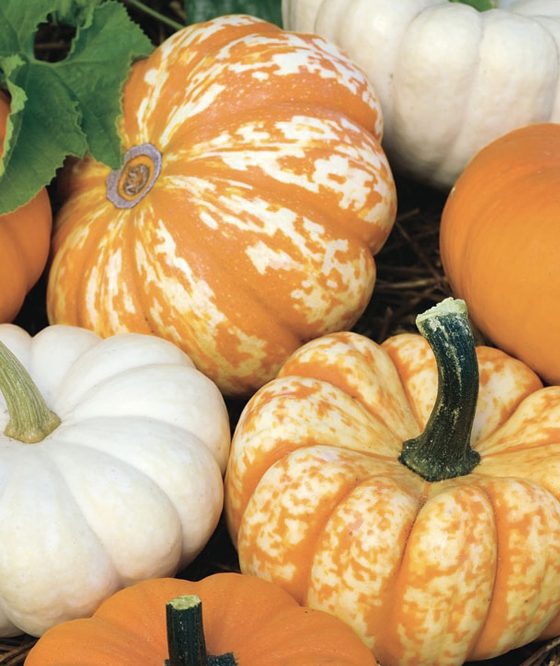
Pumpkin patch. (Living Well Farm)
Grow gourds
A basket of bumped and warty ornamental gourds creates a colourful fall display. Next spring, why not plan your autumn display early by growing your own?
The folks at T&T Seeds say that Goonies Superfreak Gourds and Gourds Gremlin are super easy to grow and very prolific.
Goonies Superfreak Gourds are 20 to 30 cm (8 to 12 inches) in size and come in a range of warty shapes and bright colours. Gremlins gourds are slightly smaller at 12 to 18 cm (5 to 7 inches).
T&T Seeds carries both seed packets as well as starter plants that can be purchased in spring.
Start seeds indoors in spring and plant outside in a full sun area once outdoor temperatures are consistently above 15 C. 100 days to maturity.
Saving and sowing poppy seeds
This summer, dozens of poppies fluttered their colourful petals across the length and breadth of Charles Begley’s front yard and boulevard for a show-stopping display.
Begley planted poppies in flower beds as well as in hoop beds where he grew lettuce, spinach, beets, carrots, and garlic.
Begley sows poppy seed in the spring. In early July, he puts ribbons on the poppies he plans to propagate so he can identify them later in the season. Then in late summer he harvests the seeds.
“I have harvested most of my poppy seeds over the last two weeks of August after they dried on the plant,” says Begley.
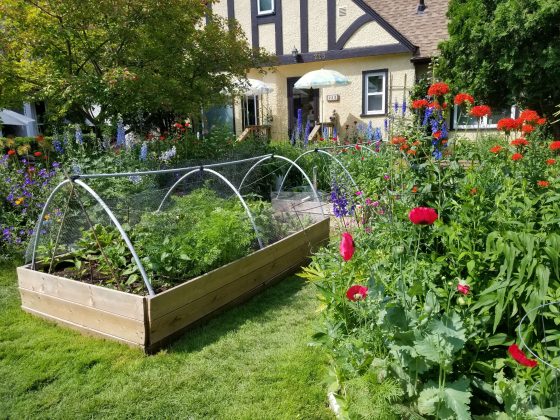
Charles Begley’s front yard poppies. (Colleen Zacharias photo)
“I go around with a dry, empty 4-litre ice cream pail as it has a handle on it and is easy to hold under the plant while cutting off the seed pods. They just fall into it, not on the ground.”
Begley shakes the harvested seed into another container and then transfers them into repurposed pill bottles, tightens the caps, and stores the bottles in a cool area of his basement for the winter.
“In spring, I just scatter the seeds where I want them to grow in the flower or vegetable beds,” says Begley. He also leaves some dried seed pods on his plants so they can self-seed.
This year, Begley experimented with Hungarian Blue Breadseed, Danish Flag and Black Swan poppy seeds which he purchased from Heritage Harvest Seeds, an heirloom seed mail-order company in Fisher Branch.
“Unfortunately, I did not have much luck with the Breadseed or Black Swan poppy seeds. They were slow to germinate and did not mature. I did get one beautiful Danish Flag to bloom, which indeed looked like the Danish Flag!”
Begley plans to try each of the varieties again next year.
A new leafy green to try
I saw Kangkong water spinach for the first time last month on a visit to FortWhyte Farms. Erin Froese, harvest and food logistics coordinator at the farm, had never heard of it either until just recently when increasing demand by their customers for this semi-aquatic spinach plant prompted FortWhyte Farms to begin growing it.
Seedlings were planted in the garden in the third week of August after seeds were started in the greenhouse at the farm. Kangkong water spinach has proved to be a good fit, said Froese, especially for low-lying areas at the farm where water tends to collect, and the soil is prone to waterlogging.
“We’ve always really struggled to grow things in low-lying areas and so we decided to take advantage of that and try and grow something that needs a lot of water,” said Froese.
Kangkong water spinach is also suitable for growing in containers, so long as the soil is kept consistently moist. Plant in full sun.
Kangkong water spinach is native to southeast Asia. Both the broad, arrow-head shaped leaves and hollow stems are edible, and it can be used the same way as other types of spinach. It can be ready to harvest in as little as 35 days.
Mail order seed companies such as Zappa Seeds and Seed2Go, both based in Ontario, offer seeds for Kangkong and other varieties of water spinach you may want to try. Zappa Seeds and Seed2Go ship across Canada.
Why is my Russian sage flopping?

Russian sage. (Colleen Zacharias photo)
Russian sage brings rich lavender-blue colour to the late-season garden. Pair this handsome perennial’s small, finely dissected silver-green leaves with other stars of the late season such as grasses, coneflowers, and rudbeckia and you will enjoy enviable colour throughout September.
The botanical name for Russian sage is perovskia. Russian sage is native to hot, dry climates. There are numerous cultivars to choose from that come in a range of sizes but one thing they all have in common: Russian sage is meant to have an upright habit.
So why is my Russian sage — and maybe even yours – falling down on the job? For one thing, taller varieties are more prone to flopping. A simple trick is to plant taller varieties of Russian sage in groups which helps the plants support one another.
But: the growing requirements for Russian sage are precise. It won’t be cajoled into satisfaction with anything less than a full sun location (6+ hours). Good soil drainage is essential. Russian sage is happier in lean soil vs. rich soil. In spring, when new growth starts to appear along the stems, cut back to about 12 inches or 30 cm above the ground.
For now, I’m using a plant support to corral my lone backyard specimen of Russian sage. I will improve the soil drainage by adding shredded leaves to the soil and create a “support group” by adding another two Russian sage plants.
Advice for a beginner gardener
Jan Barak wrote in to say that she loves Winnipeg Gardener and we are glad to hear about that! Barak became a first-time gardener in 2023.
“It is now Year Two and I just wanted to share with you how excited I am with my little garden,” says Barak.
“For years I contemplated having a garden. I envied other people’s gardens, looked through all kinds of magazines, trolled the internet but never had the courage. There were so many things I didn’t know and so many beautiful flowers and plants that I didn’t know where to start.”
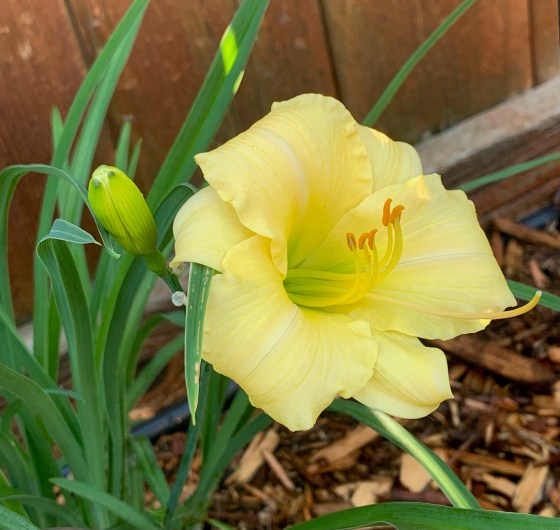
Jan Barak’s new garden. (Jan Barak photo)
Barak finally took the plunge last year. She planted peonies, hydrangea, daylilies, echinacea, delphinium, Nepeta catmint, and dianthus pinks.
“You helped me with my first year of winterizing,” she says. “I had no clue what to do and I really appreciated your advice.”
Barak is thrilled with how her new garden grew this summer but says there have been a few hard lessons along the way.
“I planted some of the plants too close to each other.”
I wouldn’t be too concerned about planting some of the plants too close together. Planting densely has gained considerable favour among many of the most prominent garden designers today such as Piet Oudolf.
The garden fills in more quickly and there is less opportunity for weed growth. There is also less need for mulch.
Planting densely really only becomes a problem if you begin seeing signs of powdery mildew due to a lack of circulation, but this is mostly a problem with plants that are more susceptible to powdery mildew such as phlox, Monarda bee balm, and Veronica, for example.
“I am worried I will need to move a peony, and I have read they don’t like to be moved.”
It’s true that peonies dislike being moved but there are a few key steps you can follow:
- Wait until September to transplant your peony.
- Start by pre-digging the hole where you’re moving the peony. Choose a well-drained site that receives at least six hours of full sun.
- Cut back the stems of your peony close to ground level.
- Using a sharp spade, carefully dig around and under the plant to obtain as much of the root ball as possible.
- Place your peony in its new home, taking care that the eyes of the peony roots (pink buds growing from the crown) are less than 5 cm below the soil surface.
- Backfill the planting hole with soil and firm the soil around the peony.
- Water thoroughly.
- In late fall, prior to a hard frost, add a protective layer of mulch.
- Be patient if your peony skips a season or two of bloom while it adjusts to its new home. But it may surprise you and bloom next year without skipping a beat.
Why do bleeding hearts lose their good looks by mid-summer?
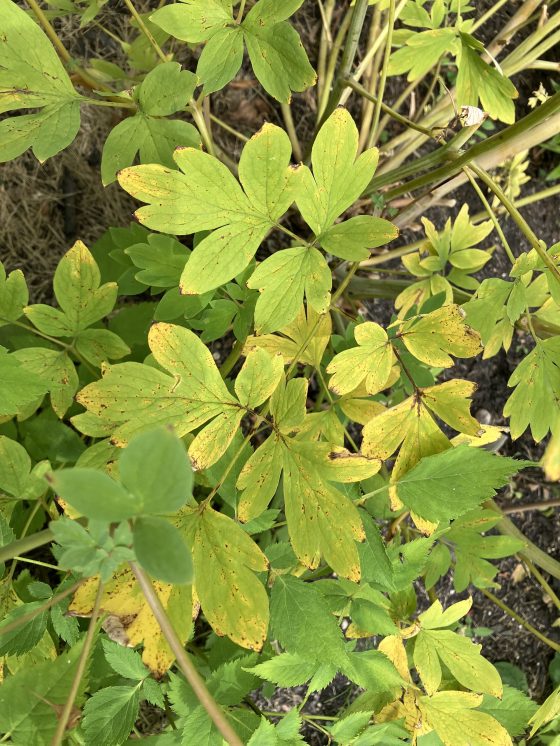
Bleeding Heart with yellowing leaves. (Supplied photo)
In August, a reader contacted Winnipeg Gardener and asked, “I’m wondering if you have heard about bleeding hearts turning yellow with brown spots and edges this summer. This is happening to my plant and I’ve seen it in others on my neighbourhood walks. Have you heard of this problem this summer? Any thoughts as to what to do with the plant?”
As a spring-blooming perennial, Common Bleeding Heart (Dicentra spectabilis) is at its peak in May and June. After it has finished blooming, the lobed foliage looks lovely in the garden for a few weeks, however hot and dry conditions in summer begins to take its toll.
Gradually the plant loses its vigor and the foliage starts to yellow or turn brown. The good news is that your plant looks healthy and shows no signs of disease.
It’s possible to maintain consistently green foliage on Bleeding Heart longer into the summer season with average watering or regular precipitation. A layer of mulch helps to conserve moisture. That said, soil that is too wet can also contribute to yellowing leaves on Bleeding Heart.
There is another type of Bleeding Heart that provides a longer display. King of Hearts Bleeding Heart (Dicentra Formosa) blooms from May to August. It grows to a height of about 25 cm and has striking blue-green, fern-like foliage.
The horticultural legacy of Louis Lenz
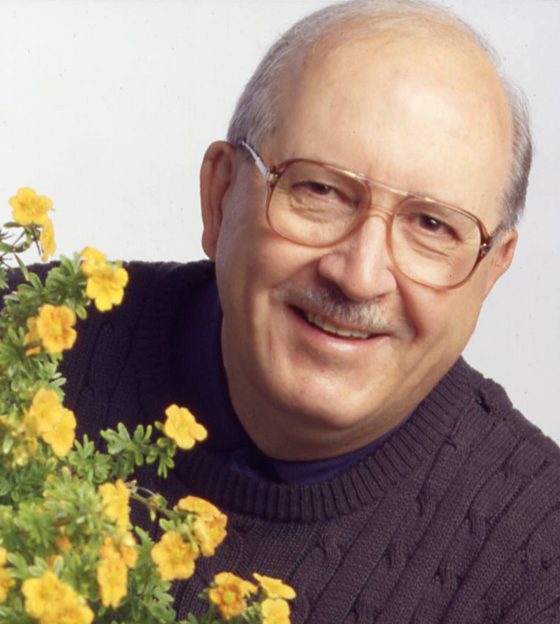
Professor Louis Lenz with Mango Tango Potentilla. (Gould Photography)
The research and ornamental plant breeding by Professor Louis Lenz has left an indelible mark on horticulture in Manitoba. He spent his 31-year career at the University of Manitoba in the Department of Plant Science, before retiring in 1995.
Professor Lenz influenced not only students of horticulture to pursue plant breeding but also inspired countless home gardeners to delve deeper in their knowledge and understanding of plants. He volunteered many hours by offering evening courses and workshops and was readily accessible when gardening groups had plant questions.
In the 1980s, Lenz developed Pink Beauty Potentilla. Today Pink Beauty is sold annually by the tens of thousands and has a strong presence in not only Prairie landscapes but also in Europe. Pink Beauty received the prestigious Royal Horticultural Society Award of Garden Merit.
Lenz also produced Mango Tango, a potentilla with orange bi-colour flowers with a red centre. His breeding work has provided the basis for other potentilla varieties such as Mandarin Tango, a cross between Mango Tango and Red Robin which was introduced by Jeffries Nurseries.
In 2010, Lenz was awarded the A.P. Stevenson Commemorative Award by the Manitoba Horticultural Association. Inaugurated by the MHA in 1932, the award honours individuals who have “made a conspicuous achievement in the field of practical horticulture”.
Professor Louis Lenz passed away on Aug. 13. He was 91.
Mark your calendars
• Volunteer seed harvesting: The Living Prairie Museum at 2795 Ness Ave., has 13 hectares of tall grass prairie and on Sept. 11, 18, and 19, volunteers are invited to help gather seeds, learn about native seed harvesting, and take home some of the seeds that are collected! Register for one or more sessions by contacting prairie@winnipeg.ca or call 204-832-0167. More details on their website.
• FortWhyte Farms hosts its Annual Harvest Supper on Sept. 12, 5:30 p.m. to 9 p.m., 1961 McCreary Rd. Guests will be seated inside a large tent located at the farm site. Featuring farm-grown ingredients, this year’s Harvest Supper will be prepared by Good Buds Catering and Chef Jonathan Rahim. Games, behind-the-scenes tours, and live music. Tickets are $165. For details and tickets, visit Fort Whyte’s website.
• The Harvest Moon Festival, celebrating the harvest season and local food production, takes place Sept. 13 to 14 in Clearwater. There will be a great lineup of workshops and live music. Full details.
• Rick Durand, prairie tree researcher and plant breeder, offers a free Zoom presentation on new, cold hardy plants and what to consider when adding new plants to your garden in our changing urban environment. Sept. 14, 1 p.m., register online.
• Sit down for dinner under a tent on Sept. 15 when Ben Kramer and other local chefs transform produce cultivated in the South Osborne Permaculture Commons into appetizing dishes. Beginning at 5 p.m., the South Sustainable Osborne Community Cooperative Harvest Dinner takes place at the South Osborne Community Orchard, Baltimore Road and Churchill Drive. Tickets are $105. More details.
• Riverbank ReLeaf live webinar: Join Trees Winnipeg’s certified arborist and the Friends of the Living Prairie Museum online to learn how to protect your property from riverbank erosion. Sept. 17, 6 p.m., register online.
• Beausejour Daylily Gardens hosts its annual Fall Surplus Sale on Sept. 21. Choose from 50 unique daylily cultivars as well as an assortment of lily bulbs and other perennials. 1st St. North in Beausejour, 9 a.m. to noon, rain or shine.
• Trees Winnipeg presents its Fall ReLeaf sale on Sept. 27. This year’s event is an online sale! Nearly 400 trees will be available at a cost of $35 each, including taxes, a tree guard and mulch. Email Trees Winnipeg for more information.
• The Manitoba Regional Lily Society hosts its annual Fall Bulb Sale at T&T Seeds in Headingley on Sept. 28. There will be a wide selection of Asiatic, Martagon, and Longiflorum Asiatic lilies as well as Orienpet and species bulbs from suppliers in Manitoba and across Canada. A bulb list will be posted on the MRLS Facebook page.
• The Manitoba Homesteading Show and Farmers Market is happening Sept. 28 at Grande Pointe Park, 423 Bernat Rd., Grande Pointe from 10 a.m. to 3 p.m. There will be 20-minute presentations throughout the day and a marketplace with homegrown and homemade products. More details online.
Your questions, answered
Have a question for a gardening expert? Reply to this email with your question and we’ll seek answers from some of Manitoba’s most knowledgeable gardeners. If you’re asking about a problem with a plant or pest, please attach a photo to help our experts diagnose the issue.
|