|
A few weeks ago, I watched the 2024 Netflix documentary Buy Now! The Shopping Conspiracy.
It’s one of those docs that doesn’t really tell you anything you don’t already know in your heart of hearts — yes, we all have too much stuff which is why there’s an entire cottage industry dedicated to “storage”; yes, we all lean too hard on convenience culture, from Amazon Prime to fast fashion; yes, planned obsolescence, that reason you must upgrade your phone every other year, is the devil’s work — but put all together and it makes you want to never buy anything again.
There’s some very strange use of an AI-voiced narrator which has, in turn, convinced a lot of people online the animations used in the film are also AI — animations that aren’t really necessary when you have real, live footage of Ghana’s beaches, clogged with cheap clothes. Unsettling technicolour mountains, composed of all the George and Joe Fresh and H&M and Shien people wear for a wash or two and then “donate,” most of it polyblends and forever plastics.
That a country in West Africa could become fast-fashion’s graveyard is a visual shorthand for the documentary’s biggest take-home message: we throw things away, but there is no “away.” It all has to go somewhere.
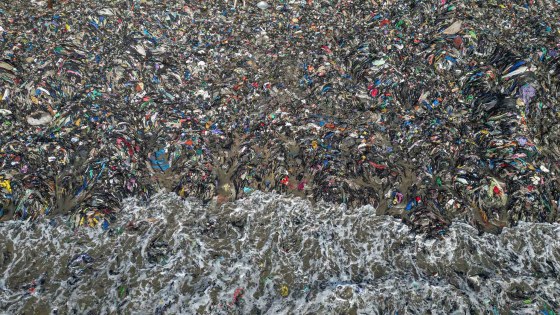
A 2024 photo of textile waste polluting the beach shore at Jamestown in Accra, Ghana. (Misper Apawu / The Associated Press)
I’m not on any kind of horse, high or otherwise, on this file. I have fast-fashion labels in my closet. My iPhone case and my toothbrush and the plastic claw clip currently holding my hair off my neck will outlive me by several generations. I have ordered things from Amazon, though I really try not to.
My relatively small house combined with an eye-twitch aversion to clutter has kept my buying habits under control. But I, too, have been Instagram-influenced into purchasing things I don’t need more often than I’d like to admit because I think I deserve a lil’ treat for surviving the horrors.
During the pandemic, it felt like shopping was all we had. I even wrote a newsletter about life-changing (and baffling) pandemic purchases — purchases that made life easier, more frictionless. Because some purchases feel like that, especially when things are hard. Hardcore Nexties will remember I dropped, like, several hundred words about a griddle. Dark times!
Even this week, I bought new glass containers for lunches that have separate compartments and, just now, eating my beautifully separated no-food-touching-other-food lunch out of one, I had two thoughts, “these are amazing” (a word that should probably be reserved for sunsets or Monet’s Water Lilies, not Vida by PADERNO Glass Clip Food Storage Container Set with Compartments and Leakproof Lids) followed promptly by “I should have bought more.”
They already come in packs of three.
I’ve been trying to be more mindful about what I am purchasing — if anything at all — and more critically, why I’m purchasing it. I’ve seen low-spend and no-spend challenges proliferate over social media, but those kind of stress me out, too, since I tend to slip into all-or-none thinking as soon as I see the word “challenge.”
I’m here for the “de-influencing” videos. It’s like the opposite of influencer content, showing you that you already have everything you need and stuffing ourselves at the buffet of capitalism only leads to debt, destroyed West African beaches and microplastic in our brains. They are a reminder to be grateful, a reminder that if you focus only on lack, you will always want.
I already know that, of course. I already know, in my heart of hearts, that I don’t need anything. Wanting, however, is a different beast — a much harder one to tame, and a much easier one to exploit.
Advertisement
|