FIVE STORIES ON TURTLE ISLAND
1. Speaking of Indigenous languages, a fascinating story is emerging out of the British Columbia, where there has been massive movement to incorporate Indigenous languages into mainstream venues.
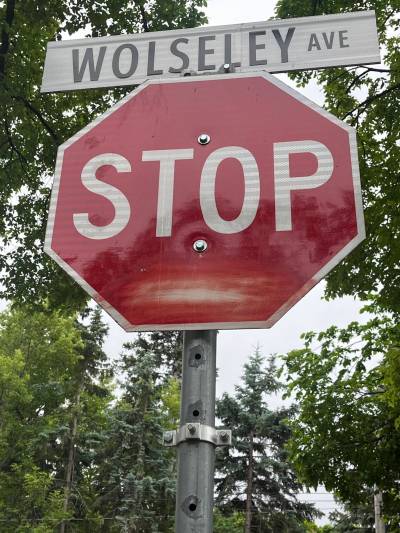
In Vancouver, the formerly-known Trutch Street in the city’s west end has been renamed šxʷməθkʷəy̓əmasəm Street (pronounced sh-MUS-quee-um-AW-sum) in the Musqueam language.
The street is long (nearly 18 blocks) and, converted on June 20, it is the first street in the city to have a legal name in an Indigenous language.
This makes sense because all of Vancouver’s west side is unceded Musqueam territory.
The problem is that Vancouver’s other private and public institutions do not recognize the name change. A Vancouver resident on šxʷməθkʷəy̓əmasəm Street says his banks, his credit card companies, and even the province’s medical service plan provider do not have the infrastructure to recognize non-alphabetical letters.
Vancouver mayor Ken Sim says people can use the anglicized version of the name, “Musqueamview.” But that ain’t the point.
2. Moments after the Senate passed the controversial Bill C-5 on June 26, Prime Minister Mark Carney promised to hold a series of “national summits” with First Nations, Métis, and Inuit leaders in July — with the first being with First Nations on July 17.
As of yet, however, no formal invites have been sent, no venues have been booked, and no agenda has been proposed.
There is increasing concern in Indigenous leadership circles that the Canadian government is returning to a pre-Justin Trudeau-era style of governing when it comes to engaging Indigenous rights.
As many know, the systematic, dysfunctional and hierarchal processes of engaging with Indigenous communities led to the Idle No More movement a decade ago.
3. Over the past year, a number of Canadian cities and the province of British Columbia have declared June 30 as Indigenous Survivors Day in honour of Indigenous children removed from their families by Canadian institutions.
Thunder Bay, Ont., Moose Jaw, Sask., and Surrey, B.C. have all proclaimed Indigenous Survivors Day.
Locally, my hometown the city of Selkirk proclaimed the day last year, claiming it offers an “opportunity to recognize and honour the resilience, strength, and cultural heritage of Indigenous communities that have endured historical traumas, including the ’60s Scoop, the Millennium Scoop, birth alerts and the enduring legacy of residential schools.”
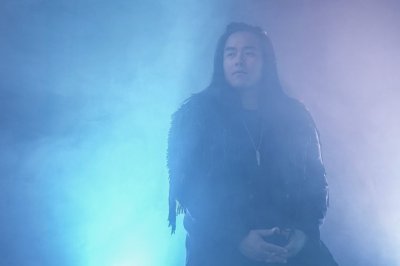
4. The Manitoba Indigenous music community is mourning the loss of David Dorian Boulanger, (Kiwizenz-Tawagun), who died this week.
Boulanger was the lead musician in Burnt Project 1, which won a Juno award in 2006 for its second album Hometown in the Aboriginal Recording of the Year category. Most notable was Burnt Project 1’s performance at the 2013 Indspire Awards.
Boulanger was a father and an advocate for traditional culture, and someone who did not shy away from speaking and singing about his personal struggles. He was also a visual artist who recently installed a mural at Red River Polytechnic.
As someone who spoke with Dave many times, I can truly say he was a force in this world — and will be in the next.
5. The singer Beyoncé is in hot water this week for wearing a T-shirt on her European tour that celebrates “Buffalo Soldiers” who killed Native Americans and Mexicans.
“Buffalo Soldiers” was a nickname given to post-Civil War African-American infantry soldiers who fought on the western frontier, running campaigns primarily against Native Americans and Mexicans while escorting and protecting settlers onto stolen land.
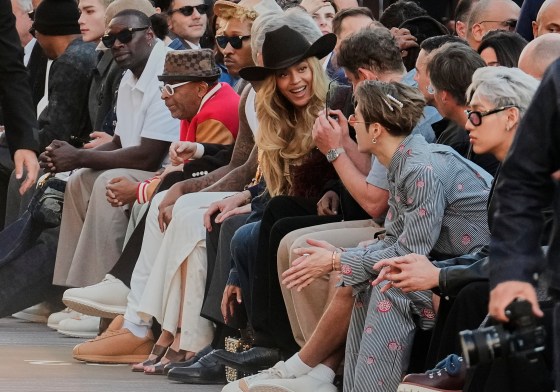
Beyonce attends the men’s Louis Vuitton Spring-Summer 2026 collection fashion show in Paris on June 24, a few days after wearing a T-shirt during her Paris concert that drew criticism. (Michel Euler / The Associated Press files)
For many African-Americans, they are freedom fighters and national heroes.
For many Native Americans, they are freedom deniers and genocidal killers.
On Beyoncé’s shirt were images of the Buffalo Soldiers on one side and on the back the phrase: “their antagonists were the enemies of peace, order and settlement: warring Indians, bandits, cattle thieves, murderous gunmen, bootleggers, trespassers, and Mexican revolutionaries” — prompting criticism from Indigenous activists and doubts the singer understands the intricacies of American history.
IN PICTURES
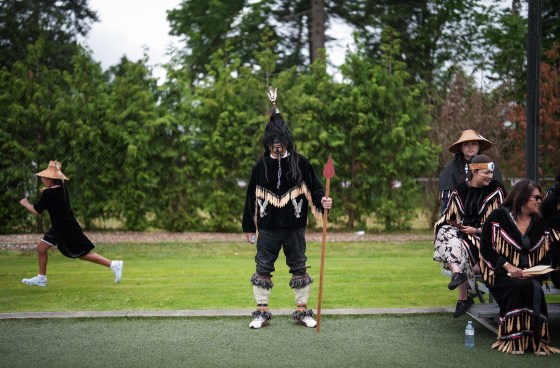
Musqueam Nation member Wes Grant, centre, wears ceremonial dress in Vancouver as a memorandum of understanding is announced regarding hosting FIFA World Cup 26 matches, in Vancouver on June 27. The MOU between the provincial government, city and the Musqueam, Squamish and Tsleil-Waututh Nations sets out a framework on how they will all work together to plan, stage and host matches, while ensuring interests of the nations are reflected. (Darryl Dyck / The Canadian Press files)
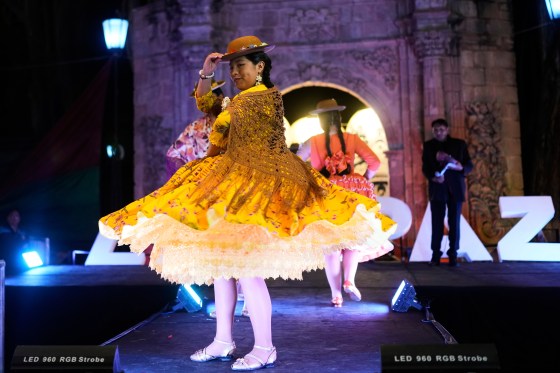
A woman competes in the Miss Cholita Pacena beauty pageant, an annual contest aiming to recognize Aymara Indigenous women’s fashion and beauty, as well as their command of the Indigenous lifestyle and language, in La Paz, Bolivia on June 27. (Juan Karita / The Associated Press)
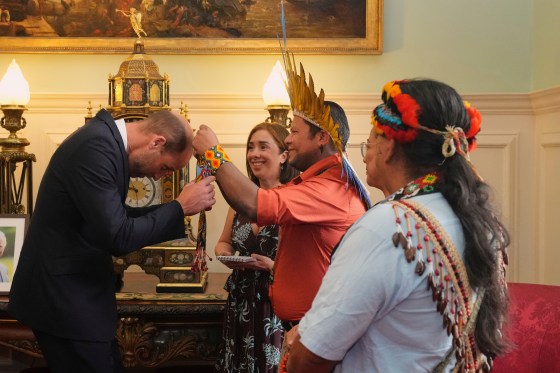
Britain’s Prince William, the Prince of Wales, receives a gift from Kleber Karipuna, Indigenous leader of the Karipuna people from Amapa, centre, Jennifer Lasimbang, Former Member of Sabah State Legislative Assembly, second right, and Juan Carlos Jintiach, General Secretary for The Global Alliance of Territorial Communities. The prince, in his role as founder of The Royal Foundation’s United for Wildlife program, attended a roundtable event entitled Nature’s Guardians at St James’s Palace in London on June 26. (Frank Augstein The Associated Press/ Pool)
RECONCILI-ACTION OF THE WEEK
Every week I highlight an action, moment, or milestone forwarding reconciliation, illustrating how far Canada has come – and how far the country has yet to go.
This week’s reconcili-action of the week is an impressive set of hockey-related events.
First there was the international hockey summit in Winnipeg June 17-19 at the Fort Garry Hotel, in which an entire day was spent discussing Indigenous contributions to ice hockey, including a keynote speech by former Manitoba cabinet minister Kevin Chief, who is now True North Sport and Entertainment’s senior advisor of community development.
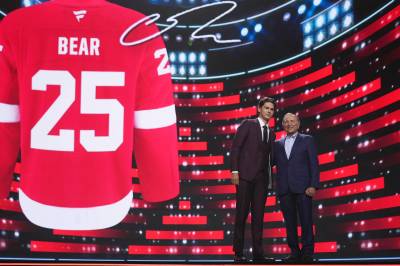
Then, there were back-to-back Indigenous hockey players picked in the NHL entry draft first round, when the Philadelphia Flyers picked Wiikwemkoong First Nation centre Jack Nesbitt with the 12th selection while the Detroit Red Wings picked Peguis First Nation left winger Carter Bear with the 13th selection.
Then there was news that award-winning hockey coach and former player Ted Nolan from Garden River, Ont., was selected to receive the Order of Canada.
There was also this amazing story of visually impaired Indigenous hockey players succeeding on the national “blind” hockey team.
Speaking of amazing, big congrats to both the men’s and women’s Under-18 teams from Manitoba who were champions in both categories in the National Aboriginal Hockey Championships last month in Kamloops, B.C.
|