FIVE STORIES ON TURTLE ISLAND
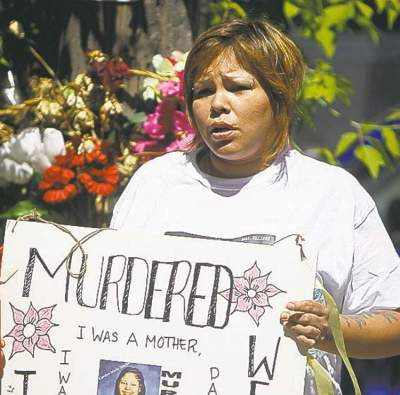
This week, the Indigenous-led organization Giganawenimaanaanig (“We All Take Care of Them”) released its final report exploring the need for a Manitoba-wide Red Dress Alert — a system that would inform and co-ordinate a systemic and community response when an Indigenous woman, girl or two-spirit person goes missing.
The report was funded by the federal government and was created after a year of consultation with Indigenous organizations, leaders, and families of victims, survivors of violence and members of impacted communities.
It aims to address a long-standing conflict (particularly between police and Indigenous communities) over how to address the issue of missing Indigenous relatives.
The Manitoba provincial government is now looking at implementing the system and is already planning to implement a 24-7 phone line that can assist Indigenous families and victims.
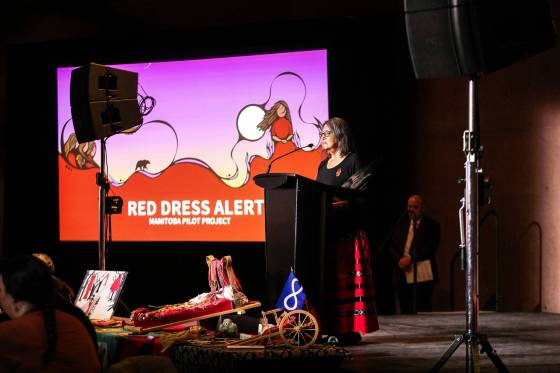
Thelma Morrisseau speaks at the Red Dress Alert report release event on Tuesday. (Mikaela Mackenzie / Free Press)
Reverberations and a “N0” movement are already emerging across B.C. First Nations in anticipation of Canada signing a memorandum with the Alberta government for a pipeline deal this Thursday.
The pipeline is intended to be built across northern B.C.
B.C. premier David Eby has already expressed frustration at being “left out” of the talks, which he knows drives a wedge between First Nations and Canada over the issue of the environment and the infringement of Indigenous rights.
There is also the little issue of the safety and tide concerns surrounding tanker ships in northern B.C., resulting in a 2019 federal oil-tanker-ship ban because an oil spill to this coast would be devastating and irreversible.
A pretty interesting constitutional dispute is emerging in Québec after premier François Legault’s government drafted a constitution without the inclusion and consent of First Nations. The constitution ignores their status as sovereign nations.
The Québec government proposed Bill 1, the Québec Constitution Act, last month and proposes to protect “Québec’s common values” which includes French, secularism, and gender equality — but ignores, for the most part, Indigenous rights, sovereignty, and nationhood.
I wonder when in the past Canadians may have seen a government propose a constitution that ignores Indigenous rights? We know what happened then.
In memoriam this week in the Indigenous world are two grassroots, brilliant and highly impactful cultural teachers and heroes who have died.
The first was Ida Bear, who was an award-winning Cree language advocate, teacher and curriculum developer who was honoured by the University of Winnipeg, where she worked for years.
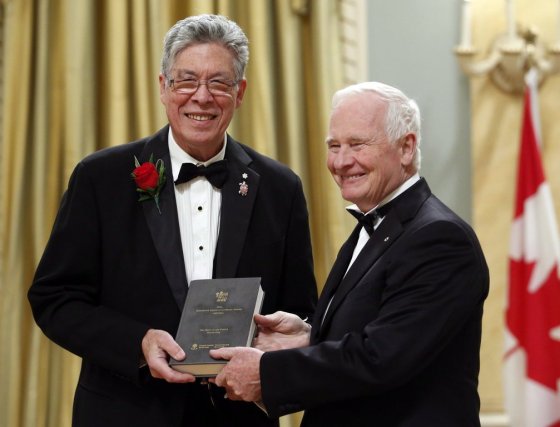
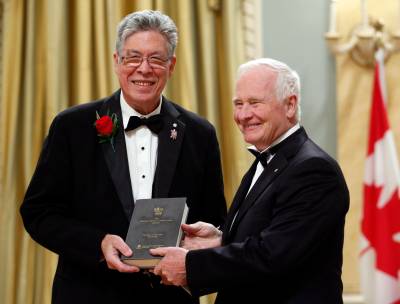
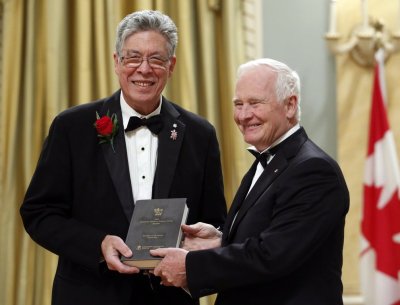
The second was Ian Ross, who was an Anishinaabe playwright, theatre teacher, and Governor General Award winner for his play, fareWel.
Ross was perhaps better known to many as the hilarious, insightful and always kind “Joe from Winnipeg.”
Both will be missed in our hearts, classrooms, and ceremonies.

Ian Ross during the set construction for The Third Colour in 2019. (Phil Hossack / Free Press files)
My last news item for the week is an optional viewing for you. For 30 minutes this week, I was the featured guest on the APTN TV show and podcast Face to Face with host Dennis Ward.
I discuss the “frustrating” pace at which the TRC calls to action are being implemented, Indigenous education in schools and universities, and new book projects I am working on. Check it out here.
IN PICTURES
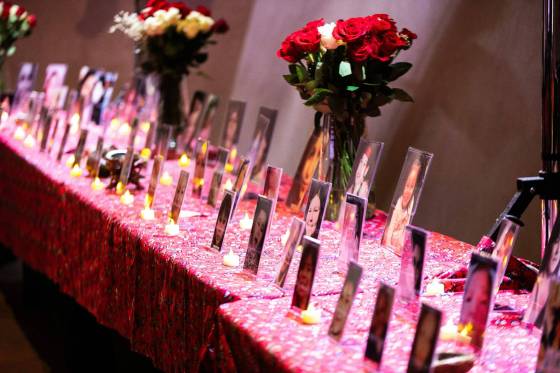
A long table holds photos of some of Manitoba’s missing and murdered Indigenous women, girls and two-spirit people at the Red Dress Alert report release event on Tuesday. (Mikaela Mackenzie / Free Press)
RECONCILI-ACTION OF THE WEEK
Every week I highlight an action, moment, or milestone forwarding reconciliation, illustrating how far Canada has come — and how far the country has yet to go.
This reconciliaction of the week is out of this world.
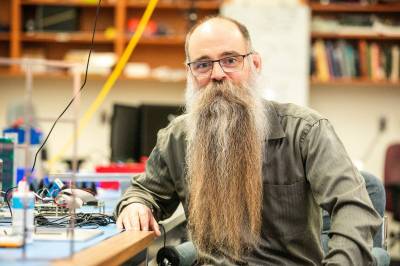
At the University of Manitoba, researchers with the STARLab team and Magellan Aerospace are working to develop a CubeSat, a milk-carton-sized satellite that will eventually orbit, map and collect data about the moon.
That’s cool enough, but an even cooler part of the project is Indigenous knowledge and youth are a foundational part of the building team, providing traditional knowledge for the lunar navigation system.
This is not the first time STARLab has created a satellite, but it is the first time Indigenous knowledge and youth are being used to help with the project.
The project will also help provide northern Inuit communities with information around ice safety conditions and climate change.
If you want to keep track of the progress of this amazing project, check it out here.
|