|
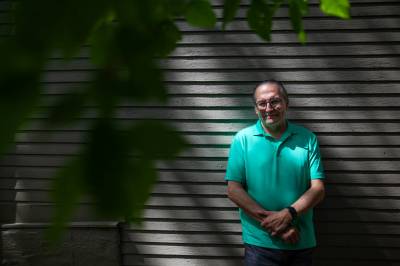
Way back in 2002, while working at Uptown magazine, I had an interview with Damian Jurado, an indie singer-songwriter from Seattle whose album I Break Chairs remains one of my favourites.
As you may recall, in 2002 the U.S. was being led into war with Iraq by a dunderheaded Republican president we naively thought was among the worst we would ever see, so I asked Jurado what he thought his role was, in terms of the long tradition of antiwar protest songs from folk singers.
His response took me aback. “All entertainers should shut up about the war — nobody cares what they have to say,” he wrote (it was an email interview). “Besides, protesting a war that’s already begun is an act of sedition.”
Advertisement

Jurado, a devout Christian, told me he believed the president was God’s appointee and therefore not to be contradicted. But his assertion that nobody cares what entertainers have to say is patently false.
From Woody Guthrie with his “This Machine Kills Fascists” guitar to Green Day and their anti-Bush concept album American Idiot, musicians have never shied away from taking on the powers that be in ways both melodic and meaningful, ways that have resonated deeply with listeners.
The ‘60s were obviously a heyday, with folk artists protesting the Vietnam War, moving to punk in the ‘70s and ‘80s, and hip hop in the ‘80s and ‘90s. Even an artist as anodyne as late-period Sting penned a few pointedly political pop songs.
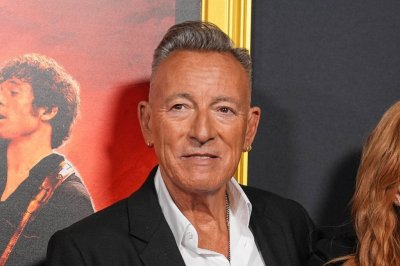
This week, Bruce Springsteen — no stranger to critiquing America — released Streets of Minneapolis, a protest song condemning the actions of ICE in Minnesota (see columnist Jen Zoratti’s take here).
It is, frankly, not destined to be an enduring anthem, but it places the brutality squarely at the feet (and under the boot) of the Trump regime, and bristles with suitable rage; the accompanying video, featuring actual footage of the events, helps drive the point home.
More importantly, it’s filling a void, a strange lacuna in the protest-song pantheon during a time when one might argue we need them more than ever. (The song immediately topped the Apple Music charts and has hundreds of thousands of Spotify streams.)
Too be clear, it’s not as if there aren’t other artists taking up the Phil Ochs mantle to protest — see Grammy-nominated roots artist Jesse Welles’ super-timely oeuvre, including the wicked track Join ICE, (“I got picked on in school / I never felt that cool / there’s a hole in my soul that just rages / All the ladies turned me down / and I felt like a clown / will you look at me now / I’m putting folks in cages”).
But where are the reactions from other Springsteen-level artists; where’s the rage from, say, Rage Against the Machine? Or, perhaps more importantly, younger artists with even wider reach, mainstream radio play and broader social media presence?
Now is the time to voice dissent, when people need to know they’re not alone. The Boss got it right, penning his song in a day, defying his usual painstaking process.
A Ryan D’Aquisto writes for Esquire: “He wasn’t trying to make a hit. He was trying to make a statement. And perhaps even more than, I like to think he was sending out a call to action. You know this is wrong, he’s saying to his fellow recording artists. No matter your political allegiance. No matter your fanbase. You know it. So use your voice. Sing your song.”
Because, contrary to what Jurado believes, we do care what songwriters say. We rely upon them to put into words the things we cannot, to frame the horrors around us and hold the perpetrators to account. In these dark times, we need art that inspires us to raise our voices in unison.
|