FIVE STORIES ON TURTLE ISLAND
1. A very ugly — but unfortunately all-too-regular — incident took place at a downtown Dollarama this past weekend and video of it on social media has sparked protest and criticism regarding the way security staff treat Indigenous peoples.
In the video, a man wearing an Impact Security uniform sits on top of an Indigenous man and — while wearing what appears to be brass knuckles — violently slaps, punches and kicks him while threatening to kill him and yelling at individuals recording him.
Winnipeg police were called to the store Saturday afternoon after a 46-year-old man, the victim of the assault, was accused of leaving without paying for items (and later charged with robbery and uttering threats). None of this excuses the actions of the 23-year-old security guard, though, who has now been removed from work by Impact Security and is being investigated by Winnipeg police.

Winnipeg police say an investigation was launched after video surfaced of a security guard beating an alleged shoplifter at a downtown Dollarama. (Chris Kitching / Free Press files)
Indigenous leaders and individuals who live downtown say they are regularly targeted, monitored, and harassed — and this case assaulted — by security staff who lack appropriate training, sometimes have racist views, and unnecessarily escalate incidents as a result.
This isn’t the only incident like this. Check out this one, and this one, or this one where a former security officer even points out that staff are told most often to watch Indigenous customers.
The big question, though, is if this is the incident that we see because bystanders recorded it, how many incidents do we not see?
2. Considering that the above incident likely has something to do with the growing issue of poverty in our city, this might be a good time to remind everyone who works, lives, and plays in this city that the 2024 Winnipeg Street Census revealed that 2,469 people are experiencing homelessness in our community (double the number recorded in 2022) and almost 80 per cent identified as Indigenous.
Leaders have called the growing, desperate situation of many who live downtown as a “crisis” that was exacerbated during the COVID-19 pandemic.
Without question, the current Manitoba government has had some success in addressing the issue — particularly in housing — and the city is studying a “managed encampment to housing” pilot program but clearly a more focused, direct approach led by brave and committed individuals and citizens like this one continue to be needed.
3. Arguably the most complicated Indigenous land rights issue in Canada is in B.C., where most of the province has never been negotiated for, ceded, or covered by historic treaties. This means that Indigenous title and rights were never formally surrendered or recognized and “modern treaties” are currently being negotiated in order for Canadians to legally and legitimately share the land with First Nations.
This has created some very weird situations – such as in 2010 when the Vancouver Olympics were literally disputed by some First Nations because every sport would be played on “stolen land.”
In a fascinating step this week, the federal government and the Musqueam Indian Band agreed to three deals that recognize the First Nation’s Aboriginal rights and increase its role in fisheries and marine emergency management in an area that encompasses Greater Vancouver. For some interesting reading, here is the wording of the actual agreements — which importantly identify that the recognition of Indigenous title do not have effect on privately owned land (but the profits and taxes from that land may be shared).
If anyone needed proof that the recognition of Indigenous title does not mean Canadians suddenly lose their privilege, homes, and whatever else — as fear-mongering pieces like this suggest — this is it.
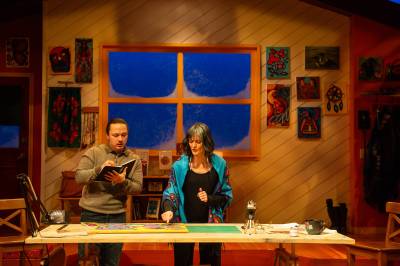
4. There are two very impressive Indigenous-authored plays this month at Prairie Theatre Exchange and the Manitoba Theatre Centre. The first — on right now to March 8 — is The Undeniable Accusations of Red Cadmium Light by Anishinaabe writer Drew Hayden Taylor. The show is a funny and dramatic examination of the complicated artistic legacy of Anishinaabe artist Norval Morrisseau and was overviewed nicely by my Free Press colleague Ben Waldman.

Playwright Drew Hayden Taylor once tried his hand at drawing, and failed. (Supplied)
Showing soon at the Royal Manitoba Theatre Centre from March 11-28 is Cree playwright Rhonda Apetagon’s new play In the Shadow Behind the Pines, a self-described “atmospheric ghost story” that “explores the shadows of Indigenous life and lore with a hint of humour.” Early buzz is exciting for this one as it comes from the very successful Pimootayowin Creators Circle — an Indigenous writers group mentored by the late GovernorGeneral’s Award-winning playwright Ian Ross, who died in November 2025.
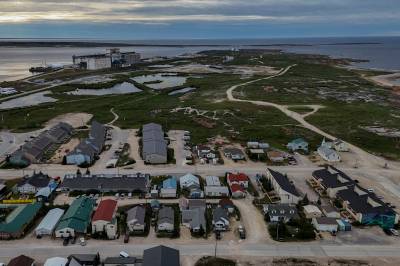
5. This week our colleagues at APTN Investigates did a very thorough and fascinating report into the ways Leaf Rapids, Manitoba is recovering after wildfires devastated the community last summer. The scariest part of the report is that the community is gearing up to what looks like another set of fires a month away and is scrambling to prepare. I don’t like ending the newsletter on such a dire, scary message but the clock is really ticking on another season of upcoming wildfires in Manitoba due to what are called “zombie fires” that slowly burn through the winter and burst out in the spring.
IN PICTURES
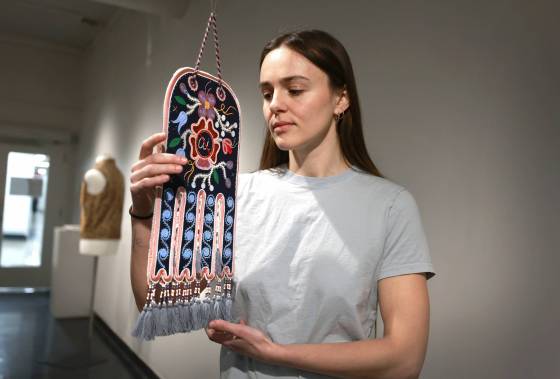
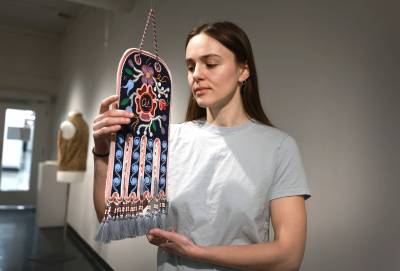
Métis visual artist Claire Johnston’s beaded octopus bag, part of her exhibition on now at Gallery 1C03 at the University of Winnipeg, includes messages protesting the use of AI. (Ruth Bonneville / Free Press files)
RECONCILI-ACTION OF THE WEEK
Every week I highlight an action, moment, or milestone forwarding reconciliation, illustrating how far Canada has come — and how far the country has yet to go.
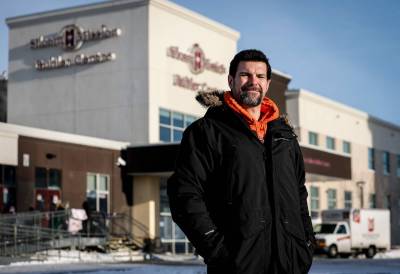
This week’s reconciliaction of the week is the beginning of construction of a new two-thousand square foot Indigenous healing space designed for children and their families accessing health care at HSC Children’s Hospital. The first of its kind, the $2.2-million centre will include an area for traditional Indigenous ceremonies such as smudging; a place for Indigenous Elders, healers and Knowledge Keepers; library space for Indigenous language books; a breastfeeding corner; a private space for personal conversations; and technology which allows for children whom are unable to leave the hospital to have access to ceremonies and programming, as well as connect with remote communities, family and Elders.
At the opening of construction, Métis pediatric surgeon and leader in Indigenous health Dr. Melanie Morris called the future space an example of “real reconciliation.” Indeed.
|