FIVE STORIES ON TURTLE ISLAND
1. For anyone familiar with the nuanced Indigenous issues in Canada and Manitoba, you know there is an uncomfortable division between the Métis and First Nations over issues of jurisdiction, land claims and resource use. Take this issue of the Manitoba government “returning” the lands of Ste. Madeleine to the Red River Métis, for example.
This has been made more complicated during the past ten years as the federal government has recognized Métis rights without including First Nations leadership, leading to worries and confusions over whose rights are the most right.
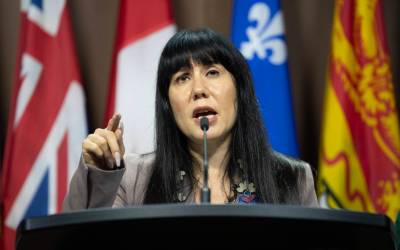
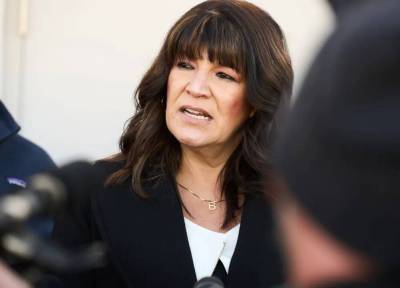
Well, after the federal government entered bill C-21, legislation which forges a treaty and codifies the Manitoba Métis Federation’s (MMF) right to self-government, Assembly of First Nations National Chief Cindy Woodhouse-Nepinak called for the bill to be stopped because First Nations “voices” have not been “respected, protected, and upheld.”
This led to MMF president David Chatrand decrying this act as “fearmongering” and “misleading,” and said, “It’s not up to her to tell you if you can govern yourself with a treaty.”
To be frank, it’s impossible to imagine how any treaty made with Métis people would not overlap with First Nations treaty rights (we are, after all, related to one another) but there has got to be a better way for Canadian and Indigenous leaders to work this out instead of in front of a public who definitely do not understand the nuances of this issue.
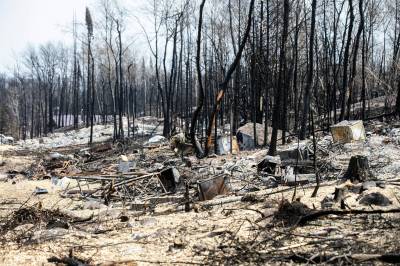
2. Last week, leaders from First Nations throughout Manitoba called upon the province to commit to “meaningful action” to address systemic failures they say were exposed during the 2025 wildfire season — one of the worst in the province’s history.
As my Free Press colleague Julia-Simone Rutgers points out, between last May and August, fires tore through 2.3 million hectares, decimated provincial parklands and forced more than 33,000 residents out of their homes, while two people died and at least one firefighter was severely injured.
First Nations leaders are asking for increased jurisdiction over wildfire response, funding to be directly available in emergencies, more reliable backup power systems, improved road and hydro infrastructure, and clear and timely plans for evacuees.
In other words, a real and legitimate “partnership” approach in dealing with this province’s most growing crisis — and something I wrote about last March.
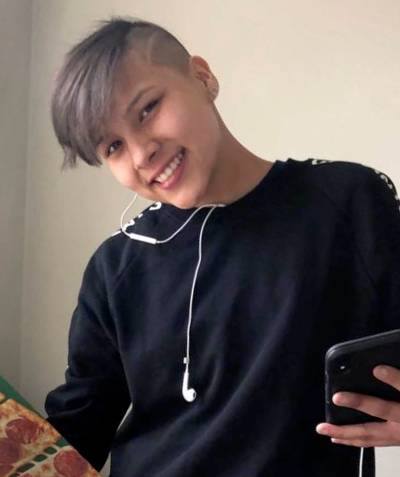
3. The inquest into the Winnipeg police shooting of 16-year-old Eishia Hudson continues this week.
Hudson was killed six years ago and I’ve written about the importance of this inquest before. I’ve also written about how the killing of this young Indigenous person seems eerily similar to racially motivated shootings in other places.
I hope everyone is keeping their eye on news reporting as I am told by some insiders that there are some very significant testimonies being offered this week.
4. This past weekend was the end of an era; after 43 years, the largest powwow in North America, the Gathering of Nations, held its final celebration on April 24 and 25 in Albuquerque, New Mexico.
To get a scope of the hugeness of this gathering, check out this news story here.
Known as the “Last Dance,” this event brought together more than 100,000 dancers, singers, artists and community members from hundreds of tribes across the U.S. and Canada, including lots of contingents here from Manitoba. As has been the case for 43 years, this Gathering of Nations featured the Miss Indian World pageant, a craft and trader’s market, and the much-beloved annual horse and rider parade. The Gathering of Nations is an event that influenced other powwows and similar celebrations across the continent. It will be missed.
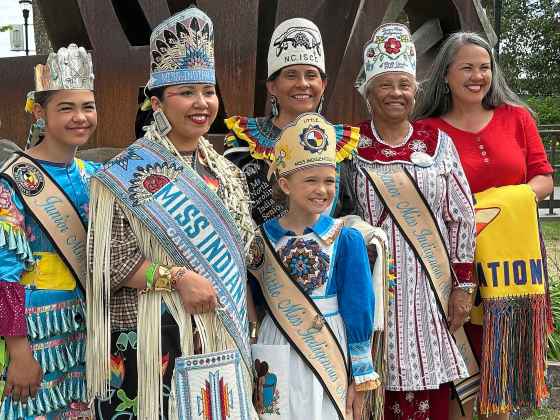
Miss Indian World Dania Wahwasuck, second from left, poses with powwow royalty on the last day of the final Gathering of Nations powwow in Albuquerque, New Mexico, on Saturday, April 25, 2026. (Susan Montoya Bryan / The Associated Press)
5. Lastly, I’m not sure if this is a “story worth watching” but Free Press readers were checking out the story about me winning the Mary Anne Shadd Cary Award for Columns at the National Newspaper Awards — it was one of the most read pieces on the Free Press website over the weekend. I cannot begin to say thank you to all of the loyal readers and supporters who have taken time to read my columns since I started here in 2018.
Speaking of 2018, that’s the last time I won this award, and this was the first column I ever wrote, introducing myself to readers.
The Free Press was well-represented at the National Newspaper Awards, with every nomination relating in some way to stories about Indigenous Peoples. And, by the way, if you haven’t had a chance to learn about Mary Ann Shadd Cary, there is truly no one better to represent the “best” in opinion writing in this country – for more, check out this video by our colleagues at The Toronto Star.
IN PICTURES
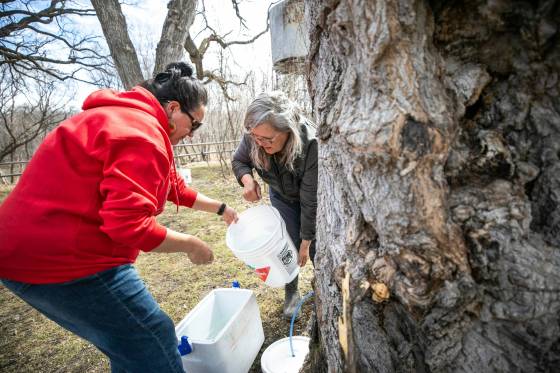
Louise May’s maple syrup project took on a spiritual aspect when kookum Christine Cyr (left) started incorporating the sugary liquid in Sundance ceremonies. (Mikaela MacKenzie / Free Press)
RECONCILI-ACTION OF THE WEEK
Every week I highlight an action, moment, or milestone forwarding reconciliation, illustrating how far Canada has come — and how far the country has yet to go.
This week’s reconciliaction of the week is to all of my Ukrainian Studies colleagues at the University of Manitoba who are holding a fascinating conference this weekend called Ukrainian Studies in Times of Global Transformations of the Humanities.
The conference will bring together Ukrainian writers, scholars and leaders with their Canadians and Indigenous counterparts to discuss everything from the war in Ukraine to how Ukrainians and Indigenous Peoples are working together in solidarity here in Winnipeg. I am one of the speakers and have been spending many years speaking about how “Ukrainian people are my people too” — such as I did in this recent talk at the University of Alberta.
I love innovative, interesting topics based in history and community-building and this conference is sure to be it.
|