Blooms for sale
Demand has been strong this spring for bouquets of fresh-cut flowers, says Nico Vonderbank, owner of Twin River Gardens, a Manitoba cut-flower farm since 1987, located in La Broquerie.
“We’ve had a good turnout at our booth at St. Norbert Farmers Market,” he says. “At Easter, people were lined up almost all the way around the building.”
Tulip harvest has wrapped up, says Vonderbank. This year, he grew Brest Double Fringed Tulip, a pink peony-shaped tulip with white fringed edges. “It’s been phenomenal,” says Vonderbank.
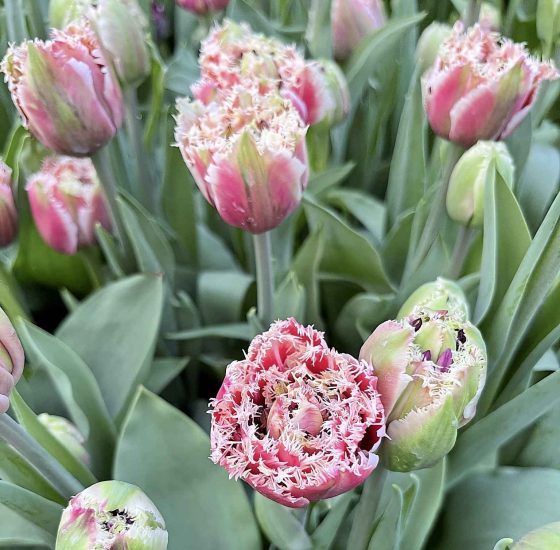
Brest Double Fringed Tulip (Nico Vonderbank photo)
Now it’s time for ranunculus and anemones.
“We started picking them a few weeks ago and will have them in supply for the next five to six weeks.”

Ranunculus make lovely cut flowers. (Nico Vonderbank photo)
Ranunculus and anemones will be followed by bouquets of snapdragons, scabiosa, cosmos, statice, and strawflowers.
If you aim to visit Twin River’s flower stand at the farmers market, arrive early! Vonderbank’s bouquets sell out in a matter of hours.
May gardening tasks
Generally, one of the first tasks in spring is to prep garden beds by cutting down perennials and applying a layer of compost or mulch. Ensure, first, that the soil in your beds is dry enough to walk on.
With a lack of April showers once again, is it too early to water? Not if you are seeing signs of winter burn on your evergreen plants. Soak them deeply to give them a good start to the growing season before warm temperatures arrive.
Set up your rain barrels, but first check for any cracks if they were stored outside during the winter.
Inspect shrubs for signs of vole or rabbit damage. Check the base of stems for bark that has been stripped away. If the damage is not severe, your shrub should be able to recover. But if the damage encircles a stem (girdled bark), this can prevent the root system from supplying water and nutrients, which flow from the roots to the branches and leaves.
Remove any broken, dead or diseased stems that you observe on your shrubs. Remove branches that are crossing with one another — these can cause damage that is further exacerbated in strong winds.
Is your Ninebark (Physocarpus opulifolius) shrub out of control? Remove up to one-third of the oldest (thickest) stems by cutting them off at the base. This helps to revitalize your shrub by encouraging fresh new growth.
Bonus: new growth produces more flowers than older stems. In addition, by opening the canopy of your ninebark to allow more air into the centre of your shrub, you will lessen the risk of powdery mildew.
Do not prune lilacs until after they have finished flowering.
Bright Ninebarks
In the past decade, several Ninebark introductions (Physocarpus opulifolius) featured dark, moody, and dramatic foliage. Think Diabolo, Panther, or Summer Wine Black.
In the mood for an invigorating splash of chartreuse or vibrant yellow?
New Honeycomb Ninebark has large, chartreuse leaves that hold their colour all season long, even in full sun. Honeycomb has attractive white flowers in the spring and gold fall colour.
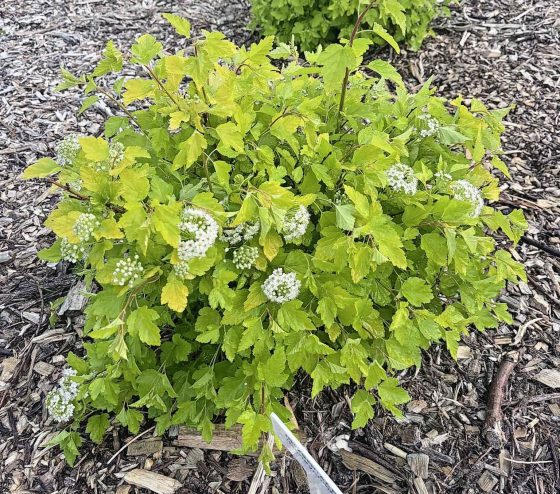
Ninebark Honeycomb shrub from First Editions (Garth Aubin photo)
Honeycomb is part of the First Editions shrub line from Bailey Nurseries in Minnesota. It was developed by the renowned plant breeder David Zlesak.
Garth Aubin, a fourth-generation member of Aubin Nurseries, a wholesale nursery grower in Carman, says he is very excited about Honeycomb Ninebark as an alternative to two older cultivars, Dart’s Gold Ninebark and Tiny Wine Gold Ninebark.
“There are not many yellow ninebarks on the market,” he says. “Honeycomb Ninebark appears to be mildew resistant from both our crop (testing) and the ones I planted in my yard.”
Honeycomb is hardy to Zone 3. Aubin expects that in our climate, Honeycomb’s mature size will be in the range of 1.2 metres tall and 1.5 metres wide.
Honeycomb prefers full sun (at least 3 to 6 hours of sun a day) but will also tolerate some shade. The soil should be kept evenly moist; however, Honeycomb has good drought tolerance once it is established.
Cougar Cub Ninebark is an exclusive ninebark from Bloomin’ Easy, a Canadian plant brand headquartered in Abbotsford, British Columbia.
Developed by plant breeder David Zlesak, Cougar Cub offers enhanced winter hardiness, which allows it to develop its vibrant yellow foliage earlier in the spring than other ninebark cultivars. It also features white spring blossoms. Mature size is approximately 0.9 to 1.2 metres tall and wide.
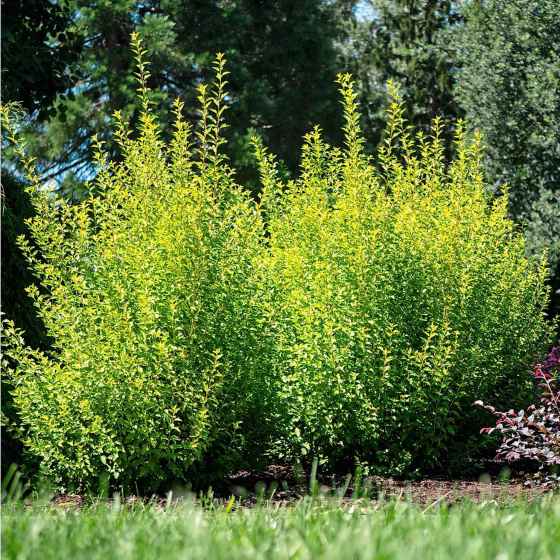
Cougar Cub Ninebark, with bright yellow foliage (Bloomin’ Easy)
Still prefer deeper shades of foliage colour? Look no further than Royal Jubilee Ninebark.
Developed by Jeffries Nurseries in Portage la Prairie around 2018, Royal Jubilee sports deep purple, nearly black foliage against dark burgundy-red branches. The overall effect when the shrub is backlit by the sun is outstanding.
This tidy shrub has pink-white blooms in spring. Mature height is 0.9 to 1.2 metres tall and wide.
I wish I hadn’t planted this
Typically described as “excellent for mass plantings,” Sem False Spirea (Sorbaria sorbifolia) is notorious for aggressive suckering. Don’t fall for it.
It beckons consumers each spring with its distinctive fern-like foliage, which features colourful tones of yellow, orange, red, pink, and lime. In late spring, the plant produces creamy white flower plumes.
Resist, if you can. Unfortunately, I didn’t do my homework on this one before I planted it.
On the plus side, Sem False Spirea has exceptional winter hardiness (Zone 2) and is adaptable to locations with poor soil that is prone to erosion. Fast-growing, it spreads quickly through underground roots.
If you have a riverbank you wish to populate as economically as possible, Sem False Spirea will do the job. Indeed, you may need only one Sem False Spirea plant to do the job.
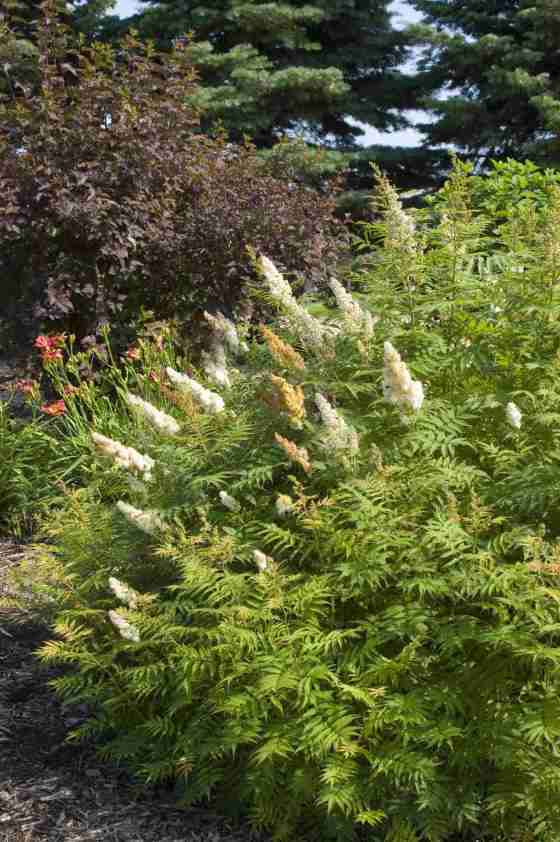
The Sem False Spirea looks pretty, but it is notorious for aggressive suckering. (Bailey Nursery)
However, if Sem False Spirea is planted in a small space, it will test your patience. Controlling its rampant growth requires annual pruning as well as digging out sucker growth with a sharp spade a couple of times during the growing season.
I would like to dig up the entire plant, but it is tenacious to say the least.
One solution might have been to sink a bottomless plastic pot into the planting hole at the time of planting. This method can act as a barrier to prevent roots from spreading horizontally and popping up randomly up to a metre away from the mother plant.
How ideal, though, is that for soil health? Over time, microplastics leach into the soil.
The best solution is to choose plants that are not invasive!
Matcha Ball Ash Leaf Spirea from First Editions is a more polite alternative. Matcha Ball was discovered in 2007 as a naturally occurring mutation by Denis Levac, a Quebec-based plant breeder.
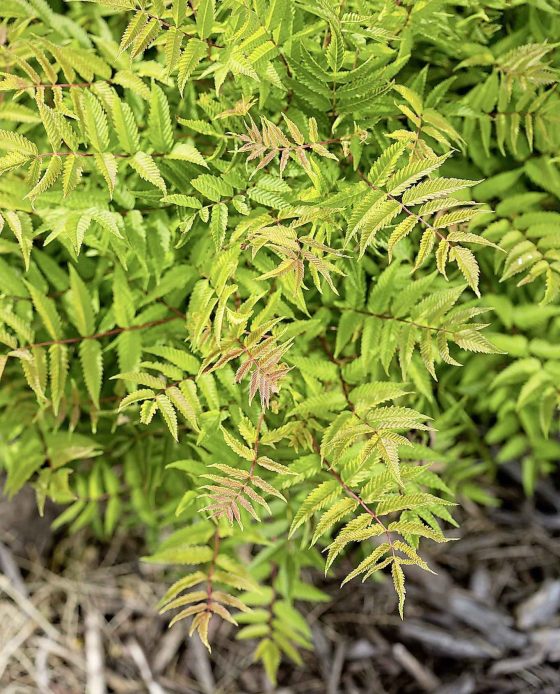
Matcha Ball Ash Leaf Spirea, a non-suckering variety (First Editions photo)
This compact, ball-shaped shrub offers fern-like foliage with hints of red and orange-peach in early spring. In summer, the green foliage colour resembles the colour of Matcha tea, hence its name. The foliage colour transitions to yellow in fall.
Unlike Sem False Spirea, Matcha Ball sparsely blooms and doesn’t develop suckers. It maintains its tight, round form throughout the growing season.
Hardy to Zone 3, Matcha Ball prefers moist, well-drained organic soil. Mature size is approximately 0.6 metres tall and 0.9 metres wide.
Choose a full sun location. Matcha Ball will also tolerate some light shade.
I wish I hadn’t dug this up
Persicaria affinis, also known as fleece flowers, is a semi-evergreen mat-forming ground cover. It grows to just 10 to 15 cm tall. The foliage is deep green and lance-shaped. The densely packed spike-shaped flowers are a beautiful rose-pink. This hardy perennial can be grown in full sun to light shade.
There are several Persicaria species. I grew Persicaria affinis Border Jewel, which is hardy to Zone 3. It is hard to find locally, although I bought mine at Schriemer’s Garden Centre.
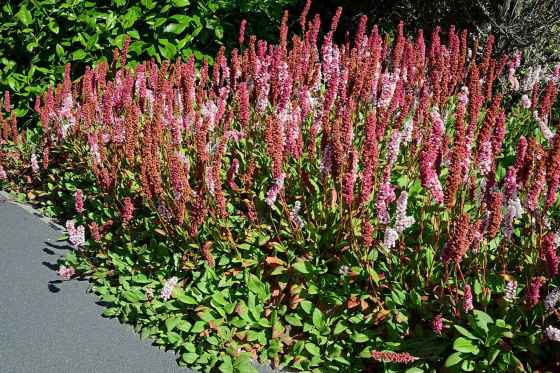
Persicaria affinis Border Jewel is a hardy ground cover. (Gary Lewis photo)
One summer, I impulsively switched out my dense planting of Border Jewel for Lady’s Mantle. While Lady’s Mantle does offer significant interest with her velvety, scalloped foliage and sprays of chartreuse flowers, it also self-seeds readily in adjacent lawn or pathways.
Are there plants you wish you had never planted or dug up? Reply to this email to let us know!
Just say no to systemic herbicide use
Glyphosate, a systemic herbicide best known as Roundup, has steadily been in the news over claims that it causes serious illness in humans and is harmful to ecosystems. In late April, the U.S. Supreme Court heard arguments in a landmark case over Roundup weedkiller.
Health Canada maintains that glyphosate is safe for human use and does not pose a risk to the environment when used according to label instructions.
Several groups, including the David Suzuki Foundation and Friends of the Earth Canada, have raised alarms about the prevalence of glyphosate residues and their harmful effects on pollinators and the habitats pollinators rely on.
I reached out to Robert Currie, department of entomology at the University of Manitoba, to inquire about glyphosate and its impact on pollinators. He suggested I contact Nancy Moran at the University of Texas in Austin. Moran is an evolutionary biologist; her studies have shown that Roundup can be harmful to bees.
“There is no doubt that glyphosate is harmful to honeybees at sufficient concentration,” said Moran in an email reply. “The main issue is the range of concentrations that bees encounter.”
The problem, she said, is that a key phrase is “when used as directed,” because humans do not always follow directions!
“At least here in the U.S., completely untrained people, some of whom do not read (instructions), can buy highly concentrated forms and distribute it in the environment,” said Moran. “To my knowledge, there are not regulations preventing direct spraying on flowering weeds on which bees are foraging. In such cases, there would be harm.
“Glyphosate kills specialized microbes in their gut and results in higher mortality. These bacteria have been shown to be protective against disease. In fact, sometimes the hives themselves are sprayed, especially with aerial spraying.”
You can learn more about Dr. Moran’s research on the effects of glyphosate on honeybees here.
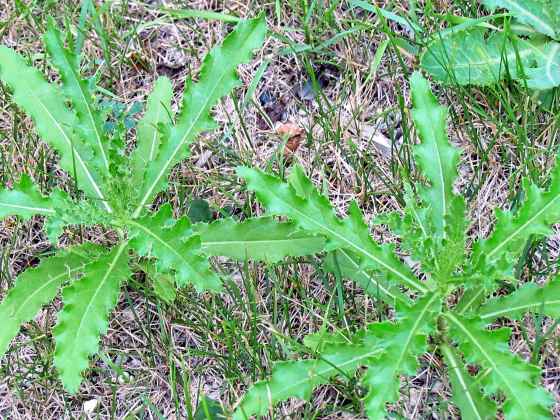
Just say no to glysophate, even on Canada thistles. (Colleen Zacharias photo)
How can you kill aggressive weeds like Canada thistle organically? Starve the root system by repeatedly mowing or cutting off the above-ground leafy parts.
Give pollinators a chance.
Product profile: Watering timers
Is this the year you manage your outdoor watering more efficiently? Help reduce water waste with a device that optimizes water use and saves you time.
Lee Valley has a range of practical programming options with independently controlled hose outlets.
Connect the water timer to a standard faucet and select the day of the week, time, watering interval and frequency. Choose from one-zone, two-zone or four-zone digital water timers.

Product profile: 4-zone digital water timer (Lee Valley Tools)
The one-zone option is suitable for smaller gardens. The four-zone option is for larger lawns and gardens with multiple watering zones.
Each timer is equipped with a rain delay option that suspends watering for up to 7 days. The timers also include an eco-option, which applies water in pulses and pauses watering at timed intervals, allowing it to soak into the soil to reduce the loss of water to runoff and evaporation.
Two AA batteries are required. Prices range from $62.50 to $109.00 plus tax. You can have a look at the options on Lee Valley’s website.
Early blooms are so Saxy
Should it be surprising that suddenly saxifrage is currently trending?
A compact perennial that grows to only 20 cm high, saxifrage forms a low-growing mound of deeply cut green foliage. In early spring, this alpine plant is covered with masses of dainty, upward-facing five-petaled flowers. It is recommended for rock gardens.
Last spring, on a visit to Oak Farm Greenhouses in Portage la Prairie, Shea Doherty convinced me to try Saxifraga Mossy Rockfoil Alpino Early Magic Salmon.
With our cool spring temperatures, it has not bloomed yet in my garden.

Purple Saxifrage, Saxifraga oppostifolia, is native to Churchill (Lorne Heshka photo)
Interestingly, the genus Saxifraga oppositifolia, also known as the purple saxifrage, is a native plant that grows abundantly in Churchill. Several years ago, Winnipegger Lorne Heshka photographed it on a trip to Churchill.
Indeed, Karen Johnson, former curator of botany at the Manitoba Museum, describes six different species of saxifrage in her landmark book, Wildflowers of Churchill and the Hudson Bay Region.
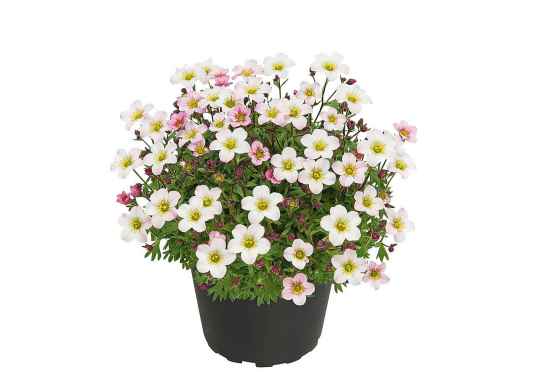
Saxifraga So Saxy Appleblossom: spring blooming (Ball Horticultural)
Saxifrage rockfoil cultivars to look for this spring include the So Saxy series (Appleblossom, Dark Rose, White). The series is suitable for full sun to part shade locations.
Duayne Friesen planted Saxifraga Appleblossom in his Winnipeg garden, so I will check back with him to see how it is growing.
Rose Rosette Disease
Have you come across Rose Rosette disease (RRD)? With any luck, you never will. So destructive is this virus to roses that stems, leaves, and flowers become distorted beyond recognition.
Several sources, including Proven Winners, say RRD was first reported in 1941 in California, Wyoming, and here in Manitoba in Morden.
Personally, I have never come across a rose affected by RRD, nor heard of its presence in Manitoba gardens.
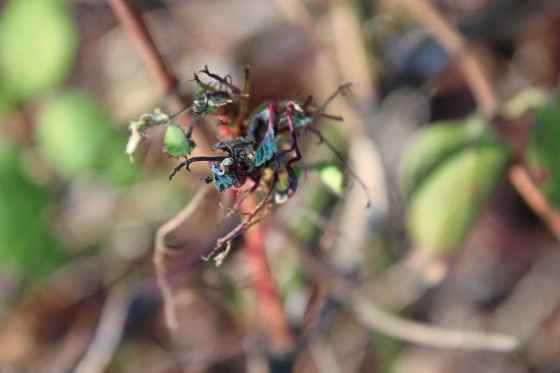
Rose Rosette Disease (Wikimedia Commons)
So, it was with no small amount of curiosity when I received an inquiry from Esther McGinnis, extension horticulturist and associate professor in the department of plant sciences at North Dakota State University.
“How prevalent is rose rosette disease in Manitoba and Saskatchewan?” she asked.
She said RRD was identified on a Winnipeg Parks rose in North Dakota in 2016, but she hasn’t seen it since. “RRD does pop up sporadically in the Minneapolis/St. Paul area. They think the mite vector rides the air currents up the Mississippi River Valley.”
I reached out to Rick Durand, who served as a research coordinator for the Canadian Nursery Landscape Association (CNLA) and oversaw CNLA’s rose research plot at Portage la Prairie, where thousands of roses were grown for several years.
Durand, who currently lives in Kelowna, grows more than 70 roses in his garden. He also breeds roses, but more on that later.
“I have not come across Rose Rosette Disease,” said Durand. He reached out to Larry Dyck, a retired rose breeder who evaluated tens of thousands of roses annually at Morden Research Station. Dyck said that RRD was not at all prevalent there.
I called Hugh Skinner, a horticulturist and breeder who grows a wide variety of plants near Roblin. Skinner has co-authored books with Sara Williams, a well-known horticulturist who lives in Saskatchewan.
“I have never come across RRD in all these years,” said Skinner.
Next, I reached out to Margit Schowalter, a rosarian who lives near Edmonton. Schowalter maintains a large collection of Canadian prairie heritage roses.
Schowalter is not encountering RRD either. “Unless it might come in on occasion on something commercial, but it’s not making the rounds in people’s gardens,” she said.
Good to know. Let’s hope that we never have to deal with Rose Rosette Disease.
But regarding roses, here are some things we can look forward to.
Rick Durand is the guest editor for The Prairie Garden’s 2027 edition, which will feature roses. The book will come out later this year.
In addition, Durand is introducing a stunning new rose called Quartet, which features beautiful transitional colour. Look for this new rose in 2027!
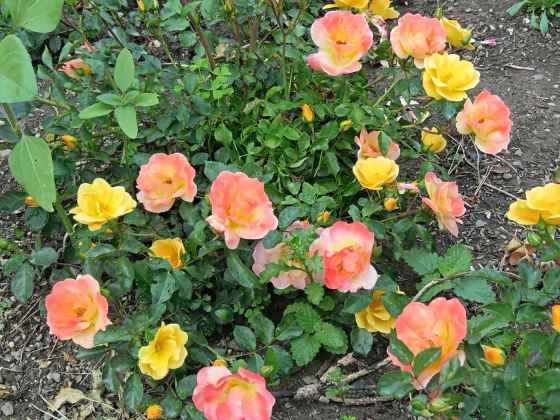
New rose introduction: Quartet (Rick Durand photo)
New phlox
Picture this: a gorgeous carpet of pink blooms bursting forth in late spring, just around the time all your spring garden tasks have been completed. Now that would be a nice reward for all your hard work.
Phlox Candy Cloud Pink is a new perennial for 2026. It offers showstopping colour with heavy flower coverage. Look for two varieties this spring — Pink and Dark Pink.
Phlox Candy Cloud blooms after Phlox subulata and before Salvia nemorosa.

Phlox Candy Cloud Pink: a new perennial for 2026 (Ball Horticultural)
Hardy to Zone 4a, Phlox Candy Cloud is suitable for partial sun to full sun locations. With a low-mounded habit, one plant grows to a height and width of 36 to 41 cm.
Phlox Candy Cloud would be a great addition to the front of garden borders or raised beds and terraces.
A seedless Manitoba maple
Recently I wrote about maple tree cultivars but here is one more selection to consider: Baron Boxelder Maple (Acer negundo).
While native to Manitoba, the Manitoba Maple, commonly known as Boxelder, produces seed prolifically. It is considered invasive in some regions, especially Ontario.
Baron Boxelder Maple, however, is a seedless selection from this rugged native species.
“Baron Boxelder Maple does away with the seediness of the species, which I consider to be one of our worst weed trees, even though it has its followers due to being a native tree,” says Wilbert Ronald from Jeffries Nurseries in Portage la Prairie.
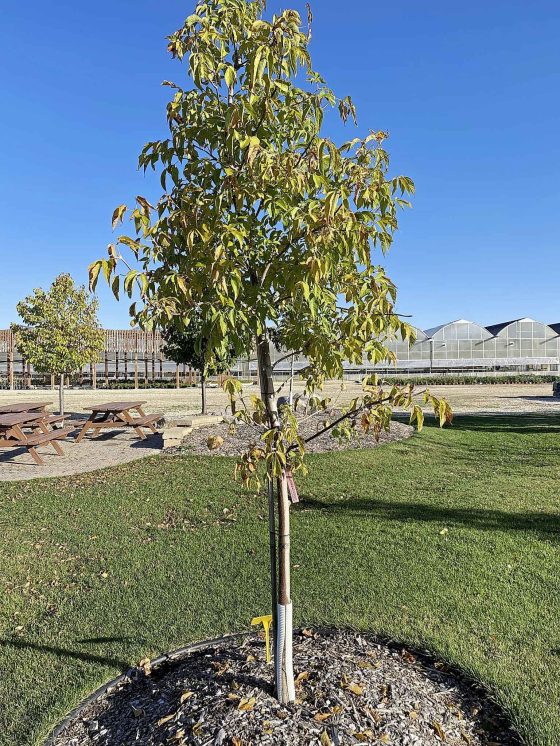
Baron Boxelder Maple: it’s seedless (Jeffries Nurseries)
Baron Boxelder Maple has a rounded crown shape with attractive emerald-green, compound foliage that turns yellow in the fall. It is well-adapted to a wide range of growing conditions.
Hardy to Zone 2, Baron Boxelder grows to a mature height of 15.2 metres tall and 9.1 metres wide. Plant in a location that receives full sun (6+ hours).
New books
Out on a Limb by Winnipeg author Erna Buffie is a fantastic, riveting read about the importance of urban forests.
Its timely release underscores the need for planting trees and acting now to save our urban forest. With the triple threat of Dutch elm disease, emerald ash borer, and a rapidly changing climate, it will take more than a village to preserve our urban canopy.
Planning to plant a tree this spring? Out on a Limb will inspire you.
Not planning to plant a tree? Out on a Limb will change your mind.
You can read a full review in my May 2 column.
A book launch will be hosted live in the atrium at McNally Robinson Booksellers on May 20 at 7 p.m. It will also be available as a YouTube stream.
Beautiful Blooms: A Photographic Celebration by Georgianna Lane that will be released on May 5.
Published by Gibbs Smith, Beautiful Blooms is 300 pages of stunning photographs of captivating flowers. Enter a beautiful world of flowers from misty Parisian gardens at dawn to sun-drenched fields of California ranunculus, from Andean rose gardens to centuries-old European estates.
Put on the kettle or pour yourself a glass of wine, sit back in your chaise lounge and dream.
Beautiful Blooms is available to order at McNally Robinson Booksellers and Indigo Chapters.
Mark your calendars
Come celebrate on Saturday, May 9, as Jensen Nursery and Garden Centre (2550 McGillivray Blvd.) celebrates 60 years in business! There will be cake, hot dogs, draws and special deals. For more details, click here.

Bountiful flowers at a greenhouse near you. Shown is Jensen Nursery and Greenhouse. (Colleen Zacharias photo)
On Thursday, May 14, Trees Winnipeg presents the 10th anniversary of ReLeaf. The online sale of over 600 trees — just $49 each — starts at 10 a.m. Tree pickup will be on Saturday, May 30, at Fort Whyte Centre, Buffalo Crossing (2505 McGillivray Blvd.). For full details, including a list of trees available and descriptions, click here.
The Charleswood Garden Club will host its annual plant auction on Thursday, May 21, at St. Mary Anglican Church (3830 Roblin Blvd.). Huge selection of annuals, vegetables, houseplants, and perennials. Doors open at 6 p.m. The auction starts at 6:30 p.m.
On May 28, Creative Retirement will present Hidden Wonders – The Enchanted World of Follies and Grottoes. Join Phil Broomfield, a United Kingdom-based garden historian and storyteller, for a fascinating one-hour Zoom presentation that starts at 11 a.m. All programs are free for members. Purchase a membership for just $10 here.

Mark your calendars: The Enchanting World of Follies and Grottoes (Phil Broomfield)
The 28th Annual Selkirk and District Horticultural Society Plant Sale will be held on Friday, May 29, at the Memorial Hall (368 Jemima St.) in Selkirk from 6 to 8 p.m. Locally grown perennials, annuals, vegetables, trees and shrubs will be for sale. Cash only. There will be a silent auction and a 50/50 draw. Free admission. Wheelchair accessible.
|