|
After 41 years in journalism, and 38 years at the Free Press, I’m retiring, so this will be my final Passages newsletter. I thank everyone who has been reading this newsletter over the past few years, learning a bit about the people who have helped shape this city and province, and for sending such wonderful, uplifting comments to me.
It’s tough to grow many varieties of fruit trees in Manitoba, but Alberto Aiello almost made it look easy.
A self-taught gardener, Alberto, who was born in 1939 and died April 15, became known for, what his family says, “his remarkable ability to cultivate and graft fruit trees.”
Advertisement

Alberto didn’t just grow apple trees. He was also able to raise trees that produced baskets of apricots, pears and plums.
He loved showing people his trees and garden, and he would even go to other parts of the city to help work on the gardens of family and friends.
Alberto was born in San Mango D’Aquino, in the Calabria region of southern Italy.
He was in his early 20s when he came to Canada in 1962, living in Sault Ste. Marie, Ont. for a bit, before he and his wife settled for good in Winnipeg.
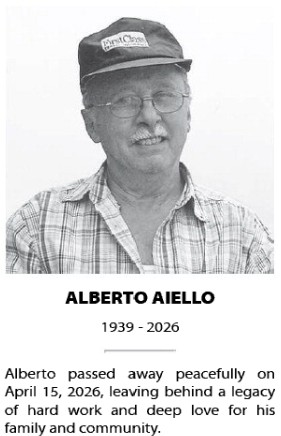
Alberto worked at Canadian Tool and Die for 41 years, where, because of his technical skill and work ethic, he rose to become foreman. He was so valued for his skills that the company continued to ask him to work a couple of days a week for some time after he retired.
As an immigrant himself, Alberto was always there to help newcomers find work and housing.
Alberto was also a longtime fixture in the cottage community of Belair, on the east side of Lake Winnipeg.
Through the years, Alberto helped shape that community and, to thank him, the community named a park there in his honour.
Alberto is survived by Carmela, his wife of 65 years, a son and a daughter, and three grandchildren.
Read more about Alberto.
How They Lived
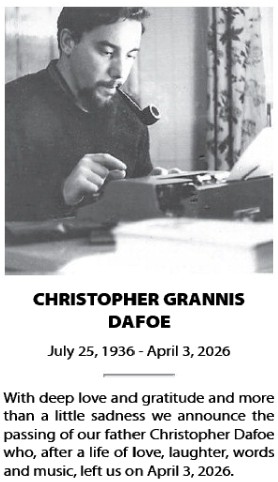
Al Posaluko taught many students.
Al, who was 94 when he died Feb. 8, first taught as a permit teacher at a one-room schoolhouse before going to the University of Manitoba to get his Bachelor of Education.
He became a civilian instructor with the Royal Canadian Airforce Reserves and the Royal Canadian Army before being hired as director of the Catholic Youth Organization.
Al then taught at Duck Bay, pioneering the introduction of secondary education there, before teaching at Charleswood Collegiate for many years.
He was later active at the West End Seniors Centre and became president for a number of years.
Read more about Al.
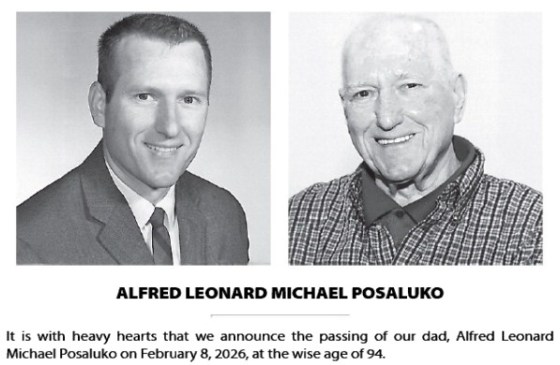
Dr. Bill Balacko was a pharmacist.
Bill, who was 80 when he died April 5, had his first pharmacy job at 14 years of age and he used his bike to deliver prescriptions for Ebbling Pharmacy.
After graduating with a pharmacy degree from the University of Manitoba, he first became a drug representative for Eli Lillie before opening Tache Pharmacy in 1974.
Bill’s pharmacy became known city-wide as the place where you could get life-saving medications unavailable elsewhere. It specialized in compounding medications as well as bio-identical hormone replacement therapy and palliative care.
Read more about Bill.
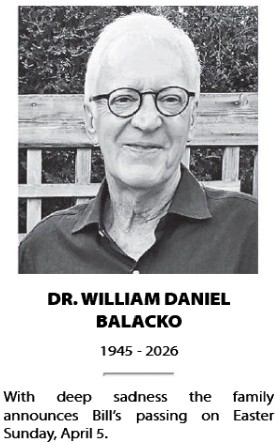
Christopher Dafoe might have stayed as a reporter if not for an unfortunate incident.
Christopher, who died on April 3 at 89 years of age, was working as a Free Press reporter when he knocked on a door during a hostage situation. That’s when shots rang out and police had to rescue him. Shortly after, he was the newspaper’s drama critic and also worked as editorial page writer, legislative reporter and columnist.
Chris went to the Vancouver Sun, where he was also a columnist, features writer, and theatre critic.
He returned to the Free Press in the 1980s before being hired into his dream job: Editor of The Beaver magazine, now Canada’s History.
Read more about Chris.
Greg Lacomy played and coached hockey.
Greg, who was 89 when he died April 25, played for the Winnipeg Monarchs before winning a national NCAA hockey championship as a player with the University of Denver.
Back in Winnipeg, Greg coached several teams through the years including taking teams in the CUAC juveniles to two provincial championships and being named MAHA coach of the year after coaching the bantam Hawks to the Purolator Challenge Cup. He also coached at the University of Manitoba for 12 years.
He was inducted into the Manitoba Hockey Hall of Fame.
While coaching, Greg’s day jobs included being the province’s deputy minister of agriculture.
Read more about Greg.
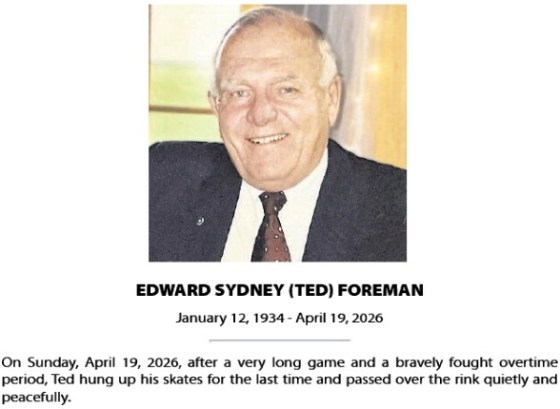
Ted Foreman went from playing hockey to managing the investments of NHL players.
Ted, who died April 19 at 92 years of age, rose through the hockey ranks and even played a pre-season game with the Montreal Canadiens. Unfortunately, he broke his leg at 20 years of age and changed careers.
He started as an office boy at Imperial Oil, owned a gas station, and then joined IG Wealth.
During his 42 years there he handled financial matters for professional hockey players while also joining the board of directors of the Winnipeg Jets when they played in the World Hockey Association.
Ted was inducted into the Manitoba Hockey Hall of Fame, as both a member of the 1952-53 St. Boniface Canadiens and as a builder, and the Manitoba Baseball Hall of Fame as a member of the Norwood Junior team from 1953-56.
Read more about Ted.
Gerry Fingler loved airplanes — especially very small ones.
Gerry, who was 87 when he died April 23, was a member of the Model Aeronautics Association of Canada from 1949 to 2025.
His passion for radio control airplanes resulted in him founding Cellar Dweller Hobby Supply in 1972. He closed the shop in 2021 following the death of his son.
Read more about Gerry.
A Life’s Story
Ken Osborne was a teacher and historian who believed teaching his students about the past was needed for the future.
Ken, who was originally from England and was teaching there, decided to come here to teach because it was a less class-structured country.
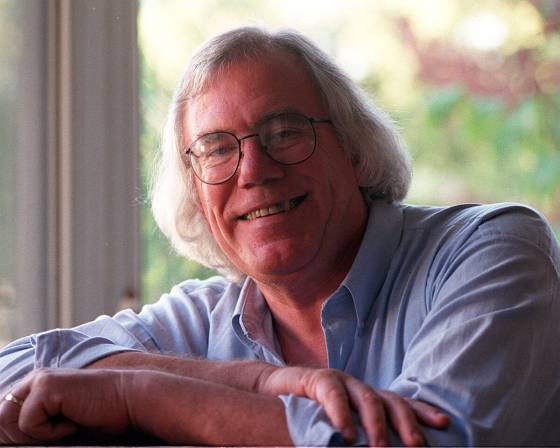
Ken Osborne, who was born in England to a working-class family, emigrated to Canada because it was more egalitarian than his home country. (Ruth Bonneville /Free Press files)
He began teaching at Daniel McIntyre Collegiate in 1961, and only found out he would teach Canadian history when he got there.
Ken went on to teach at the University of Manitoba from 1972 to 1996.
“He was a thinker,” said John Long, a former University of Manitoba colleague. “He was an intellectual. No doubt about it.
“I never met a student who didn’t express joy in having been in his classes.”
Read more about Ken’s life.
For one last time: I hope you continue to write your own life’s story.
|