Outdoor project completed!
It’s such a great feeling when a landscape project is completed.
But a finished garden project represents so much more than the process of planning and construction, especially on the cusp of summer with long sunny days ahead to enjoy.
In the March edition of Winnipeg Gardener, we learned about Erin Lebar’s plans to redesign the garden beds located on either side of the steps leading to the front entrance of her house.

A before photo of Erin Lebar’s front yard. (Erin Lebar)
Lebar, manager of audience engagement for news at the Free Press, wanted to rejuvenate foundation beds, enhance curb appeal and transition the existing jumble of plants to a relaxing, cohesive and easy-to-maintain garden.
Last fall, Sam Greenberg, landscape designer at Lacoste Garden Centre visited her garden to discuss the project which also included renovating a strip of graveled area on the south side of Lebar’s house.
She set her budget for the project at $2,500.
The cool temperatures in early May delayed the project for a few weeks but last week, Greenberg and his crew arrived on a toasty warm day to begin installation.
Since Greenberg had answered all her questions during the consult, there was little that Lebar needed to do.
“The only thing we discussed was moving some of the brickwork around the edge to extend to the front stairs. I just let the team do their thing without too many interruptions,” said Lebar.

After: curb appeal (Erin Lebar)
The before and after pictures show the outcome of careful planning and professional installation.
Upon completion, though, summer-like heat suddenly arrived. The landscape crew deeply watered the newly installed plants which will now bask in the warmth. Leafy growth will accelerate before Lebar’s very eyes in the coming weeks.
“I will be diligent about watering regularly during this heat wave,” said Lebar. “Thankfully they (the plants) get a good bit of shade from the house during the peak afternoon heat.”
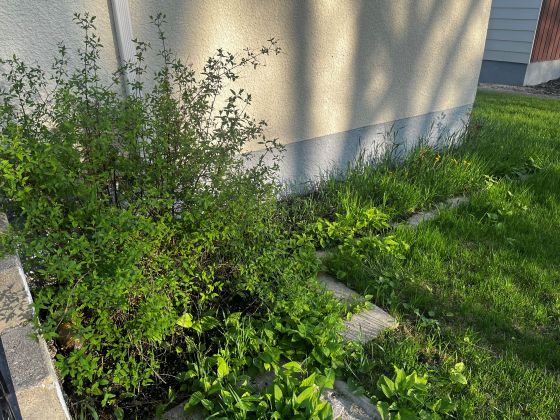
Before: The weedy side garden. (Erin Lebar)
What does she like most about her newly completed foundation beds landscaping?
“I love that it looks so clean and tidy, and while it’s a bit sparse right now with all the new little plants, I’m excited to see how it looks as everything grows.
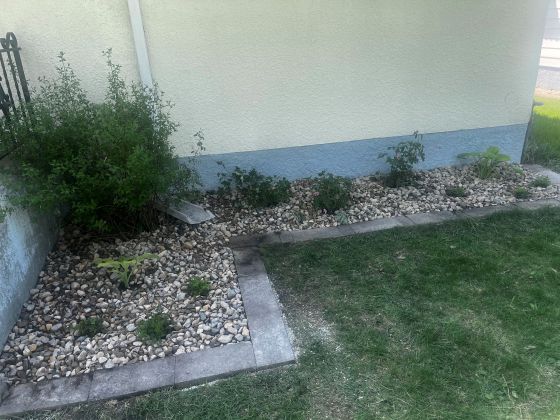
After: The side garden transformed. (Erin Lebar)
“But really, the best thing is that it makes the front of the house look so much nicer and, of course, that I don’t need to worry about weeding or unwanted grass growth for at least a little while!”
Most asked about perennial
This spring, several Free Press readers have contacted me to ask, “Where can I find La Diva Spirit White Lavender?”
I described this brand new surprisingly cold hardy Lavandula angustifolia lavender in my April 18 column. What makes La Diva Spirit White such an exciting new plant for Zone 3 gardeners is its stellar performance in plant trials at Vanstone Nurseries in Portage la Prairie. Vanstone Nurseries is a wholesale supplier to garden retailers across the Prairies.

La Diva Spirit White Lavender (Dummen Orange)
Owen Vanstone says that La Diva Spirit Lavender White has better cold hardiness than any other lavender variety on the market.
Now, that’s a powerful stamp of plant approval. Typically, angustifolia lavenders are hardy to Zone 5 and do not survive our climate. But in addition to winter hardiness, La Diva Spirit White lavender is highly aromatic with heavy flowering and great branching.
If La Diva Spirit White lavender truly provides year-in, year-out performance in our cold climate, could this mean lavender fields forever for Zone 3 gardeners?
But let’s cut to the chase. Where can you find it?
It’s always a treasure hunt whenever new perennials come to the market, but the good news is that Vanstone Nurseries still has a supply of La Diva Spirit White Lavender ready to ship to garden centres.
If you are still searching for this hardy new lavender and want to grow it in your garden, ask your garden centre to bring some in for you.
Keep hydrangeas blooming
Every Easter and Mother’s Day, florist hydrangeas (also known as Hydrangea macrophylla or mophead) fly off the shelves at garden centres and retail stores. Once the weather warms up, many of these potted mophead hydrangeas move outside to decorate the outdoors with their colourful blooms.
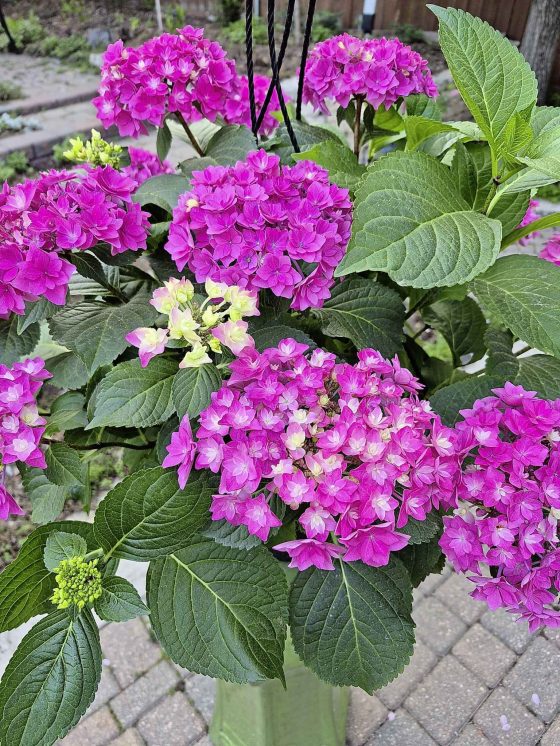
Hydrangea macrophylla aka mophead (Colleen Zacharias photo)
The Haba hanging basket hydrangea which I wrote about in last month’s newsletter is essentially a florist hydrangea, too. Florist hydrangeas are meant to be grown as annuals.
Rodney Wohlgemuth who owns and operates Green Oak Gardens in Beausejour, shares these recommendations for these specialty hydrangeas:
- A location with morning sun is fine but by noon when the summer sun reaches its highest point in the sky, ensure your plants are in shade.
- The stems will continue to produce new buds all summer long. Deadheading spent flowers will keep your shrub tidy.
- To encourage continuous bloom formation, feed plants weekly with a well-balanced plant food.
If you purchased a blue-flowered mophead and want to maintain the blue colour, Wohlgemuth recommends adding aluminum sulphate to the soil every other week.
Aluminum sulphate is a soil acidifer specifically designed to lower soil pH. Apply directly to the soil according to package directions.

Aluminum sulphate acidifer for blue mophead blooms (Colleen Zacharias photo)
Note, however, that aluminum sulphate will only change the colour of blooms on Hydrangea macrophylla mopheads. It has no effect on the colour of panicle or smooth (arborescence) hydrangea blooms.
Hydrangea introductions, rated
Dr. Michael Dirr is recognized as one of the world’s leading authorities on hydrangeas.
His more than 40 years of research including breeding programs at the University of Georgia revolutionized the hydrangea market. He is the author of several books, including The Hydrangea Book — The Authoritative Guide (Stipes Publishing LLC, 2021).
In the May edition of Nursery Management magazine, a publication that provides industry news and research for nursery operators, wholesale plant growers and breeders, Dirr shares his insights on current hydrangea introductions.
I have interviewed Dirr in the past for my column. He is not one to mince words. When he assesses a particular hydrangea as garden worthy, it’s worth having!
Check out Dirr’s comments on a range of hydrangea cultivars described under five headings — Hydrangea macrophylla, Hydrangea paniculata, Hydrangea arborescens, Hydrangea quercifolia, and Hydrangea serrata.
In our Zone 3b climate, Hydrangea paniculata (panicle hydrangea) and Hydrangea arborescens (smooth hydrangea) are the two hardiest hydrangea species and the best choices for our climate.
Hydrangea macrophylla (think Endless Summer series) and Hydrangea serrata, also known as the mountain hydrangea, can be found at some local garden centres but are not commonly grown here.
Fascinating to read Dirr’s perspectives. After reading his comments, I replaced an underperforming hydrangea with Hydrangea paniculata Spring Sizzle, new for 2026.
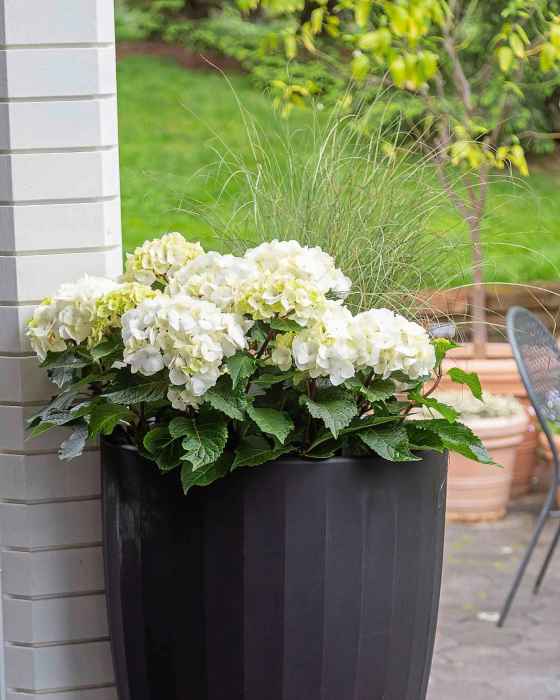
DreamCloud Reblooming Hydrangea_Endless Summer series (try growing it in a container) (First Editions)
I’m tempted to try DreamCloud, a new reblooming Hydrangea macrophylla (Zone 4). It may not be fully hardy in our winter climate, but it would look smashing in a container garden with its bright white mophead blooms.
What does Dirr say about DreamCloud? “This has garden legs.”
City rain garden
Work will begin later this summer on a green infrastructure project that will be installed on Leila Avenue between McPhillips Street and Garden Park Drive.
The project will include rain gardens, soil cells, and naturalized ground covers which will be installed on both the north and south sides of Leila Avenue, said a city spokesperson who I contacted recently.
The project is part of Combined Sewer Overflow (CSO) Master Plan work in the area. The green infrastructure features are expected to be completed in 2029, in conjunction with the Leila Avenue road reconstruction work.
A planting list is not available at this time.
I asked if residents would be able to participate in the installation or maintenance of plants.
“We (the city) will be maintaining the plantings as there are safety issues given their proximity to busy roadways,” said Kalen Qually, communications officer, corporate communications.
“The maintenance teams assigned to this work are trained in hazard assessments, safe work procedures, and traffic control.”
More municipalities in Canada are integrating rain gardens to help improve stormwater quality by filtering pollutants before water enters sewer systems.
Rain gardens are also useful strategies to mitigate flooding in the event of heavy rainfall.
It will be exciting to watch as this project develops!
Who’s Joe Pye?
Joe Pye Weed is an ideal perennial for late summer colour. Its bountiful clusters of mauve-pink flowers attract loads of bees and butterflies.
A native North American perennial formerly grouped under the scientific name of Eupatorium, Joe Pye’s new scientific genus is Eutrochium. Plant tags and plant catalogues have not fully caught up on the deluge of name changes that are largely due to advances in DNA sequencing.

Joe Pye Weed located at back of the border with purple coneflower and sedum in the front. (Teresa Lopata photo)
Gateway Joe Pye (Eutrochium maculatum) is the ultimate flowering perennial for the back of the border. This handsome giant grows to an impressive height of nearly two metres tall.
The name Baby Joe Pye (Eupatorium dubium) is somewhat of a misnomer. This is a big baby which can grow well past 90 cm in a full sun location. Don’t let him play at the front of the border! The blooms are mauve-purple.
Little Pye Joe Pye, on the other hand, is a genuine dwarf variety (30 to 35 cm tall) with dusty-pink flower panicles.
But who was Joe Pye? The backstory of this essential perennial is fascinating.
In 2017, the “Great Lakes Botanist,” which is the peer reviewed journal of the Michigan Botanical Society, delved into the history of Joe Pye Weed.
Researchers discovered that the name of this plant is linked to Joseph Shauquethqueat, a Mohican tribal leader who lived more than 200 years ago.
You can read more here.
Crazytunia Cosmic Violet Petunia
I admit, the dizzying array of petunia varieties every spring can make me a little crazy. I’ve never fully understood why petunias are so beloved. I’m a dipladenia girl, myself.
But I came to a full stop when I saw Crazytunia Cosmic Violet Petunia on a visit to Green Oak Gardens in Beausejour.
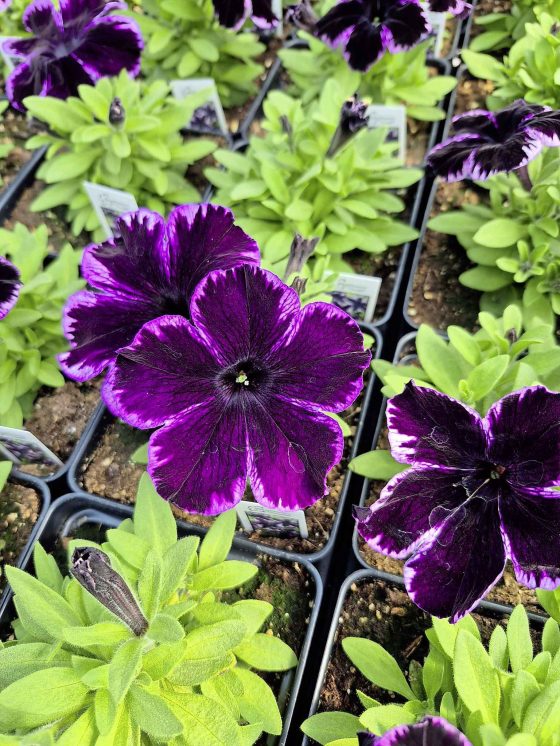
Crazytunia Cosmic Violet petunia (Colleen Zacharias photo)
The Crazytunia series consists of countless varieties. Crazytunia petunia does not grow to as voluminous a size as Supertunia or the Wave Petunia series.
But oh, the electric colour and velvety texture of the stunning bicolor blooms of Crazytunia Cosmic Violet Petunia! Top marks.
Native prairie plant sales
Looking for more native plants for your garden?
Prairie Flora will host native plant sales at Living Prairie Museum, 2795 Ness Avenue, on June 20 and Aug. 22 from 10:00 a.m. to 4:00 p.m.
Prairie Flora will also be at the Living Prairie Museum’s annual Monarch Butterfly Festival — date to be announced. Visit their activities calendar here.
Prairie Originals will have native plants available for purchase on Saturdays throughout June and July at the St. Norbert Farmers Market, 3514 Pembina Hwy.
Adventures with garden pests
Susan Southern’s garden in south Winnipeg is a constant education.
She loves roses, creates lush containers with an abundance of flowers, and has an eagle eye for detecting garden pest activity.
Whenever she discovers an unknown insect, she sends me photos. If I cannot identify it, I forward the image to Jason Gibbs, associate professor, department of entomology, at the University of Manitoba.
Each time, Southern’s natural curiosity leads me to learn something new.
One year, the rose curculio (commonly known as rose weevil) caused ghastly damage to one of her rose shrubs.
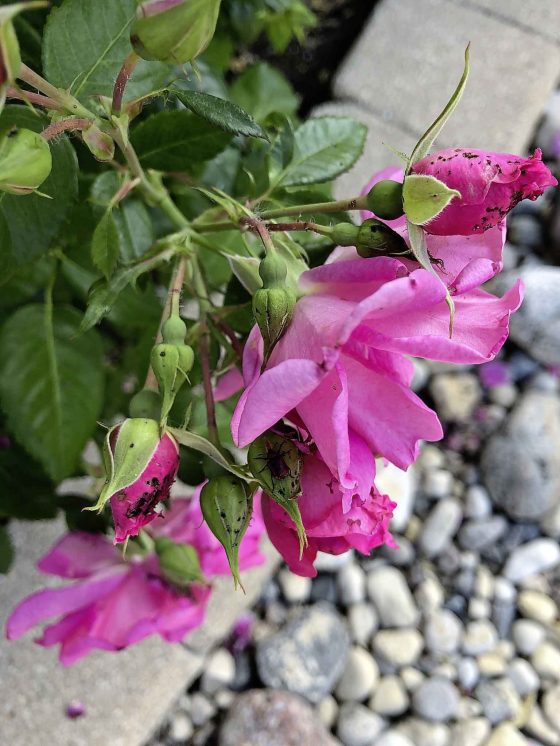
Rose weevil damage to rose petals (Susan Southern photo)
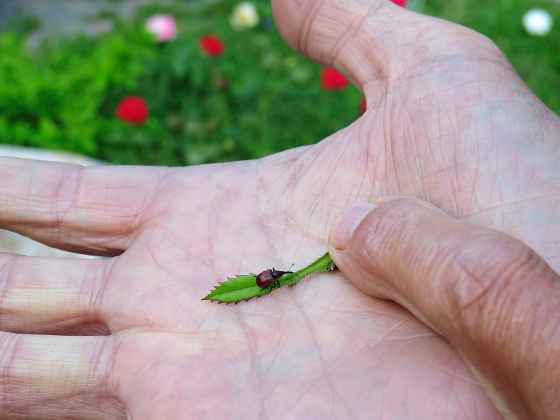
Close-up of rose weevil (Colleen Zacharias photo)
The rose weevil lays eggs inside rose buds. Its larvae chew holes in developing flower buds and deposits black frass on rose petals. It is most active in the month of June.
The rose weevil has a long snout and reddish body with a hard shell. Catching it is very challenging. The best time is in early morning.
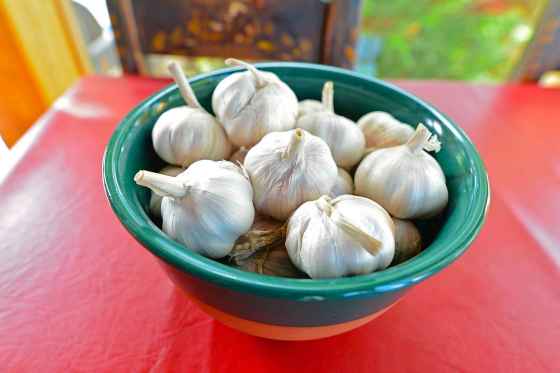
Make your own garlic spray to deter garden pests. (Becky Slater photo)
The rose weevil overwinters in the soil. This spring, Southern plans to spray her roses with a garlic spray:
- Crush five cloves in one quart (946 ml) in water
- Allow to steep overnight
- Strain the mixture and add to a spray bottle
- Using a fine mist, spray stems and leaves (including undersides if possible)
- Do not saturate
- Reapply once weekly
Southern will let us know if this recipe works but I plan to try it, too, on aphids.
Recently, Southern sent me a photo of a tick she discovered after working in her garden. Fortunately, it is an American dog tick, also known as the wood tick.
Wood ticks are very common in southern and central regions of Manitoba. Late spring is peak activity season for wood ticks. Although frequently found in wooded areas or tall grass, wood ticks are increasingly found in urban gardens.
Wood ticks do not transmit the bacteria that causes Lyme disease. In Manitoba, Lyme disease is exclusively transmitted by blacklegged ticks.
It’s a good idea in spring to perform a check on yourself after working in moist, shaded areas, tall weedy areas, or in areas with piles of leaf litter.
To monitor tick populations across the province, Manitoba public health offers a free app, eTick.ca, where you can upload a photo for quick and easy identification.
Ants are hard-working insects in the garden. They help to aerate the soil and are an essential part of ecosystems.
But no one is excited to see carpenter ants. Southern spotted carpenter ants trekking across her lawn but two of her neighbours also discovered carpenter ants in their yards.
“Where could they be coming from?” asked Southern.
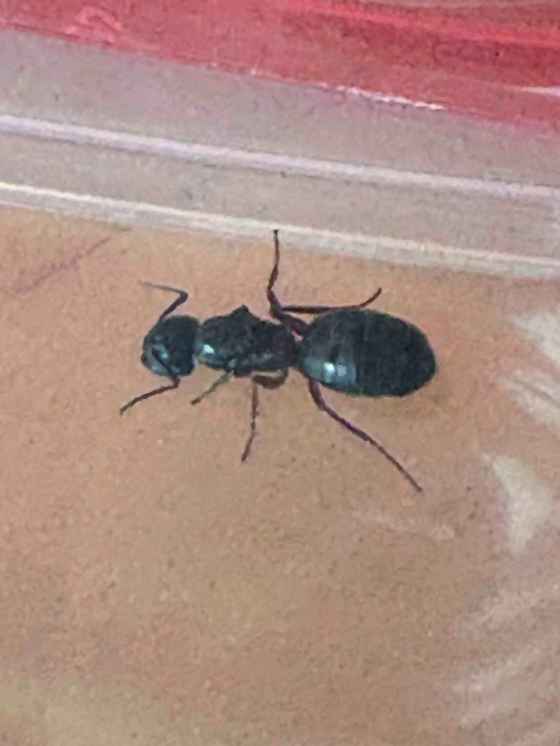
Carpenter ant (Susan Southern photo)
To confirm the ant’s identification, I forwarded a photo that Southern took to Jason Gibbs, who coincidentally, said he had come across carpenter ants crossing the sidewalk that same day while walking his dog.
“Carpenter ants are pretty ubiquitous where there is decaying wood,” says Gibbs.
If you are seeing carpenter ants, any moist decaying wood could be the source, says Gibbs.
Carpenter ants can cause structural damage to raised wooden garden beds or wooden decks that contain rotting wood. But they are rarely a threat to ornamental plants or vegetables.
For more information, visit here.
Amazing recovery
In the May 2025 edition of Winnipeg Gardener, I wrote about a panicle hydrangea tree form that had been severely damaged by rabbits feeding on the bark over winter.
The St. Vital homeowner wanted to save the tree which had been planted the previous summer.
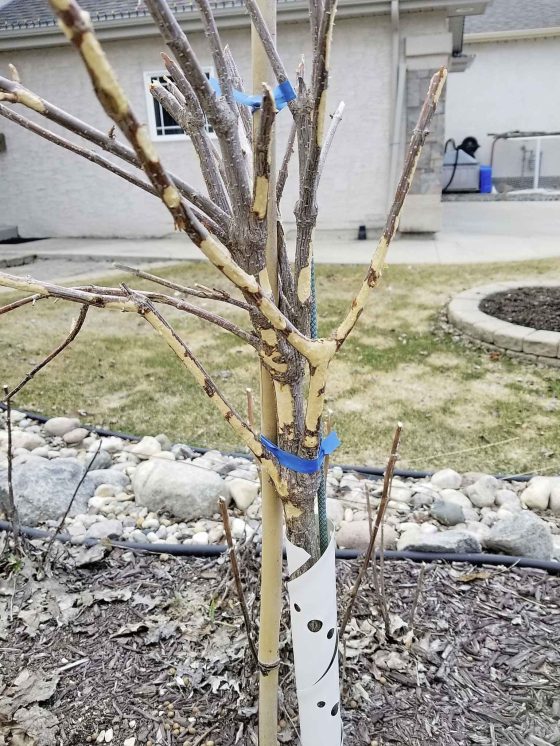
Hydrangea tree form in 2025, stripped bark on branches caused by rabbits. (Colleen Zacharias photo)
I reached out to Joel Kosa, a certified ISA arborist who owns Boreal Tree Services. He recommended removing the most severely damaged branch.
“Every time a branch is pruned and removed — especially at this time of year (spring) when a tree has stored up all its energy and it is ready to start growing — it causes a little bit of stress in the tree, and it is then going to try and spur on some new growth to compensate for that loss,” said Kosa.
He also recommended patience. It worked.

Amazing recovery of hydrangea tree form, one year later (Colleen Zacharias photo)
This spring, the plucky hydrangea tree has numerous blooms on its branches and is ready to put on a flower show this summer!
Found it: Great burnet!
I have looked high and low for Sanguisorba officinalis, commonly known as great burnet. Not only is burnet cold hardy (listed as hardy to Zone 3 or Zone 4, depending on the source), but it is also pollinator friendly, adaptable to full sun or part shade, and is fantastically low maintenance.
Most of all, burnet has good looks to spare. Slender stems topped by drumstick blooms float above a skirt of ferny leaves. It is a stunning meadow plant especially suited to naturalistic plantings.
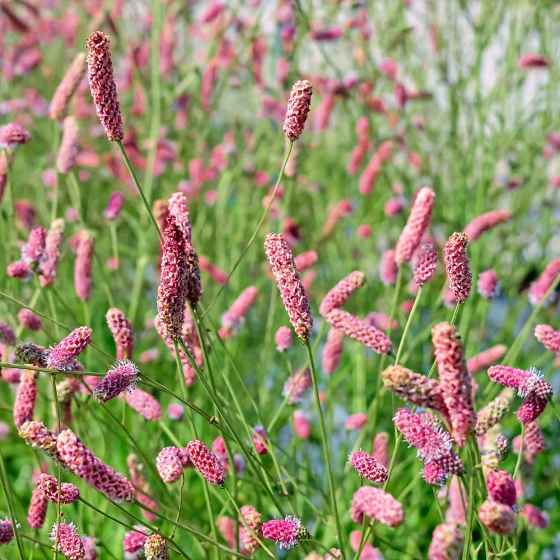
Sanguisorba Pink Tanna Burnet (Black Sheep Perennials)
I stumbled across Pink Tanna burnet on a trip to Rona+ on Kenaston. About half a dozen pots were perched on the top shelf of a plant rack opposite the self-check area. The plant’s distinctive basal foliage and wiry stems immediately caught my eye. It grows to a height of 60 to 90 cm and blooms.
Pink Tanna has deep pink flowers which bloom from summer into fall. I only purchased two but wish I had bought more.
Black Sheep Perennials is an online-only nursery in Ontario (it does not have a physical retail storefront or a public location) which carries three different types of burnet.
However, Black Sheep Perennials does not ship plants across Canada.
“We hand deliver plants directly to customers’ doorsteps across Ontario and Quebec,” says the owner-operator who goes only by the name of Jack.
That unfortunately doesn’t help Winnipeg gardeners who would like to buy burnet, but it’s fun to check out Black Sheep’s website which has great plant information including uses and benefits, plant history, and recommendations for companion plants.
Perhaps we can persuade Black Sheep Perennials to ship to Winnipeg? Or perhaps a local garden centre will offer Sanguisorba burnet? Yes, please!
Visionary Gardeners
Visionary Gardeners is an award-winning cinematic documentary series filmed across Canada, produced by filmmakers Ian Toews and Mark Bradley of Victoria-based 291 Film Company.
Season 3 premieres Monday, June 8, at 8:00 p.m. on VisionTV. The series, which features five episodes, travels to gardens in Victoria, as well as to gardens in Toronto and Montreal.
Each episode features two visionary gardeners with different, yet related, visions.
Sit back and enjoy breathtaking photography of beautiful gardens and meet their creators who reveal their personal stories. They may even share their ‘eureka’ moment when they discovered something that set them on new and exciting gardening paths. Visit a greenhouse that sells rare and unusual plants and a greenhouse that grows exotic fruit varieties using a complex regenerative agriculture system.
Thinking of downsizing your large garden? Inspiration awaits in Season 3 of Visionary Gardeners where you will meet renowned garden writer, Marjorie Harris, who sold her Toronto home with its lush backyard garden and moved to a downtown high-rise balcony garden.
Visit the official website for series trailer, episode synopses, exclusive webisodes and more.
Urban Retreats Garden Tour
The countdown begins to the Urban Retreats Garden Tour which will take place on June 20 from 10:00 a.m. to 4 p.m., rain or shine.
A summer staple celebrating its 27th year, the Urban Retreats Garden Tour will host a self-guided tour of 12 gardens in the Norwood area.

Tickets are $20.00 and are available at several garden centres or purchase tickets online.
In conjunction with the tour, the Manitoba Tea, Craft and Plant Sale will also be held that day at the Norwood Community Centre, 87 Walmer Street, from 10 a.m. until 2:30 p.m. Admission is $5.00 cash at the door.
The Urban Retreats Garden Tour is a major fundraiser in support of 1JustCity, an organization that supports three drop-in community centres in Winnipeg’s core neighbourhoods: West Broadway, West Central and Osborne Village.
In 2026, the tour raised $35,000 in support of 1JustCity’s programs and community drop-in centres!
Retirement plans?
Garden centre owners rarely retire from the industry completely. Often, the ownership or management transitions to the next generation. The founding “mom and pop” owners step away from day-to-day operations but still help out during the busy season.
But sometimes a popular nursery closes its doors permanently.
Many local gardeners will remember Canning Perennials, a popular mail-order nursery in Paris, Ont., which started in 1992 and began shipping plants across Canada in 2002.
In February 2020, at the start of the pandemic, Canning Perennials saw a hundred-fold increase in plant orders when their catalogue went online. At the time, 150 to 200 plant orders poured in daily and everyone wanted their plants delivered in May.
But by 2022, I wrote in my column Canning Perennials decided a reset was in order and would only offer pick-up orders.
Now, 2026 will be the last season for Canning Perennials. In May, Chris Lepard, co-owner, announced that she and her husband, John, are retiring.
I asked Lepard what she will miss most about operating Canning Perennials. I also asked what her plans are for the future and if there was a specific plant (or plant species) that has been a perennial bestseller over the years.
“We shipped many plants to Manitoba,” said Lepard. “I do miss all the contact I had with gardeners across Canada, and I enjoyed hearing about their gardening experiences. This will be the main thing I will miss.”
Lepard is an avid gardener and photographer. She is passionate about wilderness canoeing and exploring. She has created photo books of her canoe adventures which can be viewed at Blurb.com.
Lepard has also created a digital book called Once Upon a Paradise which features images of the beautiful gardens she created at Canning Perennials when it was a destination garden centre. Visit Blurb.ca and click on preview to expand the book.
As for Lepard’s plans for the future? “One thing I am really looking forward to is enjoying the spring without working,” she said. “It has been 34 years since I have been able to thoroughly enjoy the magic of spring — woodland wildflowers, returning birds and new growth on trees.”
And the plant that has been the bestseller over the years?
“The bestseller has always been ‘what’s new’! This was usually the first question visitors asked. Plants marked ‘new’ in the catalogue were always the bestsellers.
“However, some years a totally oddball plant would become the bestseller. One year Lobelia cardinalis was in high demand right across Canada. We were all scratching our heads. Perhaps it had been featured in a magazine.
“In recent years, native plants have become more important to gardeners and also plants for pollinators and butterflies.”
Enjoy your retirement, Chris!
|