|
It’s not yet SKYNET — the technological antagonist of the Terminator movies — but artificial intelligence is rapidly becoming the elephant in a lot of rooms.
In the process, it’s serving as a microcosm for analyzing the benefits of using taxpayer money to lure projects.
AI, which powers everything from fixing bad spelling to chatbots setting customer appointments, takes an inordinate amount of data, and that data requires an inordinate amount of computing power, which requires electricity and water for cooling.
And, it seems, an inordinate amount of public subsidy to fund the centres inside which all this data does its data-ing.
Across North America, communities are offering tax incentives, cheap electricity and construction subsidies to land these centres. Are they a good deal?
It seems not.
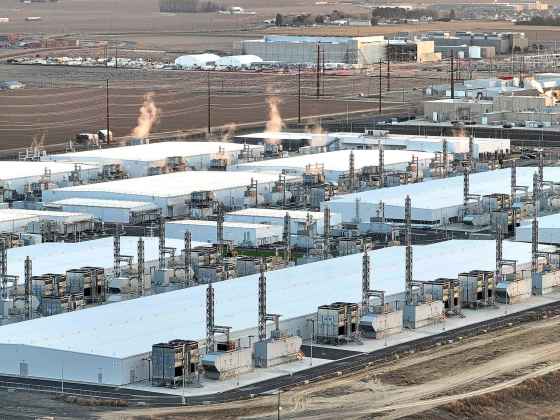
A massive Microsoft data centre in Quincy, Wash., a community reaping the benefits without having paid incentives. (Karen Ducey / The Seattle Times files)
The jobs during construction are excellent: plumbers, pipefitters, electricians, carpenters and other trades are in high demand and command good wages. But those jobs end when construction is done.
The jobs after construction are also excellent: skilled IT staff keep the centres humming.
The question is whether the small number of durable jobs justify the massive expense.
A study from the Brookings Institution — a Washington, D.C., think-tank — finds that while data centres were ribbon-cutting events five years ago, a large number of American communities are now cutting the cord instead, with moratoriums on data-centre construction springing up across the U.S.
“The backlash is not hard to understand,” says the study, titled New Evidence on Data Center Employment Effects by researchers Dany Bahar and Greg Wright.
They point not only to meagre employment — saying centres promise “only dozens to a few hundred” jobs, but consumption of excessive amounts of power and tax revenue. They point to Virginia, where a data-centre tax exemption is estimated to have cost US$1.6 billion in 2025.
“These incentives may simply be subsidizing investments that would have happened anyway.”
A deeper dive suggests a more targeted approach to analyzing job data, however. The study divides hyperscale facilities — built by Amazon, Google, Meta, etc. — for their exclusive use, from what it calls co-location facilities, built by companies that lease server use to other firms.
Hyperscale facilities have the greatest impact on jobs, with spillover effects on other industries — fibre optics, service providers and IT contractors — while the co-location facilities show minimal benefits. “A bank in New York renting a server cage in Dallas doesn’t hire IT staff in Dallas,” the study says.
The study says that while some jobs may result, it’s likely politicians overstate the effect.
Advertisement

Further, it says incentives for the biggest benefits — hyperscale facilities — may be unnecessary (representing just two per cent of construction costs) and that the centres that need subsidies the most — co-location centres — “generate the smallest employment benefits.”
If anything, the Brookings study on data centres should be a warning to governments at all levels about any kind of incentive-based employment growth. It’s true that governments will jostle to be chosen for investments, and part of that competition is outbidding other governments.
The challenge is determining whether, in the final analysis, it’s worth making a bid at all.
|