Biidaajimowin
Winnipeg Free Press Logo
 

Vandalism or hate crime?

I’m overseas in Indonesia, but I still heard about it.

“Someone sawed the poles in half,” read the text on my phone’s screen.

“The police aren’t doing anything,” a local community leader wrote. “The culprits must be found.”

“We won’t let this stop us,” an organizer texted to me.

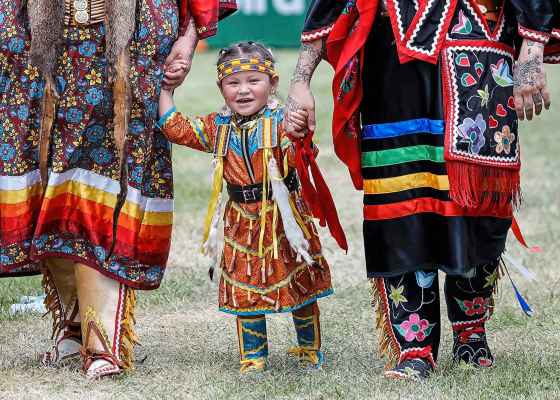
Nahanni walks hand-in-hand with her aunt Cayla Houle and mother Destiny Houle as they wait to participate in the grand entrance of the powwow at Anishinaabe Days on Sunday. (John Woods / Free Press)

Nahanni walks hand-in-hand with her aunt Cayla Houle and mother Destiny Houle as they wait to participate in the grand entrance of the powwow at Anishinaabe Days on Sunday. (John Woods / Free Press)

On Friday, leaders from Treaty One Development Corporation arrived on the site of Naawi-Oodena on Route 90 to finalize preparations for the 5th annual Anishinaabe Days Celebration.

Free and open to all, the event is meant to bring all members together on Treaty One and features a marketplace, a talent show, and food, family activities and fireworks. Here’s an example of what last year’s event looked and felt like.

This year, however, things started without any celebration at all when organizers arrived to discover the teepee poles delivered in the weeks leading up to the celebration had been sawed in half by vandals.

For anyone who doesn’t know, a teepee (also called bajiishka’ogaan in the Anishinaabe language) isn’t simply a residence; it carries immense ideological, spiritual and political weight for Indigenous nations in Manitoba. Here’s one of the best research sites to find out more about teepees but I will paraphrase for you here.

Used by Anishinaabe, Cree, Dakota, and Lakota peoples (and other nations too), a teepee is a place where everyone is welcome, which is signified by being built around a fire where visiting and acts such as political meetings, sharing meals and ceremonies take place.

Advertisement

Dish. The latest on food and drink in Winnipeg and beyond from arts writers Ben Sigurdson and Eva Wasney.


It is built using genius technology and innovation, and is an incredibly ventilated structure perfect for insulation in the winter and air control in the summer. A teepee is most often traditionally owned, operated and built by women and is designed to be a space of interdependence (see: its inter-leaning poles), nurturing (the hide) and spirituality (expressed through the direction and application of the doorway). It is also a space that connects land to sky.

In other words, vandals didn’t just slash a bunch of sticks in half but literally attacked a people’s history, relationships and sense of being.

Thankfully, new poles were found, the teepee was raised, and the event went on without any further interruptions.

According to the Government of Canada, a “hate crime” is defined as “a criminal violation motivated by hate, based on race, national or ethnic origin, language, colour, religion, sex, age, mental or physical disability, sexual orientation or gender identity or expression, or any other similar factor.”

While hate crimes are often difficult to prove, the Winnipeg Police Service Hate Crimes unit leads investigations into instances that demonstrate this definition all the time, such as this horrendous incident last January when a 34-year-old Winnipeg man targeted a synagogue, a mosque and residential homes with spray-painted swastikas and other hateful language.

The chopping of teepee poles is unquestionably the same thing.

Let’s hope our community learns and takes action against hate crimes like this.


Niigaan Sinclair, Columnist


Advertisement

Winnipeg's most read news source. 353,000 Adults Weekly.
 

FIVE STORIES ON TURTLE ISLAND

1. It’s hard not to notice all the sudden global interest in Canadian wildfires, with smoke threatening even the World Cup final.

U.S. President Trump has threatened Canada with tariffs if something is not done to address the onslaught of wildfire smoke gripping much of the continent.

What is considered a nuisance in New York, though, is a life-and-death situation for First Nations in northern Ontario.

But when sports are involved, suddenly people want to do something about wildfires, as seen at the Tour de France this week. With media giants such as The New York Times now publishing maps tracking how wildfire smoke travels throughout North America can some politician, government or anyone do anything about what is becoming a predictable annual climate-related crisis?


2. Amid his lowest approval ratings in history, a disastrous war against Iran, and polling suggesting the Republican Party is going to lose the midterm elections in just under 100 days, U.S. President Donald Trump is doubling down on attacks on Native Americans.

First, on July 13, Trump drastically slashed protections for two of the most iconic sacred places in Indian Country: Bears Ears and Grand Staircase-Escalante National Monuments — spaces long regarded as sacred by the Navajo Nation, Hopi Tribe, Pueblo of Zuni, Ute Indian Tribe and Ute Mountain Ute Tribe.

Then, on July 23 while at a political rally in Atlanta, Ga., Trump encouraged his supporters to do the offensive “tomahawk chop.”

Then, the next day on July 24, Trump ordered the installation of signs in front of the Smithsonian National Museum of American History telling visitors some of the exhibits are inaccurate, following up a report released earlier this month claiming stories about Native Americans’ contributions are overstated and the narrative of the U.S. residing on “stolen land” is false.


3. The art world has been rocked by the discovery of “fake” Indigenous art which has filled art galleries, collections and homes of private owners, specifically copies of art by famed and late Anishinaabe painter Norval Morrisseau.

For years, art galleries and collectors have made Morrisseau paintings anchors in their collections, but now they are making some shocking discoveries. Following years of allegations and eventually police investigations resulting in charges against eight people (and even allegations of forced child labour), experts now estimate criminal rings produced between 4,500 and 6,000 fake Morrisseau paintings, with total estimates of counterfeits reaching upwards of 10,000 pieces spread throughout the world in what has been called the “biggest art fraud in world history.”


4. A fascinating meeting took place this past week in Saskatchewan between elders from Ahtahkakoop Cree Nation and Tibetan monks.

Participating together in ceremonies from each culture, the two sets of knowledge keepers investigated shared beliefs and stories while talking about how to heal their communities and issues such as the environment.

Most fascinating of all was since many of the participants did not speak one another’s language, ceremonies were held primarily using movement or in silence.


5. Manitoba was dethroned this past week at the 3rd annual Miss Indigenous Canada competition.

Manitoba has won both years of the contest (in 2024 Jessica McKenzie from Opaskwayak Cree Nation took home the prize, and in 2025, Gena Boubard from Sagkeeng Anicinaabe Nation was victorious), but this year the crown went to Brooke Metchwais from Cold Lake First Nation in Alberta.

Featuring twenty First Nations, Métis, and Inuit women and two-spirit people across Canada between the ages of 18 and 30, contestants competed through an essay competition, an interview, a cultural presentation and evidence of community work in the Six Nations of the Grand River.

IN PICTURES
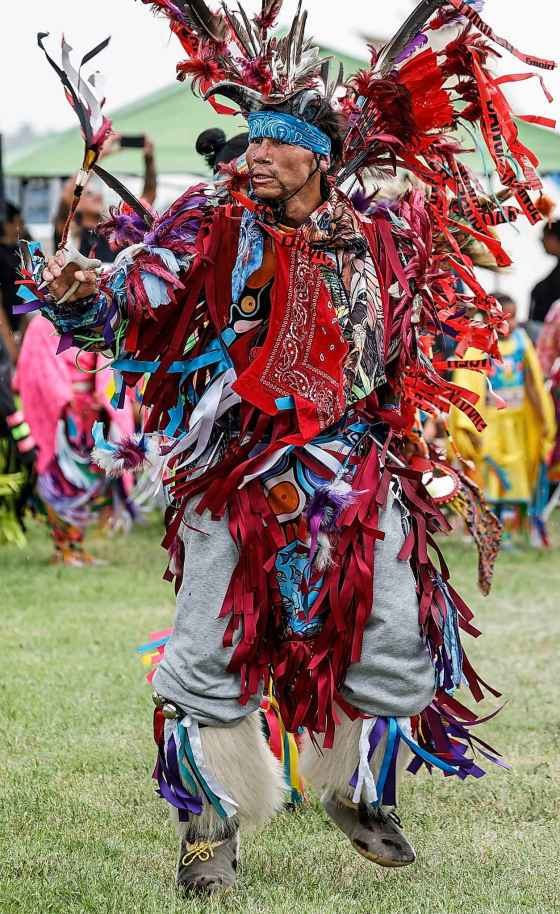
A dancer during the grand entrance of the powwow at Anishinaabe Days on Sunday. (John Woods / Free Press)

A dancer during the grand entrance of the powwow at Anishinaabe Days on Sunday. (John Woods / Free Press)

RECONCILI-ACTION OF THE WEEK

Every week I highlight an action, moment, or milestone forwarding reconciliation, illustrating how far Canada has come — and how far the country has yet to go.

The reconciliaction of the week is a tribute to my University of Manitoba colleague Karen Busby, who died July 23 after a fierce 15-year battle with Parkinson’s disease.

Busby was a human-rights advocate, a professor of law, and co-founded the Centre for Human Rights Research at the University of Manitoba. In addition to fighting for LGBTTQ+ rights, victims of sexual assault, and being an award-winning teacher and researcher, Busby worked hard to support residential school survivors, Indigenous artists, and to argue for safe drinking water on First Nations.

I first met Karen during her work with my father on the Truth and Reconciliation Commission and later witnessed her work assisting in the building of the National Centre for Truth and Reconciliation.

Karen was a very special thinker, advocate and human being. The world is a better place because of Karen Busby.


Advertisement

What's next in Manitoba arts, life and pop culture - curated by Jen Zoratti. Get the newsletter sent weekly.
 

LOCAL NEWS

Malak Abas:

Cash injection will help women’s centre grow

Serves nearly twice as many people as it did five years ago Read More


Zoe Pierce:

Building community

Inner City Youth Alive changes lives, one program at a time, in Winnipeg's North End Read More


Zoe Pierce:

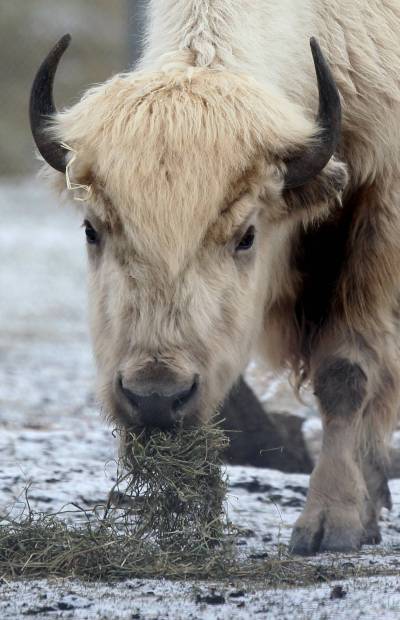
Longtime Assiniboine Park Zoo resident Blizzard the bison dies

Blizzard, the white bison that became one of Assiniboine Park Zoo’s most recognizable residents during nearly 20 years at the facility, has died, the zoo announced Friday. The zoo said ... Read More


Gabrielle Piche:

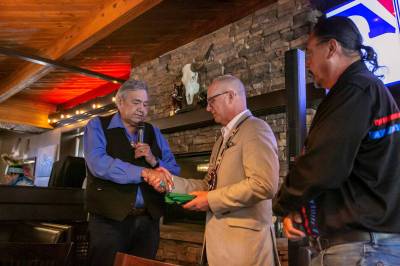
MMF partners with Garda North to train security for its facilities

Manitoba Métis Federation-owned buildings may soon be staffed by Métis security guards. The federation inked a deal with one of the world’s largest security companies to provide training to its cit... Read More


Malak Abas:

Cab companies hailed for improved Indigenous relations

Three taxi drivers have been fired and others suspended without pay since a zero-tolerance policy for mistreatment of Indigenous passengers was implemented by Winnipeg’s two largest cab companies. Read More


Mike McIntyre:

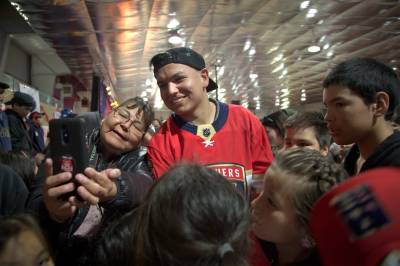
From the bigs to the bush

Cross Lake pro blueliner walks away from sport he loves to live and work in northern community he loves even more Read More


Maggie Macintosh:

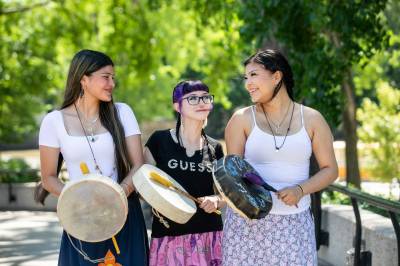
Finding their beat

Indigenous drum group celebrates sisterhood, solidarity Read More


OPINION

Noah Schulz:

Taking a stand on health care

Public health care didn’t develop in Canada by accident. It was fought for by people across the country. Read More


ARTS & LIFE

Jen Zoratti:

Changing the narrative

Cultural consultation gives Indigenous stories strength in Netflix’s new Little House on the Prairie Read More


FROM FURTHER AFIELD


Share:


Download our News Break app