FIVE STORIES ON TURTLE ISLAND
1. The Canadian Indigenous Nurses Association (CINA) and the Ontario Institute for Cancer Research (OICR) announced a new partnership this week to include Indigenous peoples in cancer research, build capacity, and examine specific reasons why First Nations, Inuit, and Métis (FNIM) communities are disproportionately impacted by cancer.
I recently attended a book launch in Yellowknife for The Book of Hope, an anthology edited by Agnes Pascal that tells the many stories and struggles of Indigenous and northern survivors of cancer.
The Canadian Cancer Society (CCS) has identified “some Indigenous groups have higher mortality rates of certain cancers compared to the general population in Canada. This is often because they don’t receive the continuous care, culturally appropriate treatments, education and support services they need.”
But the reasons for this disproportionate issue is uncertain, as the CCS says, “there’s not enough information about cancer in Indigenous communities.” Hopefully, this week’s announcement begins to address this ongoing tragedy.
2. A study by the polling company Leger was released a few months ago indicating 27 per cent of Canadians believe they are living on stolen Indigenous lands, 52 per cent don’t and 21 per cent don’t know.
These numbers showed a change from a similar study in 2021 in which Canadians were asked if they felt that they currently lived on “unceded” Indigenous lands and 25 per cent said yes, 42 per cent said no and 33 didn’t know.

The study showed age played a major factor in respondents. As pointed out by the National Post: “the older people are, the more likely they are to say they don’t.”
Younger people, in the meantime, who are the most competent generation in Canadian history when it comes to reconciliation, are much more ready to talk about sharing land and resources.
3. The vast majority of Indigenous peoples in North America condemn the military actions of Israel in Gaza, empathizing with Palestinians in the war against Hamas. Among many examples, here is one, here is another and here is another.
There are, however, some prominent Indigenous leaders such as Harry Laforme, former judge (and temporarily lead commissioner of the first Truth and Reconciliation Commission), and Harvey Yesno, former grand chief of the Nishnawbe Aski Nation, who defend Israel’s actions and condemn the Canadian government’s official statement on May 19, 2025, opposing the expansion of Israel’s military operations in Gaza.
They, and a collective of Indigenous leaders, wrote a letter expressing this opinion in the National Post this week.
4. Canada’s current climate strategy is lacking certain “essential elements” and input with Indigenous communities, said the country’s Commissioner of Environment and Sustainable Development Jerry DeMarco this week.
My colleague Mark Blackburn at APTN broke this story of a recent report in Canada’s auditor general office this week.
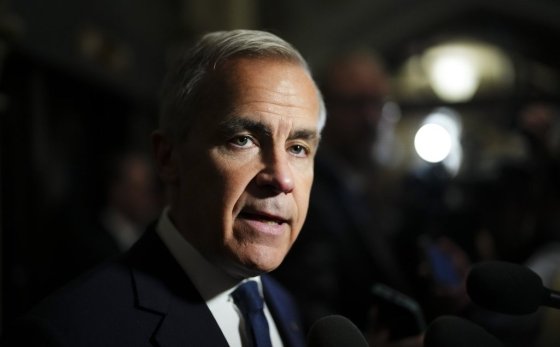
A robust conversation on climate is something researchers, scientists and activists have been calling on Mark Carney’s federal government to have — especially in relation to the country’s new plan to move quickly on resource development projects “in the national interest.”
Nothing is more in the “national interest” than having clean air to breathe, water to drink and food to eat, not to mention the critical importance of our non-human relatives in the environment.
This might be the most important thing to remember as this country gears up for what is going to be the hottest summer on record.
5. For many in North America, actor Graham Greene is the face of Indigenous peoples. Best known perhaps for his role as Kicking Bird in the Academy Award-winning Dances with Wolves, Greene was awarded a Governor General’s Award for Lifetime Artistic Achievement this week.
When he got the call, the humble actor was surprised and thought it was a “prank.”

Graham Greene on the red carpet for the 2022 Canada’s Walk of Fame Gala in Toronto. (Tijana Martin / The Canadian Press files)
An Oneida citizen from the Six Nations of the Grand River, Greene is still a working actor, most recently guest starring on the HBO hit series The Last of Us.
I know Greene best for his incredible lead role as a damaged veteran, well-meaning father but ultimately tragic figure in the feature film Skins, one of my favourite movies of all time.
IN PICTURES

Hundreds of women, girls, two-spirit and gender-diverse Manitobans gather on the Grand Staircase in the Manitoba Legislative Building on June 4 to celebrate new legislation, Bill 44, which formalizes the role of the Matriarch Circle in government. The Matriarch Circle is an advisory body that provides the Manitoba government with advice and vision to empower and benefit women, girls, two-spirit and gender-diverse individuals. The group includes representation from accomplished Afro-Indigenous, Anishinaabe, Anisininew, Cree, Dakota, Dene, Inuit and Métis women, youth and gender-diverse relatives. (Mike Deal / Free Press)
RECONCILI-ACTION OF THE WEEK
Every week I highlight an action, moment, or milestone forwarding reconciliation, illustrating how far Canada has come — and how far the country has yet to go.
This week’s reconciliaction again goes to our relations fighting the wildfires in the north and those working tirelessly to support those displaced. One could fill pages with all of the miracles firefighters and grassroots people are doing to save their kin and their homes but you can see a few here, and here, and here.
There are also many organizations stepping up and offering free services for families impacted by the wildfires and they deserve an immense thanks for showing the love.

Fire crews in Flin Flon earlier this month. (Supplied / Province of Manitoba)
I want however to give a huge AHO! though to all of the remarkable volunteers who are sorting through the literal tons of clothing donations this past week, resulting in a widescale request to focus donations now on other items, such as hygiene items (body wash, toiletries, and medical materials), baby things (playpens, diapers, and toys), pet materials (food, kennels, cleaning supplies) and travel stuff (luggage, bags, backpacks).
Perhaps the most valued and useful item: unused gift cards people may have around the house. There are many places you can drop stuff off.
If one thing is for sure, crisis brings people together, reminding us all that we are all relatives, family, and treaty people.
|