Biidaajimowin
Winnipeg Free Press Logo
 

National projects, treaty rights and climate change

This past week, former B.C. premier Christy Clark made the news rounds touting her past government’s record on getting resource projects completed through the province.

The Clark government was a key part of getting the Coastal GasLink pipeline completed, a 670-kilometre natural gas pipeline that is about to start transporting natural gas from the northeast of British Columbia to the LNG Canada facility in Kitimat.

The problem is the Clark government wasn’t the primary reason the Coastal GasLink pipeline project is completed — COVID-19 was.

The pipeline faced strong opposition from Indigenous activists and leaders — and in particular Wet’suwet’en hereditary chiefs and their supporters — since the project was first government-approved in 2014. This led to massive conflict, arrests, and an issue that has never been resolved.

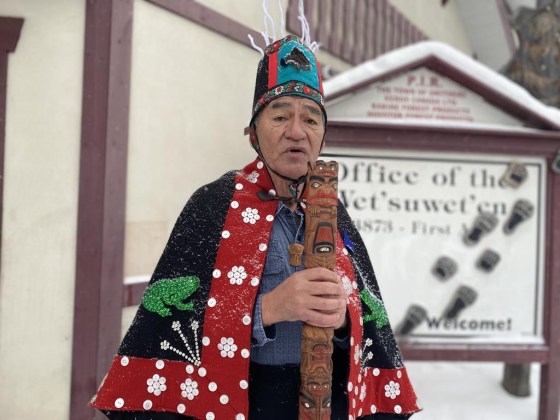
Na'moks, a spokesman for the Wet'suwet'en hereditary chiefs, holds a press conference in Smithers, B.C., Tuesday, Jan. 7, 2020, on the one-year anniversary of RCMP enforcement of an injunction granted to Coastal GasLink. (Amy Smart / The Canadian Press files)

Na’moks, a spokesman for the Wet’suwet’en hereditary chiefs, holds a press conference in Smithers, B.C., Tuesday, Jan. 7, 2020, on the one-year anniversary of RCMP enforcement of an injunction granted to Coastal GasLink. (Amy Smart / The Canadian Press files)

COVID-19 sent activists home, and construction on the project continued to completion as a result.

In other words, Clark wasn’t the reason the Coastal GasLink project was completed; a global pandemic was.

There will be no disease to save construction projects this time (one hopes, anyway). U.S. President Donald Trump is not an infection, of course, but might fit the bill.

In reaction to Trump, B.C. Premier David Eby and Ontario Premier Doug Ford moved quickly to pass bills to “speed up” the approval of resource development projects, causing widescale reaction in British Columbia and Ontario.

First Nations activists are now gearing up for conflict and criticizing legislation proposed by the federal Liberals and Prime Minister Mark Carney.

Conflict throughout the country — similar to the level of the Wet’suwet’en against the Coastal GasLink pipeline — appears imminent.

There is still time to do something, however. In this op-ed in The Globe and Mail, two leaders from the First Nations Major Projects Coalition argue: “Projects advance faster, and with more certainty and legitimacy, when First Nations are involved at the start as constitutional rights holders, environmental stewards, economic beneficiaries and commercial partners… the ‘national interest’ must not be defined exclusively by economic interests. It must reflect the rights of Indigenous peoples, the honour of the Crown and the well-being of all Canadians.”

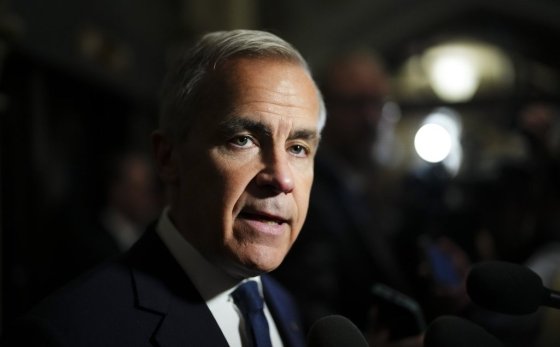
Prime Minister Mark Carney (Sean Kilpatrick / The Canadian Press files)

Prime Minister Mark Carney (Sean Kilpatrick / The Canadian Press files)

In response, Prime Minister Mark Carney has vowed to adequately consult when implementing his plan, called the “One Canadian Economy Act,” while creating an Indigenous advisory council to help guide their pro-development agenda.

Time will tell whether this will happen.

Meanwhile, Indigenous business leaders in Calgary met this week and announced they are supportive of the Carney pro-development agenda.

And here in Manitoba, Premier Wab Kinew is floating the idea of a northern trade and energy corridor and possibly even a pipeline.

This has resulted in our own home-grown conflict brewing, as individuals within the Manitoba NDP are beginning to criticize Kinew, pointing out his past statements against pipelines, while Indigenous activists such as Clayton Thomas-Müller — a longtime vocal supporter of Kinew — post videos openly questioning the premier’s motives.

With much of Manitoba’s north burning from wildfires — and potentially deep conflict between First Nations and Canada over the issue of resource development on the horizon — what and who will do something to address this looming stalemate?


Niigaan Sinclair, Columnist


Advertisement

Dish. The latest on food and drink in Winnipeg and beyond from arts writers Ben Sigurdson and Eva Wasney.
 

FIVE STORIES ON TURTLE ISLAND

1. The Canadian Indigenous Nurses Association (CINA) and the Ontario Institute for Cancer Research (OICR) announced a new partnership this week to include Indigenous peoples in cancer research, build capacity, and examine specific reasons why First Nations, Inuit, and Métis (FNIM) communities are disproportionately impacted by cancer.

I recently attended a book launch in Yellowknife for The Book of Hope, an anthology edited by Agnes Pascal that tells the many stories and struggles of Indigenous and northern survivors of cancer.

The Canadian Cancer Society (CCS) has identified “some Indigenous groups have higher mortality rates of certain cancers compared to the general population in Canada. This is often because they don’t receive the continuous care, culturally appropriate treatments, education and support services they need.”

But the reasons for this disproportionate issue is uncertain, as the CCS says, “there’s not enough information about cancer in Indigenous communities.” Hopefully, this week’s announcement begins to address this ongoing tragedy.


2. A study by the polling company Leger was released a few months ago indicating 27 per cent of Canadians believe they are living on stolen Indigenous lands, 52 per cent don’t and 21 per cent don’t know.

These numbers showed a change from a similar study in 2021 in which Canadians were asked if they felt that they currently lived on “unceded” Indigenous lands and 25 per cent said yes, 42 per cent said no and 33 didn’t know.

The study showed age played a major factor in respondents. As pointed out by the National Post: “the older people are, the more likely they are to say they don’t.”

Younger people, in the meantime, who are the most competent generation in Canadian history when it comes to reconciliation, are much more ready to talk about sharing land and resources.


3. The vast majority of Indigenous peoples in North America condemn the military actions of Israel in Gaza, empathizing with Palestinians in the war against Hamas. Among many examples, here is one, here is another and here is another.

There are, however, some prominent Indigenous leaders such as Harry Laforme, former judge (and temporarily lead commissioner of the first Truth and Reconciliation Commission), and Harvey Yesno, former grand chief of the Nishnawbe Aski Nation, who defend Israel’s actions and condemn the Canadian government’s official statement on May 19, 2025, opposing the expansion of Israel’s military operations in Gaza.

They, and a collective of Indigenous leaders, wrote a letter expressing this opinion in the National Post this week.


4. Canada’s current climate strategy is lacking certain “essential elements” and input with Indigenous communities, said the country’s Commissioner of Environment and Sustainable Development Jerry DeMarco this week.

My colleague Mark Blackburn at APTN broke this story of a recent report in Canada’s auditor general office this week.

A robust conversation on climate is something researchers, scientists and activists have been calling on Mark Carney’s federal government to have — especially in relation to the country’s new plan to move quickly on resource development projects “in the national interest.”

Nothing is more in the “national interest” than having clean air to breathe, water to drink and food to eat, not to mention the critical importance of our non-human relatives in the environment.

This might be the most important thing to remember as this country gears up for what is going to be the hottest summer on record.


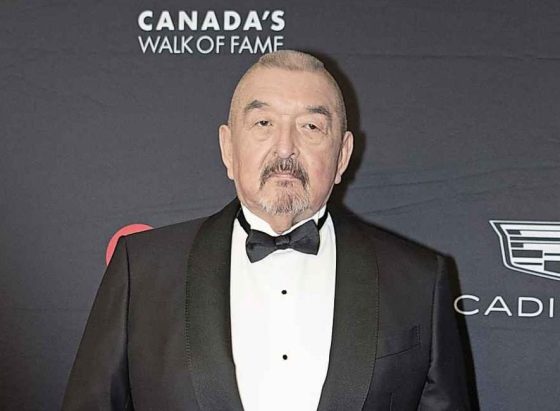
5. For many in North America, actor Graham Greene is the face of Indigenous peoples. Best known perhaps for his role as Kicking Bird in the Academy Award-winning Dances with Wolves, Greene was awarded a Governor General’s Award for Lifetime Artistic Achievement this week.

When he got the call, the humble actor was surprised and thought it was a “prank.”
Graham Greene on the red carpet for the 2022 Canada’s Walk of Fame Gala in Toronto. (Tijana Martin / The Canadian Press files)

Graham Greene on the red carpet for the 2022 Canada’s Walk of Fame Gala in Toronto. (Tijana Martin / The Canadian Press files)

An Oneida citizen from the Six Nations of the Grand River, Greene is still a working actor, most recently guest starring on the HBO hit series The Last of Us.

I know Greene best for his incredible lead role as a damaged veteran, well-meaning father but ultimately tragic figure in the feature film Skins, one of my favourite movies of all time.


IN PICTURES

Hundreds of women, girls, two-spirit and gender-diverse Manitobans gather on the Grand Staircase in the Manitoba Legislative Building on June 4 to celebrate new legislation, Bill 44, which formalizes the role of the Matriarch Circle in government. The Matriarch Circle is an advisory body that provides the Manitoba government with advice and vision to empower and benefit women, girls, two-spirit and gender-diverse individuals. The group includes representation from accomplished Afro-Indigenous, Anishinaabe, Anisininew, Cree, Dakota, Dene, Inuit and Métis women, youth and gender-diverse relatives. (Mike Deal / Free Press)

Hundreds of women, girls, two-spirit and gender-diverse Manitobans gather on the Grand Staircase in the Manitoba Legislative Building on June 4 to celebrate new legislation, Bill 44, which formalizes the role of the Matriarch Circle in government. The Matriarch Circle is an advisory body that provides the Manitoba government with advice and vision to empower and benefit women, girls, two-spirit and gender-diverse individuals. The group includes representation from accomplished Afro-Indigenous, Anishinaabe, Anisininew, Cree, Dakota, Dene, Inuit and Métis women, youth and gender-diverse relatives. (Mike Deal / Free Press)

RECONCILI-ACTION OF THE WEEK

Every week I highlight an action, moment, or milestone forwarding reconciliation, illustrating how far Canada has come — and how far the country has yet to go.

This week’s reconciliaction again goes to our relations fighting the wildfires in the north and those working tirelessly to support those displaced. One could fill pages with all of the miracles firefighters and grassroots people are doing to save their kin and their homes but you can see a few here, and here, and here.

There are also many organizations stepping up and offering free services for families impacted by the wildfires and they deserve an immense thanks for showing the love.

Fire crews in Flin Flon earlier this month. (Supplied / Province of Manitoba)

Fire crews in Flin Flon earlier this month. (Supplied / Province of Manitoba)

I want however to give a huge AHO! though to all of the remarkable volunteers who are sorting through the literal tons of clothing donations this past week, resulting in a widescale request to focus donations now on other items, such as hygiene items (body wash, toiletries, and medical materials), baby things (playpens, diapers, and toys), pet materials (food, kennels, cleaning supplies) and travel stuff (luggage, bags, backpacks).

Perhaps the most valued and useful item: unused gift cards people may have around the house. There are many places you can drop stuff off.

If one thing is for sure, crisis brings people together, reminding us all that we are all relatives, family, and treaty people.


Advertisement

Winnipeg's most read news source. 353,000 Adults Weekly.
 

WHAT I'VE BEEN WORKING ON

Niigaan Sinclair:

Wildfire evacuation underscores need for Red Dress Alert system

The grassroots organization Giganawenimaanaanig released an interim report this week on the progress of the proposed Red Dress Alert, an initiative that would notify the public and help co-ordinate responses when an Indigenous woman, girl, or two-spirit person goes missing. Read More


Niigaan and the Lone Ranger Podcast:

Trump and trade and Kinew, oh my!

A candid chat with the Winnipeg mayor about opening Portage and Main to pedestrians and (possibly) closing Graham Avenue to cars. And other stuff. Read More


LOCAL NEWS

Maggie Macintosh:

Cabinet minister breaks silence about 2019 workplace harassment probe

Manitoba’s sole cabinet minister has defended her work at a Winnipeg college and said she’s being unjustly targeted more than five years after an investigation concluded she had harassed an employee. Read More


Abiola Odutola:

Sioux Valley to spend $2M on portable classrooms

The Sioux Valley Dakota Nation will invest more than $2 million in portable classrooms as 90 students will be transferred from Sioux Valley High School in Brandon to the community in the fall. Read More


Mike McIntyre:

From Whiteout to down and out

Jets co-owner says it's 'patently unacceptable' to see downtown go from thriving to struggling as he battles to improve the city's core   Read More


Malak Abas:

MMF command centre gives evacuees ‘retail therapy’

Donations line walls of McGregor Street building, where people can grab essentials, get online and eat a hot meal Read More


Kevin Rollason:

UN ambassador travels to Peguis to learn about repeated floods

Canada’s ambassador to the United Nations has promised Peguis First Nation he will convey their concerns about repeated flooding to the Manitoba and federal governments. Bob Rae, who went to the fl... Read More


ARTS & LIFE

Jen Zoratti:

Stamp to celebrate 2Spirit pride

New Canada Post issue commemorates founding event of Two-Spirit Gathering Read More


Reviewed by Barry Craig:

Pulling back the veil

Residential school hockey tour masked suffering of Indigenous children Read More


Ben Waldman:

Icelandic lullaby jumping-off point for debut dance work

Don’t sleep on the latest work from Winnipeg dance artist Alex Elliott, even if it is based on a haunting Icelandic lullaby. Read More


FROM FURTHER AFIELD


Share:


Download our News Break app