FIVE STORIES ON TURTLE ISLAND
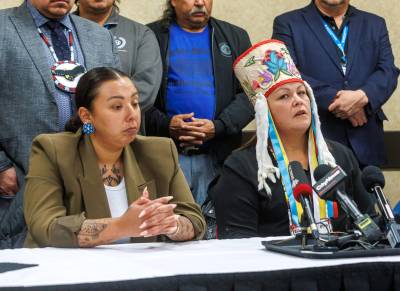
1. I’m thinking of my relations in Fisher River Cree Nation this week as leaders announced they were facing a “severe shortage” of at least 40 educational assistants needed to serve children in the school system owing to chronic underfunding.
It’s long been known adults requiring special needs on First Nations reserves go without basic services, but the involvement of Jordan’s Principle addressed some of these needs in recent years.
Funding for Jordan’s Principle is now being restricted and tightened by the federal government as the system is reviewed, and this is creating shortages as seen on Fisher River Cree Nation. During these moments of “review,” children are often the ones to suffer first.
2. A federal judge had harsh words for the federal government, saying Canada has continued to “shirk its responsibilities” since signing the 1997 Manitoba Framework Agreement.
Canada had promised to return land to First Nations that were given insufficient land under Treaties 1, 3, 4, 5, 6 and 10. The total land owed to the 21 First Nations eligible under the agreement was up to 445,417 hectares, but slightly more than half of that has been converted to reserve land as of March 2026.
Reports on this progress are available at the Manitoba Framework Agreement Treaty Land Entitlement Implementation Monitoring Committee here.
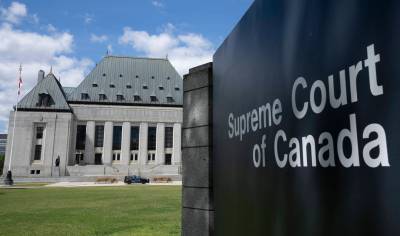
3. Independent Canadian senators continue to propose provocative legislation in Canada’s Senate with a bill aimed at explicitly defining and clarifying the RCMP’s legal obligations to recognize, respect and enforce First Nations’ own laws and governance systems.
Numerous First Nations have complained about jurisdictional confusion and spoken out about local government bylaws not being enforced by RCMP detachments.
4. Leaders from the Assembly of Manitoba Chiefs (AMC) are in India this week as part of the official “Team Canada” trade mission to forge international business partnerships and expand economic opportunities for Indigenous-owned businesses.
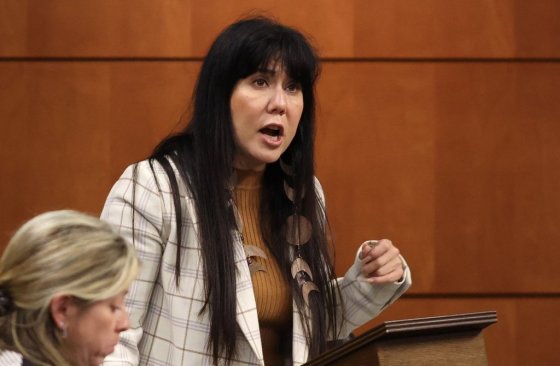
First Nations leaders including AMC Grand Chief Kyra Wilson and Minegoziibe Anishinabe Chief Derek Nepinak are joining other Manitoban representatives exploring opportunities for First Nations to participate in the creation and trade of agriculture and food products, clean energy, natural resources, infrastructure, resources and technology.
5. Gov. Gen. Louise Arbour met Premier Wab Kinew and other Manitoba Indigenous leaders during her first official visit to Manitoba Oct. 7 to 9. She also met with leadership from Manitoba Keewatinowi Okimakanak, the Manitoba Inuit Association and the Manitoba Métis Federation.
Arbour was particularly interested in meeting with Manitoba Inuit Association CEO Gayle Gruben to discuss issues facing Inuit in Manitoba, including housing, health care, education and research on residential schools.
She also spent a day touring Le Musée de Saint-Boniface and learning from Grade 6 students from l’École Taché about Manitoba’s history and Métis heritage.
IN PICTURES
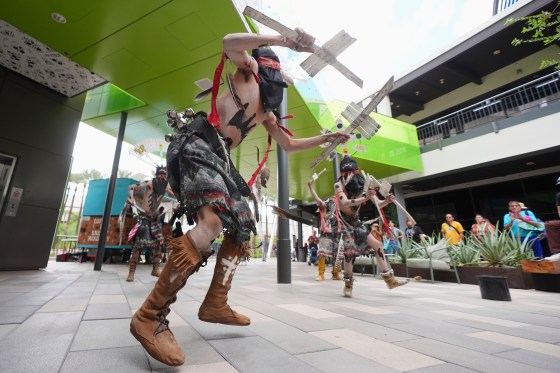
Members of ChÄbÄ“tÅ« Apache Crown Dancers perform a traditional dance at an Indigenous Peoples Day event in Phoenix, Arizona on Monday. (Ross D. Franklin / The Associated Press files)
RECONCILI-ACTION OF THE WEEK
Every week I highlight an action, moment, or milestone forwarding reconciliation, illustrating how far Canada has come — and how far the country has yet to go.
The reconcili-action of the week goes to all of my friends and colleagues at Yellowquill College, which was officially proclaimed as the province’s first fully recognized, First Nations-owned and operated post-secondary institution and will now go by the name Yellowquill University College (YQUC).
Proclaimed Oct. 1 by the Manitoba government, YQUC now has full legal authority to grant university degrees, diplomas and certificates on par with other public universities, colleges, and religious institutions in Manitoba.
Established in 1984 by the Dakota Ojibway Tribal Council and operating its main campus on the Long Plain First Nation urban reserve in Winnipeg, YQUC offers undergraduate degrees (such as bachelor of education, bachelor of relational studies, and bachelor of First Nations studies) alongside various diplomas and certificates in fields such as child and family services, business and health.
|