FIVE STORIES ON TURTLE ISLAND
1. An ongoing court battle is getting ugly, stemming from Canada’s chronic underfunding of First Nations’ child-welfare services.
Starting with a decision in 2016 from the Canadian Human Rights Tribunal, work is ongoing to rectify how Canada discriminated against First Nations children by chronically underfunding the on-reserve child-welfare system, resulting in ongoing mass removals of children from their families and communities.
After 10 years of court battles, this week, the federal government filed its third challenge this year, seeking to quash the human-rights tribunal’s refusal to reconvene a judicial panel to re-negotiate a settlement after chiefs rejected the federal government’s offer in 2024.
Critics such as Cindy Blackstock are calling this “judicial interference,” and there seems to be no end in sight — meanwhile, the situation for on-reserve children has been getting worse.
2. Prime Minister Mark Carney wrapped up his first investment summit with investors from around the world.
Carney advertised resource development projects such as the controversial Kino Aski liquefied natural gas project — a pipeline that would move gas from western Canada to Quebec’s north shore for export to Europe.
Anishinabek Nation Grand Council Chief Linda Debassige issued a warning to the prime minister: “The lands and resources being targeted for development and investment are within the treaty territories of the Anishinabek First Nations around the Great Lakes region… [these] are not yours to give.”
Ahem, well, that’s uncomfortable.
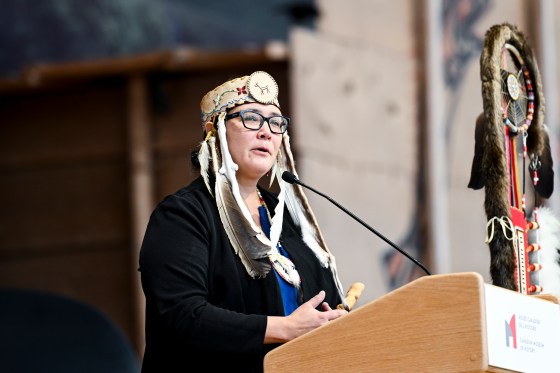
Grand Chief Linda Debassige of Anishinabek Nation (Spencer Colby / The Canadian Press files)
3. The devastating wildfires in British Columbia and their disproportionate effect on First Nations caught the attention of Amnesty International this week.
The global peace organization is known for advocating for marginalized groups when governments target groups of oppressed peoples.
A shocking series of reports has been issued by B.C.’s Office of the Human Rights Commissioner involving the various ways human rights and Indigenous rights are being violated by the lack of government response — from the federal and provincial governments — in this year’s ongoing wildfire crisis.
There is an interesting, somewhat related story on APTN this week on how traditional Indigenous uses of fire have been able to protect parts of the boreal forest.
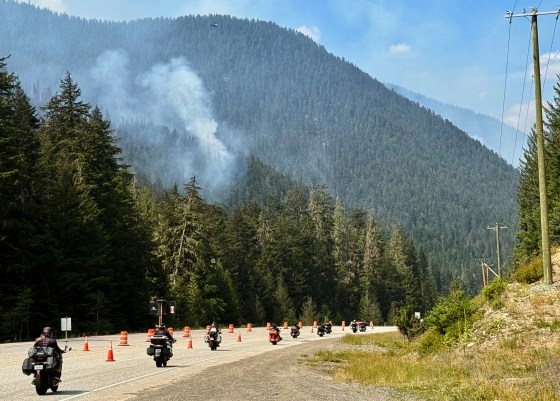
Fire crews drop water on a wildfire along Highway 3 in Manning Park, British Columbia, as fires burn throughout the southeastern part of the province on Aug. 12, 2026. (Haven Daley / The Associated Press files)
4. Fall has arrived, and leadership at Misipawistik Cree Nation is again urging all hunters — including those from the community — to voluntarily pause their harvesting of moose in order to protect dwindling local populations.“That is putting the entire population at risk of a collapse,” Misipawistik Chief Heidi Cook told The Narwhal/Free Press. “There may be no moose next year. This is an emergency. We have to do something now to make sure that the population can recover.”
According to the province’s 2025 aerial big game survey, an estimated 281 moose reside in the game area, roughly 60 of which are bull moose. The area contained an estimated 346 moose in 2013, representing an 18.7 per cent loss.
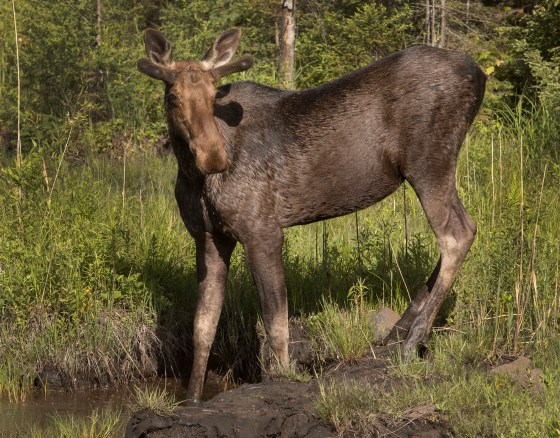
A northern Manitoba First Nation is calling for hunters to voluntarily stop hunting to conserve moose populations. (Fred Thornhill / The Canadian Press files)
5. A piece in The Guardian tells the story of exploitative online “influencers” and their attempts to target and film “un-contacted Indigenous peoples” for the purposes of online clickbait.
I don’t often focus on international stories in this newsletter, but this one was hard to ignore. It describes a practice that produces little more than conflict. It risks the well-being of the nearly 196 Indigenous communities who live in remote areas throughout primarily South America, Indonesia, and India and want little contact with the outside world.
IN PICTURES
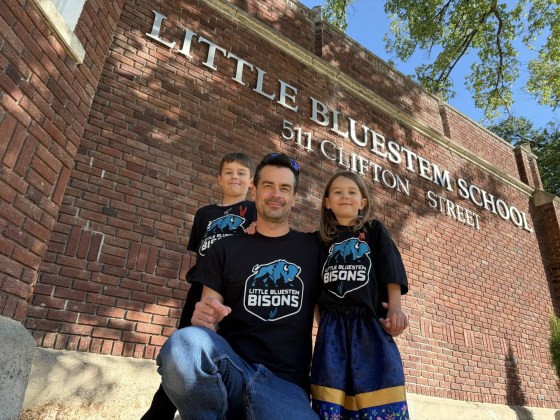
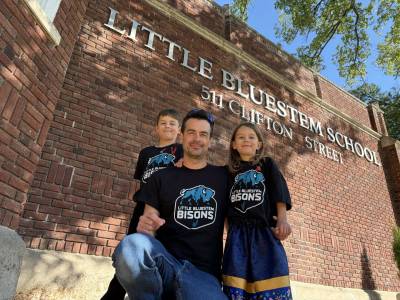
Ryan Smith, along with kindergartener Hannah and Grade 4 student Owen, all voted for Little Bluestem to be their school’s name. A fiddle and jig ceremony, featuring Metis art and traditions, was held last week to celebrate the renaming of the former Wolseley School. Col. Garnet Wolseley didn’t believe in Métis peoples’ right to self-determination. (Maggie Macintosh / Free Press files)
RECONCILI-ACTION OF THE WEEK
Every week I highlight an action, moment, or milestone forwarding reconciliation, illustrating how far Canada has come — and how far the country has yet to go.
The reconciliaction of the week is to the hundreds of Manitobans who came out to the sixth annual Indigenous Women & Girls Run hosted by the Manitoba Aboriginal Sports and Recreation Council (MASRC) last Saturday in St. Vital Park.
The event supports the funding of programs that work on wellness for Indigenous women and girls, while bringing awareness to the barriers and high dropout rates for young girls in sports.
Shout out to all of our friends and relations at the MASRC, including executive director Chantal Fritzsche, who do great — often uncredited work — to empower Indigenous nations in Manitoba to grow physically, mentally, culturally, and spiritually through sport and recreation.
Part of that work involves the Indigenous Sports Hall of Fame. Check out this year’s nominees here.
|