When to prune fruit trees
Paul Kruse is a certified arborist and owner of Northern Grove Tree Services. If you missed his presentation at last month’s Winnipeg Seedy Saturday or are wondering about when to prune your fruit trees, here is what he recommends:
“The best time to prune fruit trees is late winter into early spring while trees are still dormant,” says Kruse. “The big things to think about are leaf and bud formation. We want to stay away from pruning during those times because the tree is putting a lot of energy into creating leaves and buds in spring, so if your tree is already doing that, then that’s not the right time to prune.”
If you do not get around to pruning your fruit tree while it is still dormant, says Kruse, it’s still possible to prune in the early part of the growing season — but wait at least a month, until your fruit tree is fully leafed out.
Use only clean, sharp pruners and disinfect after every branch is removed. Don’t remove more than 25 per cent of a tree in a year or the fruit yield will be adversely affected. I will be talking again with Paul Kruse for my column in a few weeks.
Reply to this email if you have a question for him!
Increase your dahlia crop
Now is an ideal time to take your dahlia tubers out of storage and begin potting them up.
“Propagation of dahlias by taking cuttings is a simple and exciting way to increase your dahlia crop,” says Heather Warkentin, owner of Prairie Grove Greenhouse in Domain, Man., who grows more than 50 varieties of dahlias which can be ordered online as tubers or potted plants.
“I usually take only four cuttings from a single tuber because the ‘mother’ tuber is still being planted in the field and I want it to produce a big, healthy plant.”
Below are the steps Warkentin follows for growing dahlia cuttings.
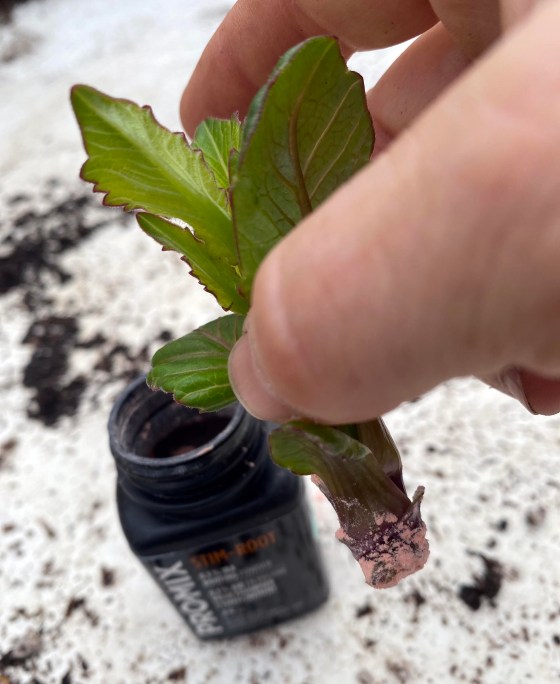
A dahlia cutting is dipped in rooting powder. (Heather Warkentin photo)
You will need a pair of sharp, sterile scissors, rooting hormone (aloe vera gel works too), 3.5-inch pots, a potting tray, fresh potting mix, and a heating mat.
Sanitary conditions are essential! When you take cuttings, dip your shears into a jar of clean fresh water with a 10 percent solution of bleach before taking each cutting.
- Start with firm, healthy dahlia tubers.
- Plant the tuber into a pot with moistened soil. Do not bury the whole tuber. Leave the neck and crown sticking out so that you have access to the eyes, which are the growing points. Take care to ensure the soil is not overly wet.
- Fresh green growth will soon begin sprouting on your tuber. Once the shoots are two to three inches in length and have two or three sets of leaves, use the scissors to remove the green shoot right at its base. Keep in mind that when you take a cutting from a tuber, a new shoot will not grow in the exact same spot. The area of the cutting will callus over, however, more eyes will develop in that area.
- Dip the end of the green shoot into rooting hormone. Or take a leaf from your aloe vera plant, squeeze out some gel, and use it in place of rooting hormone. You can also root cuttings without the use of rooting hormone.
- Plant the cutting into a small container filled with moist potting mix.
- Cover with a humidity dome and place the pot and tray on a heating mat. Without a heating mat, it takes longer for cuttings to root and as a result, there can be the risk of damping off.
- Tiny tubers will begin forming on your plant.
While I was talking to Warkentin, I of course asked the names of her most popular dahlias.
“The really popular and sought-after dahlias that we continuously take cuttings of and work really hard to increase our production are Night Silence, Karma Choc, Salmon Runner, Pink Runner, Copper Boy, Nathalie G, Linda’s Baby, and Sweet Suzanne,” she said.
But there are also dahlia varieties that Warkentin never takes cuttings from because their tuber production is so great. “I refer to these as my classic, never-fail dahlias: Apricot Desire, Arabian Night, Cornel Bronze, Golden Scepter, Maarn, Petra’s Wedding, and Viking. These produce mass amounts of blooms on long, strong stems and tuber production is excellent. Every dahlia grower should have these, as they are workhorses.”

Popular dahlia varieties Salmon Runner, Pink Runner, Nathalie G and Linda’s Baby. (Prairie Grove Greenhouses photo)
Pollock’s potting mix
Last year, to test the market, Pollock’s Hardware offered consumers a small quantity of its own handcrafted peat-free potting mix.
This spring, general manager Kaitlyn Peters says the shop will once again offer its mix. Available in six-litre bags, the organic potting mix is comprised of Sea Soil compost, coconut coir, vermiculite, and worm castings. These ingredients are designed to add beneficial soil microbes and nutrients, and promote good aeration and water-holding capacity, says Peters.
“We also carry CowPots for starting seeds, which are made from composted cow manure. These are biodegradable and a great choice for starting veggies such as cucumbers, which have shallow roots that don’t like to be disturbed,” she says.
In addition to seed packets from Lindenberg Seeds, Pollock’s will also be offering tomato seedlings and seedlings for lettuce, kale, and herb mixes this spring from Slow River Gardens, a CSA Farm south of Winnipeg.
Looking for lawn and garden equipment rentals? Pollock’s Hardware rents hedge trimmers, manual lawnmowers, and other tools that can be booked in advance and are available for 24 hours. The shop celebrated its 100th anniversary last year.
A woolly garden solution
Anna Hunter and Luke Palka are a husband-and-wife team who own and operate Long Way Homestead, a sheep and fibre farm that is Manitoba’s only wool-processing farm. In 2018, they began looking for innovative ways to use waste wool.
After working with an engineering firm in Indiana, they purchased a machine that uses heat and force to crush waste wool into wool pellets. Last year, Hunter and Palka began marketing the wool pellets for use as an organic fertilizer in garden soil and potting mixes.
“When we use wool pellets in our garden it slow-releases nitrogen and other nutrients, it adds aeration to the soil and increases water holding capacity, it keeps away slugs and other pests,” says Hunter.
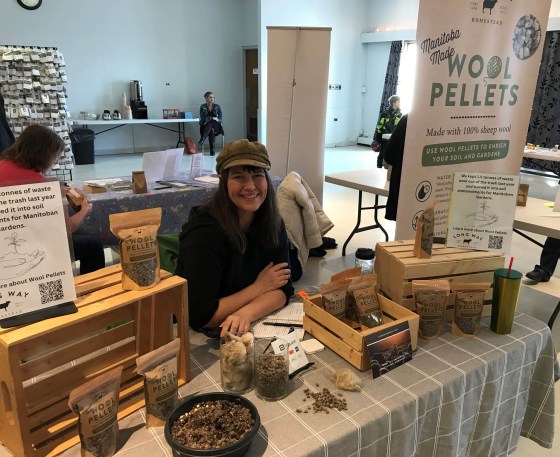
Anna Hunter at 2023 Seedy Saturday. (William Dowie photo)
In addition to processing all the waste wool from their mill, Hunter and Palka also purchase waste wool for pellets from other sheep producers in Manitoba. The process has diverted 1.5 tonnes of waste wool from local landfills.
Here’s a video that shows how wool pellets are made.
Long Way Homestead was at Winnipeg’s Seedy Saturday in March and will be at the Living Green Show April 7-9. To learn more, visit longwayhomestead.com.
Divide your primroses
Primroses brighten up shady areas of the spring garden with their cheerful, brightly coloured flowers. Keep Primula looking beautiful and vigorous by dividing crowded clumps every three to four years.
Division is also a wonderful way to increase your plant collection. Divide primroses after they have finished blooming in spring, or wait until early September. Dividing primroses immediately after flowering gives them a chance to establish their roots during the growing season.
Greg Boguski grows several types of primroses in his Brandon garden and shares the following tips:
“The easiest type to divide is the Japanese primrose (Primula sieboldii),” says Boguski. “Dig up the clump, cut or pull apart the plant into smaller pieces similar to how you would divide a perennial geranium, and replant.” Discard the old centre of the plant. “And then you have two options: you can plant the divisions in pots and baby them until they establish, or you can replant the divisions in a shaded area and keep them moist and cool.”
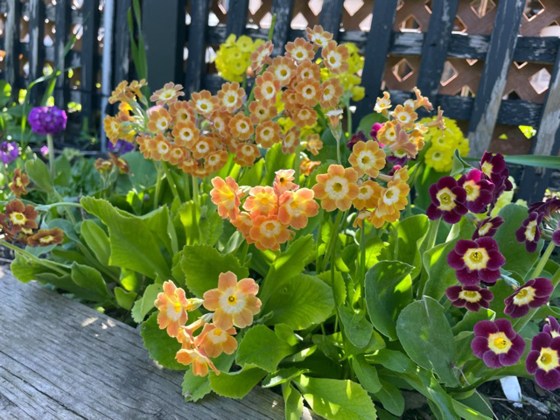
Primroses auriculas (Greg Boguski photo)
Primulas referred to as auriculas are alpine plants. Most are scented. “To divide Primula auricula, pull away the offsets which grow from the main root, which is referred to as the ‘carrot’,” says Boguski. “Remove some of the leaves on the offsets and root the plants in pots filled with clean potting mix or replant them into the ground.”
Boguski doesn’t bother to divide grocery store primroses because they are not as reliably hardy and typically have a shorter life in the garden. Always use a clean sharp knife for dividing plants and water in new divisions thoroughly after planting.
Planning a new garden?
If you have plans for designing a new garden or want to renovate a flower or shrub bed, take note now of the sun and shade patterns that the area receives, as well as the number of hours of sun or shade.
Repeat this in June and again in late August or early September. Recording the quality and quantity of light that an area receives will help you match your plant selection to the light conditions of your site.
Spotlight on phlox ‘orchid green’
As you visit garden centres this spring, keep your eyes peeled for Phlox paniculata ‘Orchid Green’, a tall, perennial garden phlox with Zone 4 hardiness. ‘Orchid Green’ has intriguing flowers that are twisted in the bud and divided into five creamy-white petals with broad green picotee edging. The fragrant, six- to seven-inch (15-17 cm) pyramid-shaped flowers bloom from midsummer to early September. Plant in full sun to part sun.
One may be the loneliest number, but sometimes it works magic in the garden. If you decide to try ‘Orchid Green’ this year but plant just one specimen, why not combine it with the light green, velvety leaves of Lady’s Mantle (Alchemilla mollis) which produces sprays of tiny, yellow-green flowers along with Sunny Seduction yarrow ‘Firefly Sunshine’ Achillea, which has lemon yellow flowers and grey- green ferny foliage. Pollinators love phlox and I think you will love this unique variety, too.
House plant of the year
Feeling Flirty Tradescantia (purple tradescantia) is Proven Winners 2023 Houseplant of the Year. What makes this trailing purple tradescantia different from all the others?
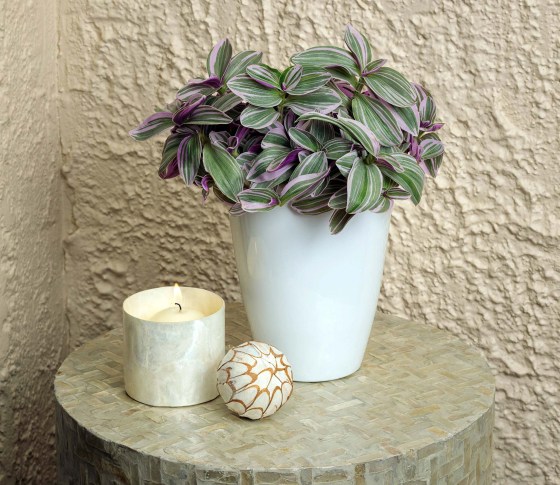
Feeling Flirty Purple Tradescantia (Proven Winners photo)
A recently developed variety, Feeling Flirty has pink and green striped variegation with soft purple undersides and a tighter, more compact habit perfect for patio tabletop planters. Feeling Flirty matures to just 2 to 4 four inches tall (5-10 cm) and trails to about 3 inches (7 cm). Tradescantia (pronounced tra-duh-scan-shee-uh) thrives in bright light indoors or outdoors, but avoid exposure to direct sun.
Phenomenal lavender
Last spring, Louise Sloan, a Winnipeg gardener, started six English lavender plants from seed. When the weather warmed up, she planted three of the lavender plants in a large planter and grew the other three in her garden bed. In the fall, Sloan gave some of the plants away but brought a few of the lavender indoors for overwintering. She stored them in a bright, sunny room in her house where she maintained a cool temperature away from drafts or a direct source of heat.
In early March, I asked Sloan how her lavender was doing. “So far most of my plants are doing well — not 100 percent but close.” If you overwintered lavender indoors, it’s time now to repot it into a larger container using fresh soil. Lavender prefers lean soil and does not require fertilization. A top dressing of compost in spring is all it needs. Avoid wet and soggy conditions and water when the top few inches of soil are dry.
This year I want to try Lavendula ‘Phenomenal’, a variety that has a Zone 3 rating. It is said to offer outstanding winter performance, a strong root system, and tolerance to heat, drought, and wind.
Owen Vanstone, Vanstone Nurseries, Portage la Prairie says this about ‘Phenomenal’: ‘Sometimes I wonder if we are a little too optimistic with a Zone 3 rating on ‘Phenomenal’, but I do feel that it has more vigour and hardiness than both ‘Hidcote Blue’ and ‘Munstead Dwarf’. My observations are from plantings in gardens around the property. We have not grown it through the formal trial program.”
Have you tried growing ‘Phenomenal’ lavender in your garden? Reply to this email and let me know how it turned out.
Native willows don’t pussyfoot around
Pussy willow branches, with their furry gray catkins, are one of the earliest indicators of spring. Many homes and offices around the province will be decorated this April with pussy willows. Indoors, the cut stems look beautiful in cut flower arrangements. Create a long-lasting display by placing cut branches in a vase without any water.
Fred Driedger, owner of Evergreen Valley Nursery in western Manitoba, grows the native pussy willow (Salix discolor) along with numerous native willow varieties that are fully adapted to this region. Evergreen Valley Nursery cuts native pussy willows as well as a wide range of European varieties from early March to mid April and supplies stems to flower shops and churches.
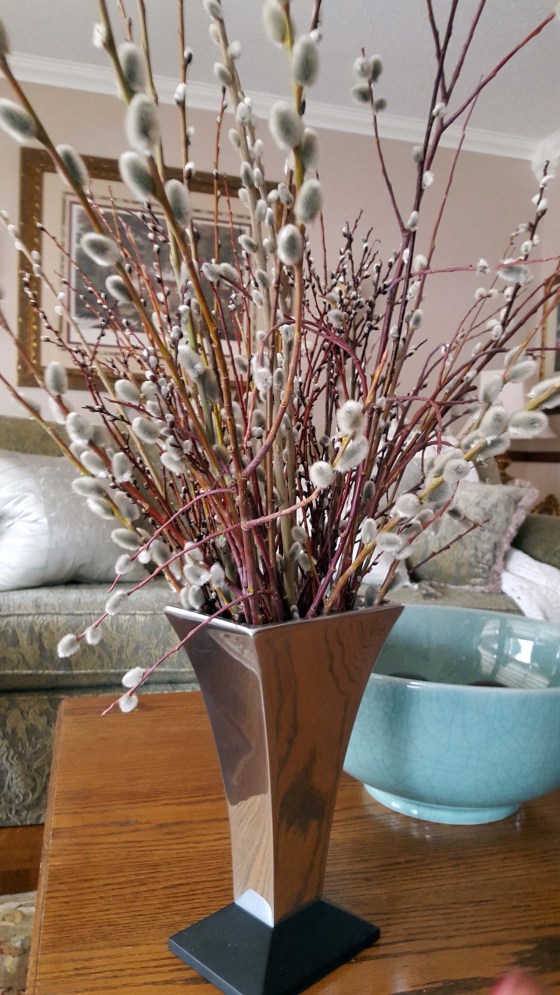
Pussy willows from Evergreen Valley Nursery. (Colleen Zacharias photo)
Apart from their ornamental value, Driedger says native willow varieties play important roles in Manitoba. The male flowers are an important source of food for early pollinators such as bees, and they help prevent erosion.
Driedger specializes in phytoremediation, which is the use of plants for removal of contaminants from soils, surface water, and groundwater. “The willow is one of the best plants for phytoremediation,” says Driedger. “The real workhorse of the native willows for stabilizing riverbanks and streams is the Sandbar willow (Salix exigua), which spreads by underground roots and is capable of colonizing an area.” The native sage-leaved willow (Salix candida) grows to only 1.5 metres and produces attractive furry catkins. It is popular with cottage owners along Lake Winnipeg.
Driedger says that only native willow varieties are appropriate for planting on our riverbanks. Evergreen Valley Nursery makes native willow cuttings available for shoreline planting for both erosion suppression as well as nutrient uptake. To learn more about the environmental role of native willows, visit evergreenvalley.ca.
Showstopping spring blossoms
Princess Kay plum tree (Prunus nigra) deserves to be better known, says Eileen Rosen, a Charleswood gardener. In early spring, Princess Kay plum is smothered in a cloud of fragrant, double-white blossoms that are a magnet for pollinators. The blossoms appear before the dark green leaves.
A compact tree, Princess Kay produces few fruits and has yellow fall colour. It matures to a height of 16 ft (4.8 m) and width of 10 ft (3 m). Another of its showy features is its smooth, black-brown bark.
A selection of a native North American species, Princess Kay plum has exceptional winter hardiness (Zone 2) and is tolerant of urban pollution. Plant in a full sun location in average, well-drained soil.
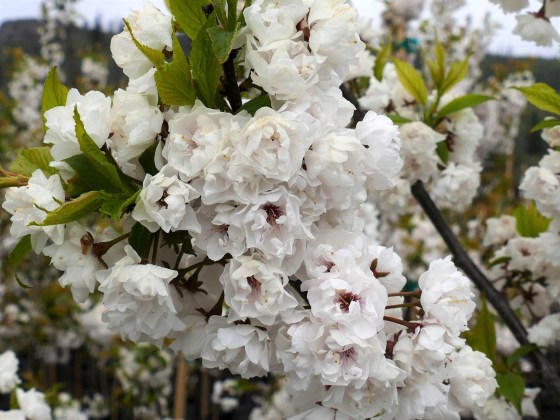
Princess Kay Plum flowers (Rick Durand photo)
Orchid notes
Congratulations to Eddie Wong whose stunning Phalaenopsis with an abundance of deep pink blooms won Best of Show. The winning plant was distinctive not only for its abundance of dark pink blooms. Manitoba Orchid Society’s Denise Fortier said that the award presented to Wong also recognized his creativity in training his orchid to grow with all the flowers displayed in a single direction, creating a waterfall effect.

Eddie Wong’s stunning Phalaenopsis won Best of Show. (Denise Fortier photo)
Education is a significant component of the Manitoba Orchid Society’s annual show and sale. “The Manitoba Orchid Show has always been more than a simple judging contest for good cultural practices and fine examples of orchid species and hybrids,” says Fortier. “Orchid growing attracts people for all kinds of reasons, from admiration of the exotic flowers to getting immersed in orchid hybridizing and genetics.”
For new and expert orchid lovers, Fortier put together a marvellous educational display that illustrated an at-home potting station complete with a variety of orchid potting media, tools, fertilizers, and sundry items for keeping indoor orchids beautiful and healthy.
I came away with new knowledge and naturally, an orchid purchase, as well as an impression of great beauty and imaginative creativity.
Mark your calendars
• The Living Green Show is from April 7 to 9 at the Red River Exhibition Grounds. This exciting event is Winnipeg’s newest show dedicated to the love of gardening! Find inspiration and expert advice. Shop with local vendors who will showcase natural products (including plants) and environmentally friendly services that will enhance your indoor and outdoor living experience. There will also be an opportunity to swap seeds and connect with other gardening enthusiasts.
Living Green Ambassadors Dorothy Dobbie and Kevin Twomey look forward to seeing you! Admission is $10, kids under 12 have free admission, and parking is free. Purchase tickets at the door or online at redriverex.com.
• Winnipeg Home + Garden Show returns to the RBC Convention Centre April 13 to 16 with the latest trends in home improvement, interior design, and landscaping with a lineup of local experts to deliver insights on all things home and garden.
This year’s event features “Ask a Landscaper”, presented by the Manitoba Nursery and Landscape Association. Attendees will have the opportunity to talk with local landscape and nursery experts for a free 15-minute consultation.
• Earth Day is April 22 and this year’s theme is ‘Invest in Our Planet’. What can you do to celebrate? First, let sleeping pollinators take all the time they need to wake up this spring after a long winter. You may not be able to see pollinators right now, but they are everywhere in your garden: beneath layers of leaves and other debris, tucked inside dried plant stems or cavities of old trees, beneath wood chips and hibernating below the soil surface.
Once the snow melts and the frozen ground thaws and warms up (and it will eventually!), plan to feed your soil with compost to build up the microbial life in your soil. Leave a layer of plant residue to decompose into your soil which will help to improve soil health and increase soil fertility and water holding capacity.
Your questions, answered
Have a question for a gardening expert? Reply to this email with your question and we’ll seek answers from some of Manitoba’s most knowledgeable gardeners. If you’re asking about a problem with a plant or pest, please attach a photo to help our experts diagnose the issue.
— Manitoba Master Gardener Association
“Please admire my plant!”
Got a fabulous flower? A handsome houseplant? A ravishing radish or elegant eggplant? An attractive annual or pulchritudinous perennial? We want to see it.
Reply to this email to send a picture to us and we’ll feature your gorgeous growth in future issues of this newsletter.
Please include a photo you took yourself, your name, the name of the plant and all the details your fellow readers might want to know about it.
Recently I wrote about the Catalpa tree in my gardening column in the Free Press and received an overwhelming response from readers.
While the Catalpa tree is not considered fully hardy for this climate and consequently is seldom found at local garden centres, a surprising number of people across southern Manitoba have had success growing them in protected areas of their properties.
Mona Lavallee, who lives in St. Jean Baptiste, wrote, “We planted a Chinese Catalpa in a sheltered area of our backyard. It’s probably eight to 10 years old. I absolutely love it. It was six feet when I planted it and it’s probably 15 feet now.”
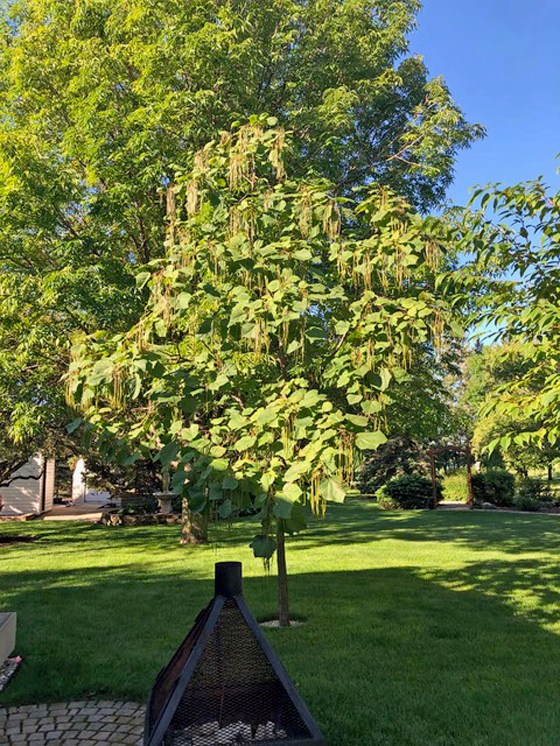
Mona Lavallee’s Chinese Catalpa tree. (Mona Lavallee photo)
Many readers said they started their Catalpa trees from seedlings — so many that I’m convinced the seedlings would be a hot item if they were made available for sale. Growing plants from seedlings encourages nurturing, which can give tender plants a better chance of survival in the landscape.
An urban forester shared this message: “What I love about this tree are the flowers. Notice those yellow streaks in the flower. They are there to direct bees to where the nectar is and, in the process, the bees collect pollen in the hairs of their bodies and deposit the pollen in the next flower they visit.”
|