Perennial Plant of the Year
Phlox paniculata “Jeana” has been selected by the Perennial Plant Association as the 2024 Perennial Plant of the Year. What makes “Jeana” noteworthy?
- Hardy to Zone 3
- Resistant to powdery mildew
- 36 to 60 inches/91 to 152 cm tall
- Lavender-pink flowers
- Pollinator-friendly
Phlox “Jeana” was evaluated for its garden performance at Mt. Cuba Center. You can learn more about the results here.

A hummingbird moth on Phlox paniculata Jeana, the 2024 Perennial Plant of the Year. (Supplied)
Perennial Plant of the Year selections are suitable for a wide range of climatic conditions, require little maintenance, have good pest- and disease-resistance, are readily available and provide multiple seasons of growth.
Assiniboine Park garden wins landscape design award
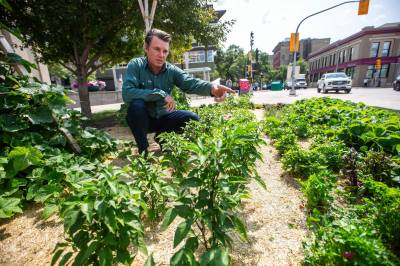
The Johnston Family Seasonal Garden at The Leaf in Assiniboine Park, was recently awarded the 2023 Public Garden Award of Excellence from the Perennial Plant Association at its national symposium in Niagara Falls in July. Horticulture supervisor Craig Gillespie was on hand to accept the award. He shared this recent photo of the Seasonal Garden. Head down to the park to check out the award-winning garden in person!

The seasonal garden at Assiniboine Park won the 2023 Public Garden Award of Excellence from the Perennial Plant Association. (Supplied)
Structural elements in the garden
Arbors, benches, fences, gates, pergolas, obelisks and water features are just some of the structural elements that can transform your garden design.
Whenever we visit a garden and come upon unique garden elements, they often make a lasting impression and inspire us to consider enhancing our own garden design. A French-style cast-iron-handled urn on a pedestal strikes me immediately as beautiful.
Unique garden paths are captivating. When a design is off the beaten path, featuring unusual materials or patterns, it creates added interest.
This checkerboard pathway can be found in Anne Peters’ garden in Steinbach. She created it several years ago. “I’m very happy to say it has held up really well,” says Peters. “No shifting has occurred, all the stepping stones are intact — probably due to the 4 to 6 inches (10-15 cm) of pea gravel I put underneath each one.”
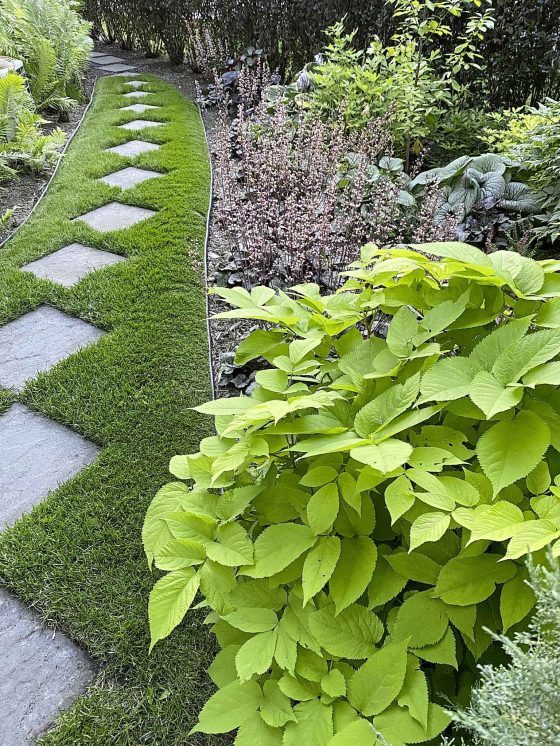
Anne Peters’ checkerboard pathway. (Supplied)
Have you incorporated a hardscape element or focal point that has added beautiful structure to your garden? Reply with a picture and perhaps we’ll share it in a future issue!
Perennials from seed: lower cost, big rewards
Purchasing perennial plant seedlings in spring is always exciting — but it’s also getting more expensive. This spring I bought three dwarf Leucanthemum Carpet Angel Shasta daisy plants in 5.5” pots for $12.95 each, plus tax. They transplanted easily and I am pleased with the first-year performance of this new variety.
Aimee Kornelsen, a Stonewall gardener, also planted dwarf Shasta daisies this spring but started her plants from seed. She chose “Madonna,” a compact variety that was introduced in 2020 and was awarded a Fleuroselect Gold Medal.
Kornelsen purchased two seed packets at $5.89 each from West Coast Seeds (although the current price is $6.49). Each packet contained 20 seeds. Kornelsen grew 25 plants from seed for less than $15. “The seeds were really easy to start and germinated well, too,” says Kornelsen.

Aimee Kornelsen grew all of these Madonna Shasta daisies from seed for less than $15. (Supplied)
Compare the savings! Starting your own plants from seed represents a significant saving.
Ugly plant has a bright future
Many plant varieties make their debut each year at Cultivate, a green industry event hosted by AmericanHort. Elephant Ears Colocasia “Redemption” was a hit for the tropical-houseplant crowd at Cultivate ’23 in July in Columbus, Ohio, winning a Retailers Choice Award.
A Plants Nouveau introduction, Colocasia “Redemption” has large leaves that emerge green and turn nearly black in its preferred sunny location, and then, as if by magic, a line of Barbie-pink colour trails like a zipper down the centre of the leaf, gradually radiating outward.
What do you think? Is Colocasia “Redemption” ugly or beautiful? I’m on the fence.
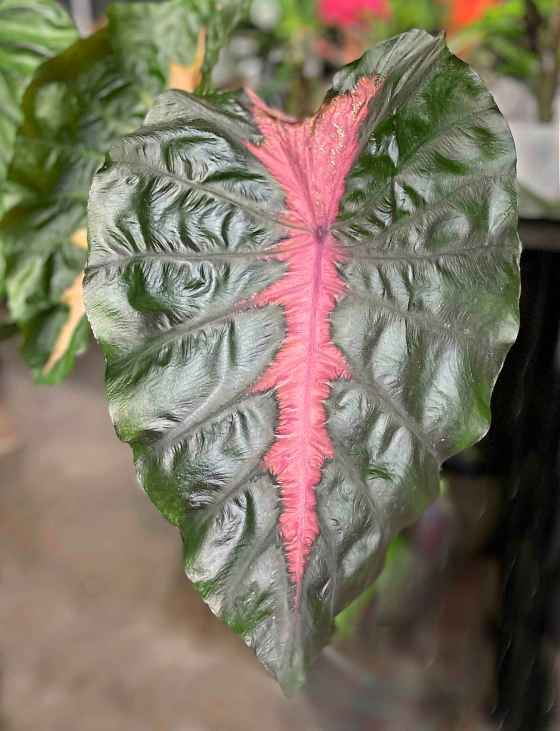
Is it ugly? Colocasia Elephant Ears Redemption, a new introduction for 2024. (Supplied)
Ugh, chinch bugs
James Smith owns Gardens of Distinction, which specializes in landscape maintenance and design. He is a journeyman landscape gardener and has a diploma in horticulture. He lives in Landmark, Man., but many of his clients live in Winnipeg. I asked Smith if there was a pest problem that was widespread this summer. Without hesitating, he replied, “Yes, this has been a bad year for chinch bug damage on lawns.”
Chinch bugs overwinter in leaf litter or thatch. They feed on grass leaves in full sun areas by inserting their mouthparts and sucking out the sap. The adults have black bodies with white, folded wings. They are most prevalent in hot, dry weather or when lawns are not regularly watered. Initially, yellow patches develop on the lawn but if the problem is left unchecked, the lawn turns brown.
If the problem is severe, Smith, who has a pesticide applicator licence, sprays affected areas of turf, but a chemical spray is effective only so long as a regular watering schedule is followed. “Chinch bugs don’t like irrigated lawns,” says Smith.
Do you have chinch bugs? If you have an area of dead grass and want to determine if chinch bugs are the cause, place one end of a large can that has both ends removed a few inches into the soil of lawn bordering a dead area. Fill the can with water and wait about 20 minutes to see if chinch bugs float to the surface.
Weed-control tools
My go-to weeding tool is a Yankee weeder, which has a sharp slicing blade for weeding between walkway and patio stones. It has a wooden handle and is 37 cm in length.
But to remove lots of weeds quickly and efficiently from a large patio or driveway, James Smith uses a Red Dragon Weed Dragon propane vapor torch kit. It has a 10-foot/3 m long hose that hooks up to a propane tank, such as a barbecue cylinder. The tank can be carried or wheeled around.
The propane vapour torch uses intense heat (up to 2000 F/1093 C) to kill weeds and weed seeds. The goal is not to burn the weed to a crisp, but rather to heat the leaves and cause cell walls inside the plant to rupture. This disrupts the photosynthesis process and, in a few days, the roots of the weed die.

James Smith uses a Red Dragon Weed Dragon propane vapor torch kit to kill weeds among patio stones. (Supplied)
Smith does not use the vapour torch on windy days, nor does he use it around anything flammable such as mulch, spruce cones, wooden decks, etc. He allows the device to cool down completely before storing it away.
Diverse, drought-tolerant gravel garden
Asta Johannesson grows many different plants in flowerbeds and containers in her Stonewall, Man., backyard, but on one side of her house, she has created a unique gravel garden.
The garden site originally served as a dog run for Johannesson’s Labrador retriever. After her dog passed, she created a small memory garden in a raised bed, alongside which was was an existing surface layer of quarter-down limestone.
Johannesson added a layer of pea gravel for a neat and tidy look. Two years ago, she decided to create a gravel garden and install mostly drought-tolerant groundcover plants.
A floating sidewalk of granite pavers with pea gravel in between runs alongside the gravel garden. Johannesson began by experimenting with Goldmoss Stonecrop sedum, which she planted in the spaces between the granite pavers. The sedum thrived in the east exposure and required minimal maintenance, so Johannesson added the following plants:
- Dianthus Firewitch Pinks
- Dianthus Frosty Fire Pinks
- Lamium Orchid Frost
- Phlox stolonifera Creeping Phlox
- Thyme
- SunSparkler Firecracker and Lime Twister Sedum
- Hens and Chicks (Ruby Heart, Silverine, Green Wheels)
- Prairie June Grass
The gravel garden also includes a dwarf purple iris, annual portulaca, and a volunteer Coreopsis tickseed plant.

Asta Johannesson’s gravel garden in Stonewall. (Colleen Zacharias / Winnipeg Free Press)
The site of the gravel garden is the most challenging area of Johannesson’s property because it receives the brunt of north winds. Fortunately, groundcover plants lend themselves well to windy areas.
Another advantage is that pea gravel is permeable and provides ideal conditions for drought-tolerant plants. Excess moisture percolates into the soil and is directed to where it is needed most: the root system of plants.
Johannesson waters regularly to establish each new planting, but then the drought-tolerant plants rely on natural rainfall alone. No fertilizing or soil amendments are necessary and only the occasional weeding is required.
New online plant option
In 2022, Great Garden Plants, a mail-order company with a vast inventory of perennials and shrubs, began shipping plants on a trial basis to Quebec and Ontario from its greenhouses in west Michigan.
Last month, the company began accepting orders from anywhere in Canada.
My first choice is always to shop for plants locally. Plant lovers, though, will discover that Great Garden Plants is a good resource for learning about many different varieties of plants. I think one of the attractions will be the opportunity to locate a unique plant that may not be available locally. In my case, I have wanted to try Fairytrail Bride Cascade Hydrangea, the first cascading hydrangea in North America, ever since it was named Plant of the Year at the Chelsea Flower Show in 2018.
I was among a group of Canadian garden writers who was offered free plants to evaluate the shopping experience.
So, what was my shopping experience like? It went smoothly. The plants arrived healthy and leafed out, but were so well packaged that I wrestled with extricating them from their plastic wrapping. Others have had the same problem, hence there is a video that demonstrates the quickest way to unbox the plants and remove the secure wrapping.
A spokesperson for Great Garden Plants said that orders will be accepted up to mid-October. Orders that are placed by 4 p.m. on Tuesdays are shipped the following Monday. All plants are shipped in pots and are accompanied by a detailed care guide. Plants can be ordered in a range of sizes from three-inch containers up to one-gallon containers.
What’s for dinner? Fresh produce!
Colin Rémillard, co-owner at Jardins St-Léon Gardens, says 2023 has truly been an early year for many fruit and veggie crops.
Strawberry season started in mid-June, about two weeks earlier than normal, says Rémillard, and ended before many people had a chance to taste them. “But now the exciting part is that local beans, pickling cucumbers, tomatoes, and corn have arrived!”
Rémillard says that fresh local corn is sublime. Rémillard likes to eat corn every day and says that the simplest way is to place a cob in the microwave and cook for three minutes. Cut off the tips first.
“You can add fresh corn to anything, it spices up the flavour. Stand the corn on its end, cut the fresh kernels off with a knife, and mix in with your salad. You can also boil cobs of corn in water for a minute or two or grill them on the BBQ with or without the husk.”
Rémillard suggests grilling corn without the husk and making your own version of Mexican street corn. “Grill the corn on both sides for a few minutes, remove, then brush the corn with sour cream mixed with Mexican seasoning.”
Another simple dish that Rémillard enjoys every day during the summer is Caprese pasta salad. “Prepare your favourite big-bite pasta and mix in crunchy cherry tomatoes, some fresh basil, and thinly cut onions, shallots, and garlic, then add olive oil, red wine vinegar, salt and pepper, and mozzarella.
“It makes for a really nice supper with fresh veggies. You have the acidity from the vinegar and the sweetness from the tomatoes which really kicks up the flavour. I do it way too often in the summer for a very good reason — it’s lovely.”

Caprese Pasta Salad is a favourite of Jardins St-Léon Gardens’ co-owner. (Supplied)
Following your fresh-veggie dinner, you might enjoy some fenugreek tea.
A legume, fenugreek belongs to the pea family (Fabaceae). Both the dried seeds and small green leaves, which resemble clover, are widely used to flavour food. Native to southern Europe and the Mediterranean, fenugreek is a popular herb in Africa and India, where it is commonly known as methi.
Winnipegger Lovedeep Dhemi drinks a traditional fenugreek tea twice weekly, a reminder of growing up in India, where her father still maintains a large farm.
Dhemi makes tea from leaves grown from seeds that she purchases in the spice aisle at her local grocery store. She soaks the fragrant, yellow-brown seeds for one hour, then direct sows them into her garden. “In 15 days, you have leaves that are ready to harvest,” she says.
Dhemi harvests the leaves in the morning and steeps them in boiling water along with a small amount of grated fresh ginger and a pinch of cardamom and pepper. She recommends bringing water to a boil slowly on a stovetop over low heat for about five minutes. Allow the tea to cool and, if you prefer, sweeten with honey.
Notes from a low-maintenance gardener
Alyssa Rempel was part of this summer’s Manitoba Master Gardener Association’s garden tour on July 15. Visitors to Rempel’s garden which is planted with a diverse range of native and ornamental plants were each given a list of every perennial, shrub, herb, and grass that Rempel grows in her backyard and front yard — a total of 155 unique varieties, including the cultivar and scientific name for each plant. (See the list here.)
Rempel is an honours graduate of the Greenspace Horticulture Diploma program at RRC Polytech. She has worked many years in the greenhouse industry as a grower and is an experienced landscape designer. When I stopped by Rempel’s garden on the day of the tour, she was surrounded by gardeners who asked many questions about gardening and plants.
“A lot of things that I take for granted — for example, my Joe Pye Weed and Highbush Cranberry — were of interest to people who visited my garden,” says Rempel. “In my front yard boulevard garden, everyone asked about the Veronica ‘Charlotte’ speedwell, which is planted next to Culver’s Root.” “Charlotte” Speedwell has white flower spikes and green leaves with creamy margins.
The greatest number of questions were about the Dwarf Turkestan Burning Bush (Euonymus nanus) that grows in Rempel’s front yard. This compact shrub with narrow blue-green leaves produces unique, pendulous pink capsules that bloom in summer.
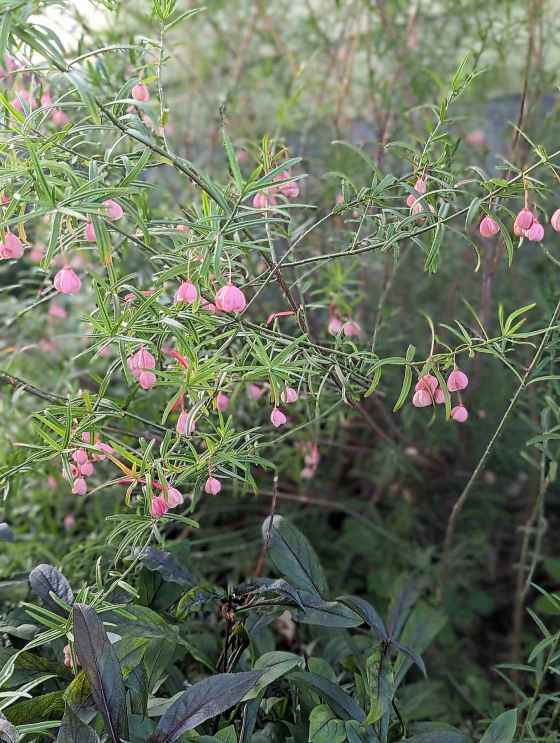
A Turkestan Dwarf Winged Burning Bush in Alyssa Rempel’s garden. (Supplied)
Many of the garden visitors asked about butterflies and what to plant to attract them. Rempel was eager to point out that native plants attract not only butterflies but numerous species of bees as well as many other lesser-known pollinators — for example, the damselfly, muscoid fly, and hoverfly (also called syrphid fly). “When you plant native plants, many different types of pollinators, including birds, will visit your garden,” says Rempel.
Rempel also received several questions about the basics of garden design and how to organize plants in a flower bed. Rempel takes a simple approach. “I go to garden centres and year after year I buy what I like, plant it, see how it does, and I will also experiment with moving plants around until they find a happy home.”
Visitors were also intrigued to discover that Rempel does not restrict the placement of tall plants to the back of her garden beds. “Some of my plants — Agastache Giant Hyssop, Heliopsis False Sunflower — move around because they self-seed and if they are doing well, I let them do their thing.”
When visitors inquired about a name of a specific plant in her garden, Rempel stressed the importance of botanical names because common names can vary considerably.
Many visitors expressed surprise, says Rempel, that she does not fertilize her native plants or use any pesticides, and relies on natural rainfall versus supplemental irrigation. “I don’t do anything,” she says. “Native prairie plants, once they are established, look after themselves. Ornamental plants, though, require more attention.”
Vegetable thieves
It’s been a good year for tomatoes, says Lynne Vickery: just ask the birds! After sampling several different tomato varieties, birds hop over to her berry patch to cleanse their palate. It can be frustrating for gardeners when birds and squirrels help themselves to fruit and vegetable patches, but Vickery likes to take a more rounded view of things.
“Birds are beautiful to look at and listen to, they keep insects in check and leave you gifts of fertilizer and even seeds,” she says. Vickery and her daughter, Rebekah, practise and teach permaculture techniques. They maintain a large garden where they grow food and enjoy sharing space with wildlife.
“It may seem counterintuitive to invite wildlife into your yard to prevent crop loss but the trifecta of happy habitat — food, water, and shelter — keeps them content.” The usual reason that birds and squirrels peck at one fruit and go on to another, says Vickery, is because they are thirsty.
Here, Vickery shares her favourite strategies:
• Hammer a stake into the front and back of your garden and run a line of twine or string. You can also repurpose old clothesline or use polypropylene rope. Or try inexpensive kites, tying one or two on the line encircling your garden. You can paste eyes on them as well. The kite will move in the slightest breeze. This technique is used in Australia for strawberry crop protection.
• Interplant your crop with two or more different types of plants. Asparagus and tomatoes are great pals. The fuzzy fronds of asparagus get very tall and hide your crop, but allow moisture and sunlight to filter through. This year I planted snow peas between a few boxes of tomato plants.
Other ideas:
• Cage culture. Often used by fruit growers on a small scale, completely caging a crop can result in a 30 per cent yield increase. Try this with fruits, vegetables, and espaliered trees.
• Bird netting. Cheap and easy to install, but the downside is that it risks catching the feet of birds and can damage their wings.
• Deterrents such as decoy fruit or stones or bottle caps painted in a strawberry colour. Or place a plastic owl on top of spiral tomato stakes so they bob about in the breeze. I confess my birds perch on the owl — it might be the equivalent to bull riding.
• Rubber snakes (this works well unless your spouse is terrified of snakes).
• Hot pepper spray or tea. The trick is to harvest your peppers before the squirrels get them. Caution is needed when handling capsaicin. If you mix up a litre or more, label the container properly and store it on a high shelf or in a locked cabinet.
• Predator urine. Deters squirrels but less so birds.
Vickery’s best strategy is to plant a little extra to compensate for any fruit or vegetable losses and share her space with the wildlife that comes to visit. She embraces this philosophy by author Toby Hemenway: “Without animals, nature just limps along.”
Your questions, answered
Have a question for a gardening expert? Reply to this email with your question and we’ll seek answers from some of Manitoba’s most knowledgeable gardeners. If you’re asking about a problem with a plant or pest, please attach a photo to help our experts diagnose the issue.
This month we have four questions — two were answered by the Master Gardeners and two by other experts.
Question: Last year I noticed a few hard, round growths had develop along the branches of a young oak tree. This year there are considerably more of them.
The health of the tree does not seem to be affected, however I did pick them off last year fearing they would damage the branch. They come off fairly easily without causing damage. I have broken some open and they are consistent throughout except for the skin. I noticed a small hole in the middle which made me think it was a larva of some type.
— Shawna Mason
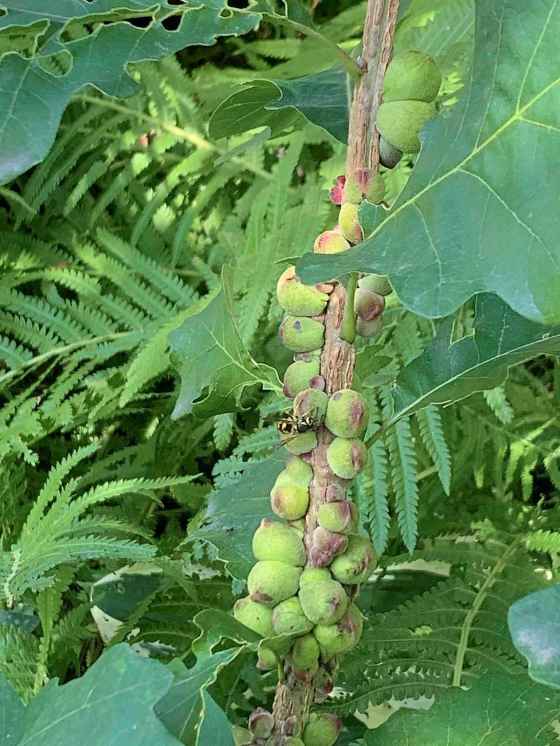
Mystery solved: these growths on an oak branch are wasp galls. (Supplied)
Answer: Those fuzzy looking growths on your young oak tree are called wasp galls. They are the tree’s reaction to a chemical secreted by the wasp and form into these galls which are home for the growing wasp larva. The tree actually grows these galls for the wasp larva to live in!
These galls are of no threat to the health of your young tree and are but a small example of how harmoniously nature works.
— Gerry Engel, arborist and president of Trees Winnipeg
Question: I am seeking advice regarding an orchid blight of mealy bugs which I have had for well over one year. I am a longtime orchid person and usually have two to three in bloom while another dozen or so are dormant. They have all been infested. They are still blooming, however the leaves are yellowing and falling off.
I have tried neem oil, rubbing alcohol, a DIY mix of dawn, neem oil and water, and any other remedy I could find. What happens is the bugs stay away but if I am not vigilant (as happened in the last two weeks, while I was away) they return with a vengeance.
Do I need to dispose of the plants and start anew? While this would break my heart, I am also at wit’s end trying to permanently solve this issue. I believe the bugs were hidden in a gift orchid I received in May of 2022 and I did not notice them in time to isolate the rest of them.
— Lisa Dveris
Answer: Alas, the phalaenopsis orchid is a beloved host to mealy bugs. The problem with mealy bugs and other types of sucking insects is that they are adept at protecting themselves. Adult mealy bugs have a waxy body coating which is resistant to liquids and sprays. The mealy bug goes through several life stages — egg, crawler, adult — but it is only at the crawler or mobile stage that it is easily eradicated.
Simple dilutions of isopropyl alcohol with water or the use of mild soaps have been found to be effective. For a tough infestation, I use Safer’s End All which contains pyrethrin. It’s important to use products containing pyrethrins outdoors where there is good ventilation. Use up some of those leftover COVID supplies like a disposable mask and gloves!
The key to getting control of the situation is to understand the life cycle of the pest. If you kill the crawlers, the adults will reproduce and, in a week, you will have yet another generation of crawlers who will be travelling throughout your collection.
Spray your plants every five to seven days for five repetitions, taking care to spray the leaf axils. Mealy bugs also hide in the roots and potting media. Repotting with fresh orchid-growing media is always recommended.
Inspect any other houseplants you may have and give them a good shower. Always isolate a new plant for at least two weeks before introducing it to your collection. This practice makes it much more likely that you will catch any hitchhikers before they are able to produce a new generation of plant thugs.
— Denise Fortier, Manitoba Orchid Society
Question: Wondering if you can tell me what is happening to one of my lilacs? It is less than 10 years old and the label said “pink lilac.” It seemed healthy until this year. Now the branches at the back fence side seem different, the bark is more white than the front of the shrub, plus the leaves are small and shrivelled. The picture shows the difference in the leaves.
— Carol Westlund
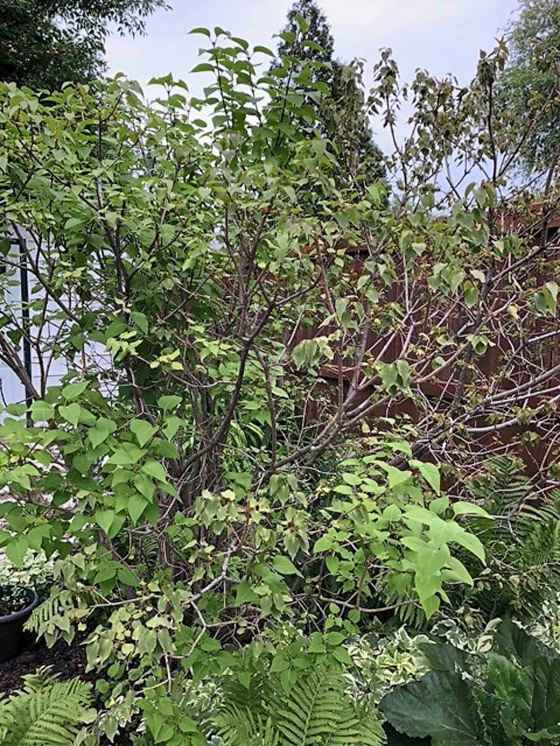
On some of this lilac’s branches, the bark is whiter and the leaves are small and shrivelled. (Supplied)
Answer: It is difficult to determine what is happening to your lilac by the pictures.
Although lilacs generally prefer drier soil the very dry and very hot weather of this year’s spring created stressful conditions particularly for trees and shrubs. Heat- and drought-stressed plants become more susceptible to diseases and insect pests. There are bacterial and fungal diseases as well as insect pests that can infest the mostly problem-free lilacs when the right conditions come together.
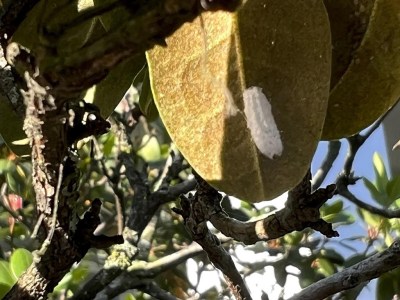
A heavy infestation with oystershell scale (look for very small waxy shells on branches) and the fungal disease Verticillium wilt may cause a branch die back pattern similar to the one your tree shows. However, a proper diagnosis is often only possible with closer inspection of the tree and its environment as it can be provided by a certified arborist.
Without a diagnosis of what is ailing your tree, the best recommendation is to provide optimal growing conditions: remove all dead and thin out crowded branches and stems for better air circulation, water the tree during dry spells, fertilize lightly only in spring, and clean up and destroy all dead plant material under the tree as it may harbour pathogens.
— Manitoba Master Gardener Association
Question: Some of my plants in containers are really suffering from the wind this year. I was wondering if there are certain plants that are hardier in windy conditions. I was surprised even my geraniums seem to be affected. My poor Coleus did not do well.
Answer: Wind can damage plants by breaking stems and causing dehydration, effects which can leave plants more susceptible to disease.
Traditionally, wind-resistant annuals that look great in containers include grasses and plants with flexible stems such as fountain grass (Pennisetum), papyrus (Cyperus papyrus ‘Prince Tut’), angel’s fishing rod (Dierama pulcherrimum), and gaura or wandflower (Oenothera lindheimeri).
Another group includes very low growing plants, such as short-stemmed Zahara mix zinnia, various alpines and succulents. One can create a lovely container of a variety of succulents and enjoy them all year by bringing them inside in the fall. Be inspired by “Tender Succulents for the Prairie Garden” by Marilyn Dudek published in the MMGA Newsletter.
Silver-leaved plants such as rosemary and the lower growing artemisias like ‘Silver Mound’ tolerate the dehydrating effects of the wind. For a spiller plant that adds texture, consider the heartleaf ice plant (Mesembryanthemum cordifolium).
Lastly, perennials such as purple coneflower (Echinacea), blanket flower (Gaillardia) and Russian sage (Salvia yangii) tolerate wind and can add height and colour to a container. Unless grown in a very large container, artemisia ‘Silver Mound’, like the other perennials mentioned, will need to be transplanted into the garden or moved to an insulated garage to overwinter in our climate.
— Manitoba Master Gardener Association
Members of the Manitoba Master Gardener Association (MMGA) are part of an international network of non-profit organizations of horticulturally accredited trained volunteers devoted to gardening education. Master Gardeners provide horticultural information to the public through workshops, presentations, information booths, radio appearances, their newsletter and website.
Mark your calendars
The St. Vital Agricultural Society will host its 112th annual Display and Fair on August 11 starting at 2:30 p.m. and August 12 at 9 a.m. at the St. Vital Centennial Arena, 580 Ste. Anne’s Rd. New for this year: Manitoba Carnivorous Plants Addicts will be in attendance and will have many plants for sale. Tickets are $2 for one day or $3 for both days. More details are available online.
The Miami Horticulture Show, hosted by the Miami Horticultural Club, takes place on August 17 at the Miami Community Centre. Doors open at 3 p.m. For a complete listing of plant categories, please see the horticultural show booklet. The keynote speaker is Ian Steppler, chairperson of the Manitoba Beekeepers’ Association. The Miami Horticultural Club recorded its first flower show in the 1890s. Last year’s event featured well over 600 entries — flowers, fruit, vegetables — submitted by gardeners from Miami and several surrounding communities.
Sample the delectable tastes and take in the savory aromas of the Honey Garlic & Maple Syrup Festival in Manitou on Sept. 9 from 8 a.m. to 10 p.m. at the Manitou Community Centre. Featuring honey, garlic, and maple syrup vendors, the event also features indoor and outdoor entertainment. More details are available online.
Tour and tasting at Manitoba’s only commercial wine vineyard, hosted by Shrugging Doctor Beverage Company, takes place Sept. 10, which is the week before grape harvest. Tickets ($129.13) include a bus ride to the farm in southern Manitoba’s Pembina Valley. Enjoy wine samples and a BBQ (vegetarian options provided) and learn about the process of growing more than 10 different grape varieties in Manitoba from master winemaker Zach Isaacs. Shrugging Doctor Beverage Company (shrugdoc.com) was founded in 2017 and this will be its first public tour. More details are available online.
Sustainable South Osborne Community Co-op will host a harvest dinner on Sunday, September 10th at the South Osborne community orchard located at Baltimore Road and Churchill Drive. Drinks and garden tour at 4 p.m. followed by dinner at 5 p.m. under the tent with Chef Ben Kramer. Live music and free bike valet parking. Tickets are $105 plus tax. Visit their site for details.
The Manitoba Regional Lily Society will host a fall bulb sale, on Sept. 30 between 9 a.m. and 3 p.m., at T&T Seeds and Garden Centre, 7724 Roblin Blvd. in Headingley. A wide variety of lily bulbs will available for purchase. Visit their site for details.
|