FIVE STORIES ON TURTLE ISLAND
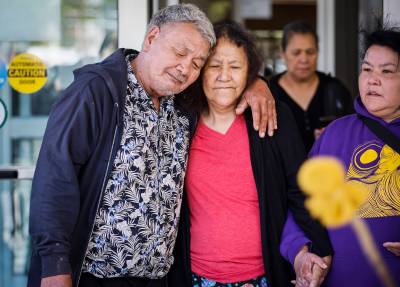
New research coming out of York University identifies the causes and outcomes of Indigenous racial profiling in Canadian businesses.
The researchers, who are widely recognized for their work on human rights, call Indigenous racial profiling a human rights issue.
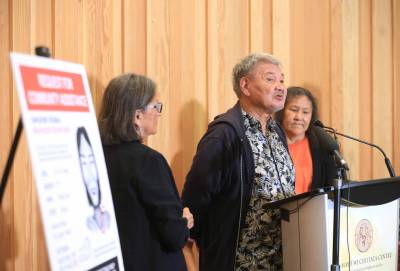
The report was commissioned by the Heiltsuk Nation in B.C. after two of its members were profiled while shopping at a Canadian Tire store in Coquitlam in 2019.
Hundreds of Indigenous athletes from around the globe gathered in Ottawa last week for the 2025 Masters Indigenous Games.
The athletes, aged 19 and older, competed in Indigenous and well-known sports. For the first time, the event included Arctic and northern-specific sports, such as the “Seal Hop,” which features competitors bouncing on their knuckles and toes, mimicking the act of sneaking up on a sleeping seal; and the “stick pull,” in which opponents sit on the ground facing one another while each holding on to the same stick and trying to force their opponent to a standing position.
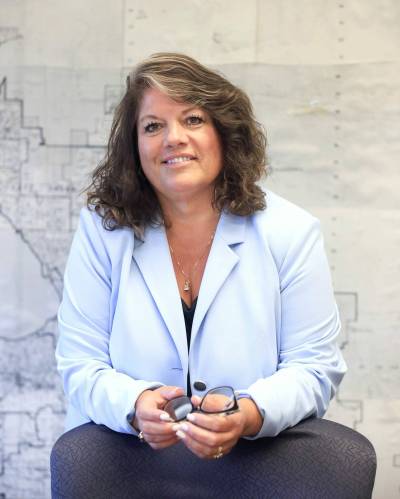
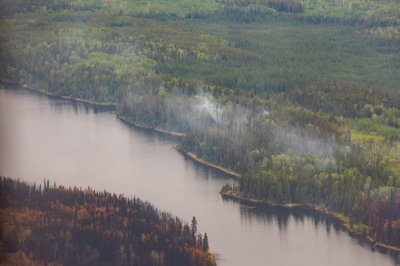
This week, my APTN Truth and Politics co-panelist Jennifer Laewetz, CEO of Paskwâw Strategies, and I discussed the federal government’s response to this wildfire season, which is the already the second-worst on record.
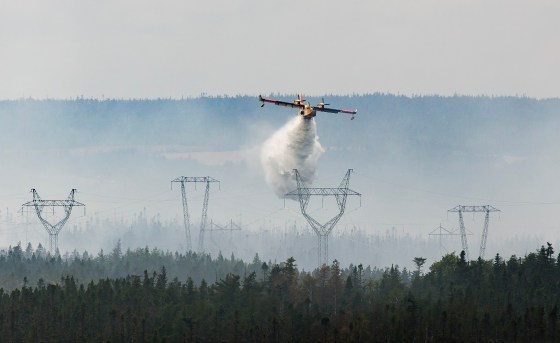
A water bomber provides a steady steam of water to assist crews on the ground at the Paddy’s Pond wildfire, just outside St. John’s, N.L., on Aug. 14. (Paul Daly / The Canadian Press files)
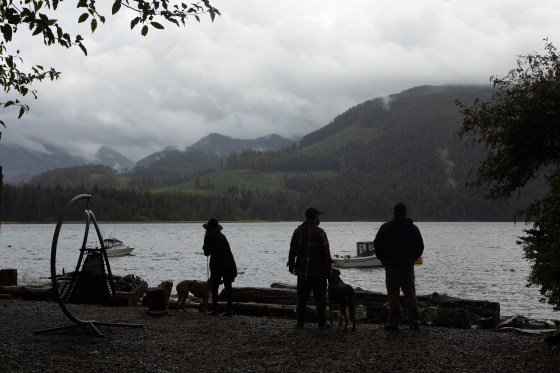
People look from the shoreline of the Alberni Inlet towards Mount Underwood, where a wildfire continues to burn across from Macktush Creek Campsite, south of Port Alberni, B.C., on Aug. 16. (Chad Hipolito / The Canadian Press files)
It’s not the first time this panel and I have discussed this issue. I hope now the federal government is listening and doing something about this ongoing emergency.
The government recently announced $45 million in funding for nearly two dozen projects to study how to deal with wildfires in Canada. Half of the fires are burning in Indigenous communities.
Four individuals from the same family in the Yukon are suing a woman in Ontario over online posts she made alleging the women are “pretendians.”
The Walrus recently published a feature on this issue, probing if someone can be sued for accusing a person of falsely claiming Indigenous identity.
My colleague Drew Hayden Taylor recently completed this documentary that details how falsely claiming Indigenous identity can be very lucrative and damaging to real-life Indigenous communities.
The (literal) million-dollar question is: should Canadian courts and governments be in charge of determining how Indigenous communities determine their own membership?
For decades, the Gathering of Nations powwow in Albuquerque, New Mexico has been the gold standard of powwows.
It’s the world’s largest gathering of drums, dancers, and artisans.
Mysteriously, organizers announced this week that next year will be the powwow’s last. Without providing details on the decision, organizers said the event will end after 43 years.
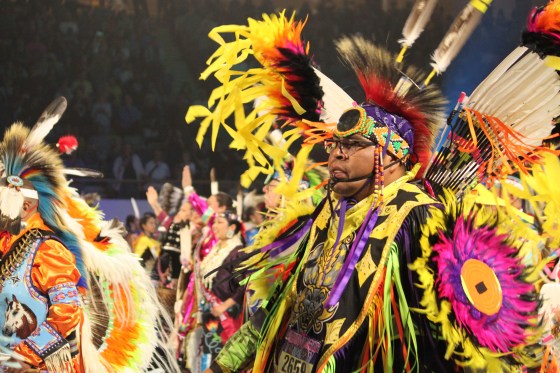
Dancers participate in the grand entry procession during the annual Gathering of Nations powwow in Albuquerque, New Mexico, on April 25, 2025. (Susan Montoya Bryan / The Associated Press files)
It’s hard not to see this as connected to recent deep funding cuts to Native American tribes under the Trump administration.
Let’s hope the Gathering of Nations — one of the coolest powwows in the world, as you can see in this video — survives.
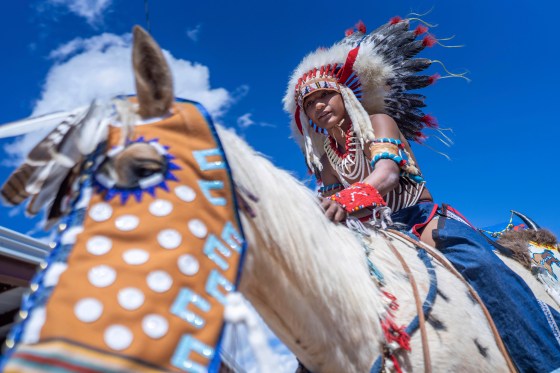
Fourteen year-old Mylan Archuleta of Ohkay Owingeh village in northern New Mexico prepares for the horse parade at the 40th anniversary of the Gathering of Nations powwow in Albuquerque, New Mexico, on April 28, 2023. (Roberto E. Rosales / The Associated Press files)
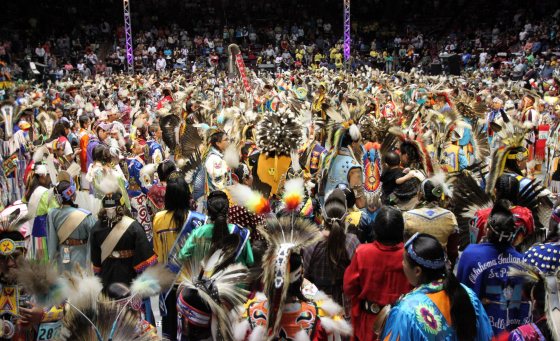
Hundreds of Indigenous dancers pour onto the floor at University of New Mexico Arena for the grand entry during the 29th Annual Gathering of Nations in Albuquerque, N.M., on April 27, 2012. (Susan Montoya Bryan / The Associated Press files)
IN PICTURES
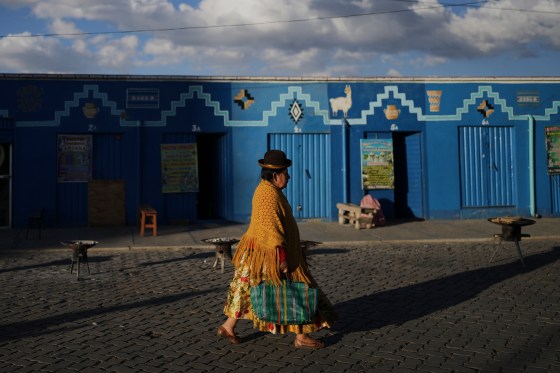
A woman walks past Aymara Indigenous spiritual workers’ workplaces at El Alto, Bolivia, on Aug. 15. Natacha Pisarenko / The Associated Press files)
RECONCILI-ACTION OF THE WEEK
Every week I highlight an action, moment, or milestone forwarding reconciliation, illustrating how far Canada has come — and how far the country has yet to go.
Content warning: readers may be triggered by the subject matter of Indian Residential Schools. To access a 24-hour national crisis line, call: 1-866-925-4419. A Community Assistance Program can be accessed by citizens of the Anishinabek Nation: 1-800-663-1142.
This week’s reconcili-action highlights the brave and tireless work of multiple research teams across the country finding lost children who attended residential schools.
Over the past month, archivists uncovered 50 additional confirmed deaths at the Kuper Island residential school while Deninu Kue’ First Nation announced the discovery of the remains and burial sites of five children who died at the St. Joseph’s residential school.
Anomalies continue to be found, including here in Manitoba, suggesting other graves may exist at residential school sites across the country.
Archivists, researchers and Indigenous leaders often have to battle a Canadian public that ignores evidence and is distracted by lies surrounding residential schools — lies that downplay the atrocities the system perpetrated.
I hope a fight of truth against lies — which holds reconciliation back for all of us — won’t be necessary forever.
|