FIVE STORIES ON TURTLE ISLAND
1. Best thoughts to all of my relations at Peguis First Nation and Fisher River Cree Nation, as leaders this week declared an official state of emergency due to flooding, and evacuations of some community members will be required. Premier Wab Kinew toured the sandbagging efforts this past week, too, calling it a “race to try and protect the homes in this community.”
It’s not time to think what’s next yet, but even the premier spent time reflecting how numerous politicians and governments have promised to find solutions to the annual, devastating flooding in this region.
The flooding is caused by a myriad of factors, none of which are of the community’s doing; the forcible removal to the area in 1907, federal control over the height of Lake Winnipeg, and factors such as climate change and deforestation all contribute.

Sandbags are unloaded at a home at Peguis First Nation on April 16. (John Woods / The Canadian Press files)
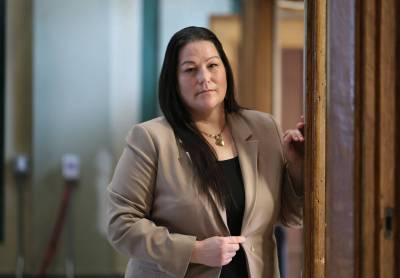
2. This week, First Nations leaders held a press conference in Manitoba to demand a federal inquiry after newly revealed documents showed that RCMP conducted surveillance on Indigenous leadership for decades. As I stated when this information came to light, being an Indigenous leader in any official or unofficial capacity is dangerous. Or, as Assembly of Manitoba Chiefs Grand Chief Kyra Wilson stated: “If you speak out against Canada, you will be surveilled.”
3. The United Nations Permanent Forum on Indigenous Issues (UNPFII) opened its 25th session at United Nations Headquarters in New York this week. Established in 2000, the Forum has placed the concerns of Indigenous Peoples at the center of international debates, promoting the recognition of their rights and strengthening their effective participation in global processes.
This session brings together UN officials such as Secretary-General António Guterres and more than 1,000 participants from Indigenous communities and cultures who work in state governments, local governments, non-governmental organizations and traditional ceremonial spaces and academia.
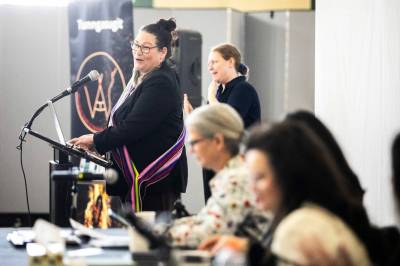
Offering a welcome to territory was Chief Tadohaho Sid Hill of the Onondaga Nation, alongside the opening speaker and Gov. Gen. Mary Simon.
The primary theme of this year’s UNPFII is the health of Indigenous peoples when it comes to increasing conflicts and wars, land and territorial rights, intellectual property and artificial intelligence, and the impacts of climate change.
As UN Secretary General António Guterres announced to delegates, “For Indigenous Peoples, health is inseparable from your lands, waters, languages, cultures, and ecosystems.”
4. Speaking of the UNPFII, participation by delegates to this year’s discussions on Indigenous rights was hindered by two factors: the United States’ refusal to pay its dues to the UN (causing an overall funding crisis) and the Trump administration’s decision to pull out of the World Health Organization. Both decisions have resulted in many Indigenous delegates having to rely upon local fundraising (an anomaly for representatives of countries) or simply not attending.
5. The NHL Draft Lottery takes place on May 5 and the stage will be set for teams to change their future, including the Winnipeg Jets, who finished 26th in the overall standings and have a 6.5 per cent chance to win.
History is also likely to be made with forward Gavin McKenna projected to be chosen with the first overall pick — an historic first for an Indigenous player as McKenna is a citizen of Trondek Hwëch’in First Nation in Yukon.
Could the first-ever, first-overall Indigenous player go to the team residing in the community with the highest proportional population of Indigenous peoples? If it happened, the story would write itself.
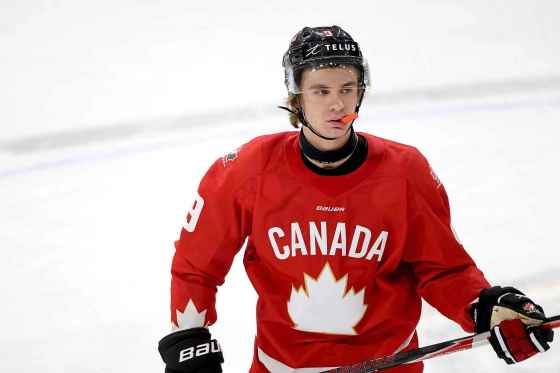
Gavin McKenna playing for Canada in an exhibition game against Sweden in 2025. (Nicole Osborne / The Canadian Press files)
IN PICTURES
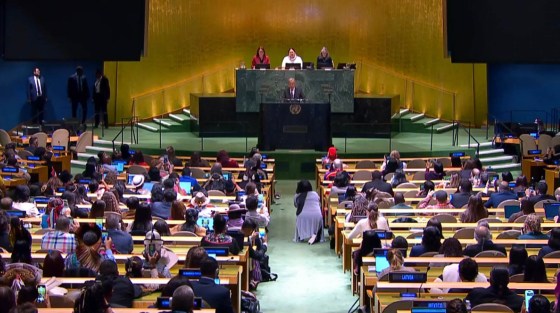
This image taken from UNTV video shows United Nations Secretary-General António Guterres speaking at the UN Permanent Forum on Indigenous Issues in New York on Monday. (UNTV / The Associated Press)
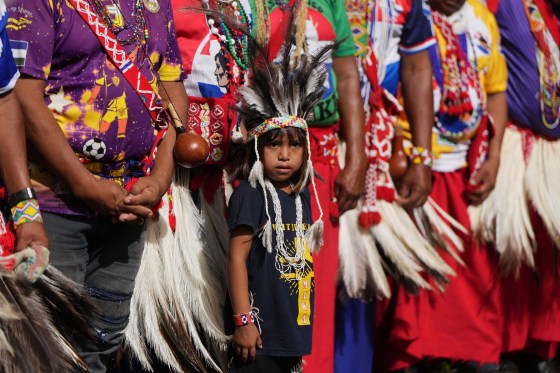
A Maka child takes part in a ceremony on Americas Indigenous Peoples Day on lands they dispute with the government, in Asuncion, Paraguay, Sunday. (Jorge Saenz / The Associated Press)
RECONCILI-ACTION OF THE WEEK
Every week I highlight an action, moment, or milestone forwarding reconciliation, illustrating how far Canada has come — and how far the country has yet to go.
This week’s reconciliaction of the week goes to local fashion designer Tammy Wolfe from Norway House Cree Nation, who was invited to showcase her work at Tokyo Fashion Week, one of the biggest fashion showcases in the world. Check out (and you can even buy if so inclined) Tammy’s work here, from her floral jackets to ribbon skirts. In addition to being an emerging fashion star, Wolfe is a business leader, a podcaster and writer, and a PhD student who is studying beadwork and its role in healing the legacies of murdered and missing Indigenous women and girls. Here’s to another Indigenous Manitoba voice on the world stage!
|