How They Lived
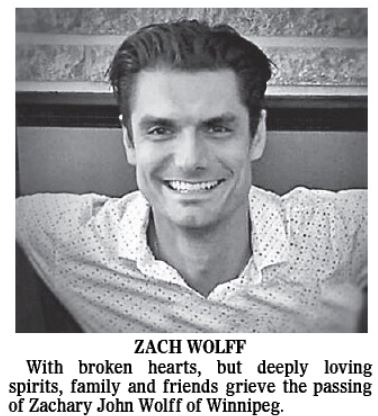
Phil Carlton made his mark in movies, but behind the screen not on it.
Carlton, who died on Oct. 3 at 86, grew up in the North End and joined the business side of MGM in 1956.
Carlton moved to Warner Brothers in 1971 and he rose through the ranks to become president and Canadian general manager of the company, retiring in 2001 after working 45 years in the motion picture business.
He was also a past president of the Canadian Picture Pioneers. Read more about Phil.
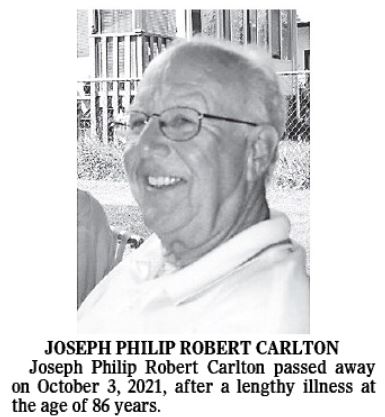
Robert Besant was an environmentalist before there were many.
Besant, who was 86 when he died on Oct. 31, graduated from the University of Manitoba in 1957 and then worked at the National Research Council before later, after graduating from Princeton University, becoming part of the faculty at the University of Saskatchewan.
While at the university, he pioneered the development of the first heat recovery ventilators for small buildings and his work, on super-insulated houses, provided key inputs for the federal government’s R2000 program. His work continues to impact energy preservation through building design.
Besant was named Engineer of the Year by the Saskatoon Engineering Society and he was honoured as Solar Person of the Year by the Solar Energy Society of Canada. Read more about Robert.
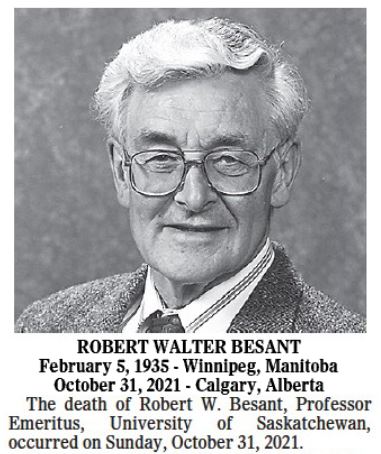
Roy Fondse loved to ride a bicycle fast.
Fondse, who died on Oct. 26, at 75 years of age, was born in India and it was there he began cycling competitively. That competitive spirit continued after he immigrated to England in 1963 and then Canada during the Centennial year.
Fondse even competed for Canada at the UCI Track Cycling World Championships in Italy in 1971 and Montreal in 1974.
He retired from the sport in 1978, but he kept a keen interest in following it, even after coming to Winnipeg and becoming a realtor. Read more about Roy.
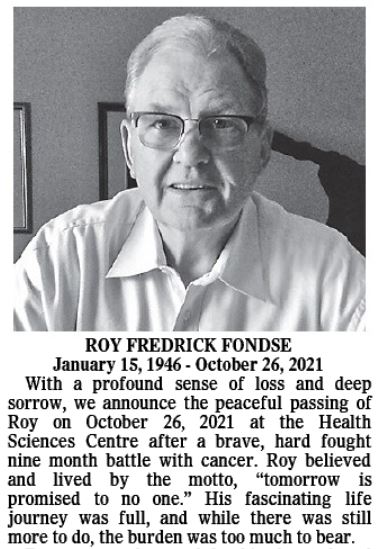
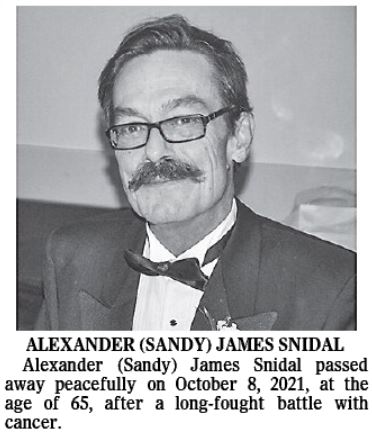
Sandy Snidal showed it’s never too late to go back to school.
Snidal, who died at the age of 65 on Oct. 8 after a long battle with cancer, worked in construction, then propane, and then a vehicle service department when he decided to go back to school.
Snidal was in his 50s when he decided to study computing.
After Snidal graduated, he used his new database management skills every day for vehicle sales and leasing for the rest of his career. Read more about Sandy.
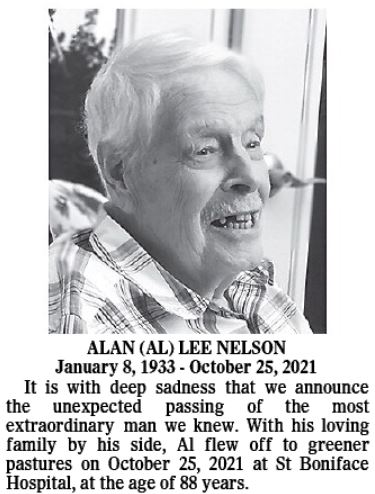
If you were going to be in a plane crash, Al Nelson was the pilot to be with.
Nelson, who died on Oct. 25 at 88, got his pilot’s licence at 17 and became an arctic-exploring bush pilot.
He was able to walk away from two crashes during his career, one where he had to MacGyver his way back. He put out the fire on the wing of his float plane and then taxied to shore. He was able to find a tablecloth inside a trapper’s cabin and used that to repair the wing and fly back. Read more about Al.
A Life’s Story
Bill Neil faced many battles during the Second World War — even losing his left arm in one — but he finally faced the first enemy he couldn’t beat: COVID-19.
But Neil, who died on Oct. 3 at 100, didn’t just recover from the amputation of his arm: he made it into his career and volunteerism.

Colleen Kidd / Calgary Herald filesWinnipeg veteran Bill Neil (left) was presented with the Order of the Legion of Honour by France’s Defence Attaché Capitaine de Vaisseau Olivier Casenave-Péré in 2004 during a ceremony at the Museum of the Regiments in Calgary.
Neil came back from the war and spent 18 years working in Veteran Affairs Canada’s prosthetic services department, later becoming the regional superintendent.
And after retiring, he served with the War Amputations of Canada National Council and helped found CHAMP, the War Amps Child Amputee program.
“He was most proud of getting the CHAMP program off the ground because of the fact he went through the war, lost an arm, but he never let that hold him back,” Neil’s son John told writer Ashley Prest recently in a story on the front of the Free Press’ Passages section.
Read more about Neil’s life.
I hope you continue to write your own life’s story.
|