Biidaajimowin
Winnipeg Free Press Logo
 

Fighting residential school denialism

This past week the Assembly of First Nations expressed deep disappointment and outrage after the Senate rejected an amendment to bill C-9 (the Combatting Hate Act) that would have rendered residential school denialism a punishable crime.

For those who don’t know about the Combatting Hate Act, proposed by the governing federal Liberal party, the bill is intended to address the rising amount of hate crimes, hate speech, and intimidation of vulnerable communities.

For a bill that seeks to reduce conflict, it sure has created a lot of it.

Among other things, it seeks to define what “hate speech” is, make it a crime to interfere with a group’s ability to access places of worship, schools, daycares, seniors’ residences, and community centers and prohibit the public display of certain symbols associated with hate against an identifiable group (such as a Nazi insignia).

A few days ago, Nunavut Senator Nancy Karetak-Lindell put forward an amendment to the bill to make it a crime when anyone is found to be “willfully promoting hatred” against Indigenous peoples by condoning, denying or downplaying the residential school system.

In a vote of 32-41, the amendment was rejected.

The bill, however, did pass and is now on the way to becoming Canadian law.

That law just won’t include residential school denialism.

Residential school denialism is not the denial of the existence of residential schools but “the rejection or misrepresentation of basic facts about residential schooling to undermine truth and reconciliation efforts . . . in ways that ultimately protect the status quo as well as guilty parties.”

Those who disseminate residential school denialism claim they have a right to free speech. What if, though, this “free speech” is predicated on misinformation, built on ideas lacking any legitimate research, and preys on the ignorance of those who were taught very little — if anything — about Indigenous peoples?

Then it’s something else.

Full disclosure: I have lots of thoughts on residential school denialism.

I have spoken, and given many interviews on residential school denialism.

My University of Manitoba colleague Sean Carleton and I have even co-edited a book of essays coming out in September called Truth Before Reconciliation: Confronting Residential School Denialism featuring more than a dozen residential school survivors, researchers and academics.

In case it isn’t obvious by this point, the issue is not whether residential school denialism is wrong but whether it should be criminalized. Many Canadians think it should be.

The majority of Canadian senators don’t agree.

There is much precedence in criminalizing hate speech in Canada, though. In 1970, the federal government amended the Criminal Code of Canada to include provisions that made publicly inciting hatred and willfully promoting hatred against identifiable groups an indictable offence.

Since this time, certain groups, such as LGBTQ2S+ peoples, have received important protections.

So have Jewish people, who Prime Minister Mark Carney has vowed to protect and even created a national council to advise the government on how to deal with anti-semitism.

As the prime minister has said, bill C-9 will criminalize expressions of prejudice or bias against Jewish individuals, communities or institutions and stop the scourge of anti-semitic violence, vandalism, harassment and intimidation that infects Canadian society.

The problem is, though, you can’t simply decide one marginalized group gets protection from hate while others — especially those who receive as much, if not more — do not.

To do so is to embolden the kind of divisions and conflicts that bill C-9 seeks to stop.


Niigaan Sinclair, Columnist


Advertisement

Mike McIntyre On Sports. Keep up to date on sports with Mike McIntyre's weekly newsletter.
 

FOUR STORIES ON TURTLE ISLAND

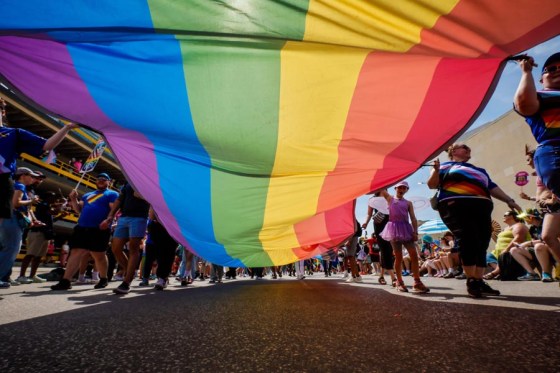
1. It’s the time of Pride and so it is also time to consider the innate and intricate intersections between the LGBTQ2S+ and Indigenous communities.

Here is a great site at the Canadian Museum of History where you can see Anishinaabe filmmaker Debbie Mishibinijima’s work on the subject.

Love and life are some of the most important teachings Indigenous queer people carry and share with the universe.

People attend the Pride parade in downtown Winnipeg on Sunday. (John Woods / Free Press)

People attend the Pride parade in downtown Winnipeg on Sunday. (John Woods / Free Press)


2. New research published by First Nations and Métis scholars and authors affiliated with the Canadian Climate Institute and the Centre for Indigenous Environmental Resources (CIER) are profiling Indigenous expertise and solutions for climate change.

If you want a great read, check out the section on the dynamic and essential knowledge in historic Métis harvesting practices.


3. This past week featured the 26th annual ImagineNative film festival in Toronto, featuring the newest in Indigenous storytelling on film, television and other media forms.

The big winner at the festival was the mythic gothic horror film Mārama, a story about a young woman named Mary (played by Ariāna Osborne) who travels from Aoteoroa, New Zealand, to North Yorkshire in Victorian England after receiving a letter suggesting the trek will unlock the mystery of what happened to her biological family.

If you missed the many offerings of the festival, you can still stream films for a fee and check out the previews of films off their website.


4. Did you know Native American Jim Thorpe was chosen in 1950 as the greatest American football player and the greatest athlete of the first half of the twentieth century by U.S. sportswriters and broadcasters?

Born on May 28, 1887, and dying in 1953, Thorpe was a citizen of the Sac and Fox Nation who excelled in track and field, American football, baseball and basketball, but some of his most incredible achievements were during the Olympics.

At the 1912 Stockholm Olympics, Thorpe won gold medals in the pentathlon and decathlon, with King Gustav V famously calling him “the greatest athlete in the world.”

However, the International Olympic Committee (IOC) stripped his medals after discovering he had played semi-pro baseball.

Following decades of advocacy, the IOC restored his records in 1982 and officially reinstated him as the sole winner of both events in 2022.

IN PICTURES

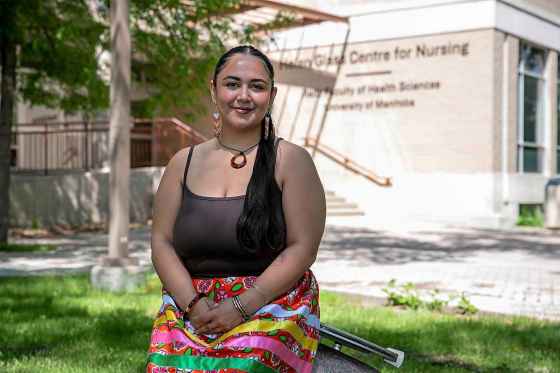
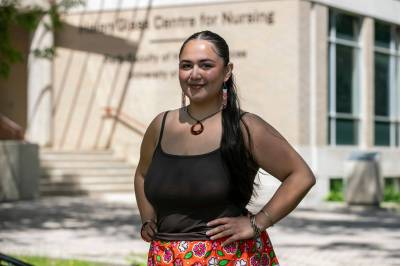
Kaydence Morgado Thomas, who was raised in Winnipeg with family ties to Norway House Cree Nation, graduated from the University of Manitoba's faculty of nursing through the Pathway to Indigenous Nursing Education Program on June 1. She will be working at the Health Sciences Centre starting July 15 while working casually at the Percy E. Moore Hospital which serves Peguis First Nation. (Brook Jones / Free Press)

Kaydence Morgado Thomas, who was raised in Winnipeg with family ties to Norway House Cree Nation, graduated from the University of Manitoba’s faculty of nursing through the Pathway to Indigenous Nursing Education Program on June 1. She will be working at the Health Sciences Centre starting July 15 while working casually at the Percy E. Moore Hospital which serves Peguis First Nation. (Brook Jones / Free Press)

RECONCILI-ACTION OF THE WEEK

Every week I highlight an action, moment, or milestone forwarding reconciliation, illustrating how far Canada has come — and how far the country has yet to go.

The reconciliaction of the week is everyone who celebrated Blue Jean Jacket Day on June 6.

This is the day that advocates and family members wear blue jackets and pins in an effort to draw attention to the disproportionate rate of violence against Indigenous men, boys, and two-spirit people.

Started in Edmonton in 2023, local advocates are now trying to make Blue Jean Jacket Day a national event; this year’s event featured a walk and demonstration at The Forks.

People are now getting on board throughout the province; here is a great site created by our colleagues at Red River College Polytechnic on the history and purpose of Blue Jacket Day.

Statistically, Indigenous males represent the majority of Indigenous homicide victims and are murdered at rates roughly seven times higher than non-Indigenous men and more than three times higher than Indigenous women.


Advertisement

That's a wrap. Today's must-read stories and a roundup of the day's headlines. Get the newsletter sent every weekday evening.
 

WHAT I'VE BEEN WORKING ON

Niigaan Sinclair:

Saying ‘no’ to AI data centre a huge win for Manitoba — and Kinew

It’s a tale of two provinces — and two artificial intelligence data centre mega-projects. Read More


LOCAL NEWS

Gabrielle Piché:

Kinew sets sights on opening up Manitoba mining opportunities

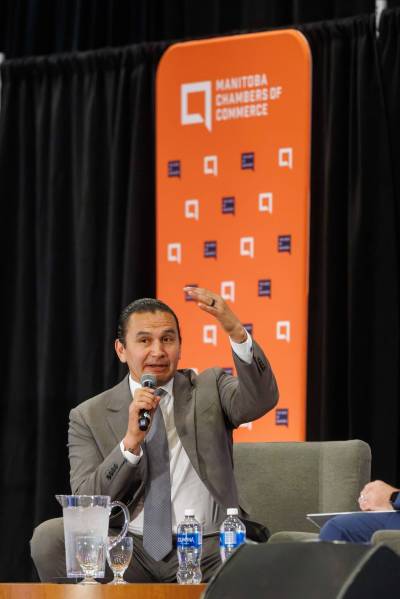
Premier Wab Kinew unveiled a new slogan on Tuesday: “Mine, baby, mine.” The provincial government wants to cut mining regulations to speed up development, Kinew told business leaders at a Manitoba Chambers of Commerce event in Winnipeg. Read More


Tara Deschamps, The Canadian Press:

At 356, the HBC charter is about to get a Manitoba Museum welcome

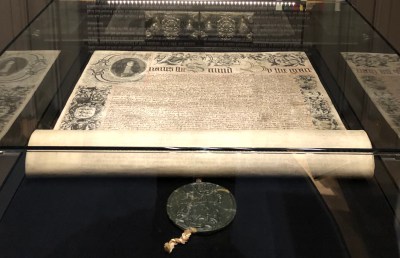
When Hudson's Bay faltered last year, Manitoba Museum CEO Dorota Blumczynska didn't even need to look at the institution's bank accounts to know it couldn't afford to buy the royal charter that formed Canada's oldest business. Read More


Maggie Macintosh:

Cree name chosen for new Waverley West school

Waverley West’s newest elementary school will be named after a Cree translation of its address. École Iskonakwa School — the kindergarten-to-Grade 8 building that’s being constructed at 175 Skyline... Read More


Gabrielle Piché:

Legislation to create Manitoba-Indigenous Crown corporation pending as some First Nations express concerns

Legislation to create a new Crown corporation is hung up, in part, on First Nations’ concerns the entity would override the government’s duty to consult individual nations before launching projects. ... Read More


Erik Pindera:

Brandon police officer charged with assault for conduct in arrest of teen after school sword attack

Manitoba’s police oversight agency has charged a Brandon Police Service officer with assault in relation to his conduct while arresting a teenage boy during a sword attack at a high school in the western Manitoba city last June. Read More


Gabrielle Piché:

SCO-led app Miikahnah Connect links Indigenous workers to labour demand

As Jay Sanderson turned to face his job site, evidence of his work stared back — plywood replacing windows at the former Hudson’s Bay Co. flagship store downtown. Lately, he’s been in the basement.... Read More


Tiago Resko:

Nursing grad hopes to drive change for Indigenous patients

A Cree student who graduated from the University of Manitoba nursing program said she’s striving to make the health-care system a more welcoming place for Indigenous patients. Kaydence Morgado Thom... Read More


Mike McIntyre:

Getting the call to the Manitoba Hockey Hall

Class of 2026 announced Tuesday at Hockey For All Centre Read More


ARTS & LIFE

Dan Gelston, The Associated Press:

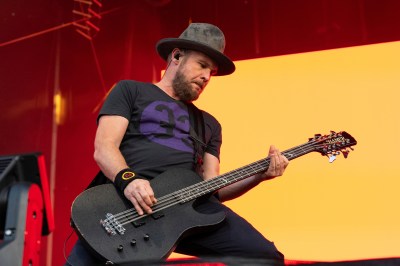
Pearl Jam bassist Ament highlights skateboarding’s impact in Indigenous communities in Tribeca film

Raised in the rural Montana community of Big Sandy, Jeff Ament got hooked as a teenager on skateboarding at a time when not much more than only a handful of ramps were available in the state.... Read More


FROM FURTHER AFIELD


Share:


Download our News Break app