|
On Thursday I talked with University of Alberta law and public health professor Timothy Caulfield about his fascinating new book The Certainty Illusion: What You Don’t Know and Why it Matters, published earlier this year. Caulfield visits Winnipeg next Friday (Feb. 21) to launch the book at McNally Robinson Booksellers’ Grant Park location at 7 p.m.; you can read my interview with him in the Free Press on Wednesday, Feb. 19.
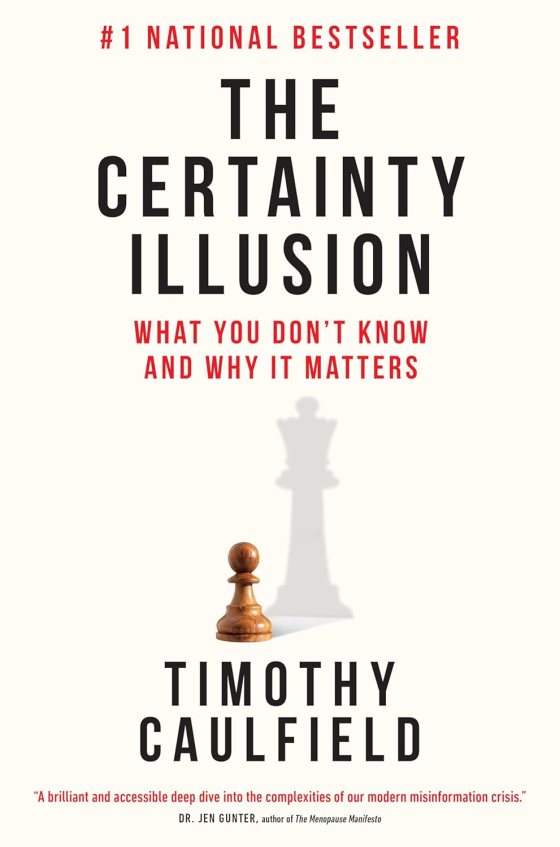
Caulfield’s well-researched and well-written book looks at three different areas in which misinformation runs rampant — science, goodness (well-being, beauty, health products) and opinion. It’s the last of those topics that’s pertinent to, well, me writing about his book in a food and drinks newsletter — namely, reviews.
In 2017, The Shed at Dulwich became the top-rated restaurant on TripAdvisor in London. One problem — the eatery wasn’t real. The Shed at Dulwich was created by Vice journalist Oobah Butler as an experiment to see whether, by creating fake reviews, it was possible to game the system. He bought a burner phone, set up a website and created a menu with accompanying photos of the “dishes,” flooded the eatery’s TripAdvisor page with positive reviews and, within a few months, The Shed rocketed from the 18,149th-rated restaurant to number 156 and, eventually to number one.
(Wine-wise, a similar thing happened in 2008 when Robin Goldstein of a website called Fearless Critic submitted a wine list for Wine Spectator magazine’s annual Award of Excellence prizes. The list, for the fake restaurant Osteria L’Intrepido di Milano, won one of the magazine’s 3,254 Award of Excellence designations.)
Today the shenanigans persist on a range of platforms and are executed with more savvy. Food delivery apps, Google ratings and restaurant Facebook pages feature wildly positive reviews, some of dubious origin, be they purchased, AI-generated or otherwise. And it’s not just restaurants — anyone who has shopped for pretty much anything online has likely come across intensely positive reviews that seem just a little… off.

Timothy Caulfield (Curtis Trent photo)
One trend Caulfield doesn’t touch on, but that can be found everywhere on social media platforms such as Instagram and TikTok, are videos featuring an influencer or foodie or whatever they call themselves. They’re always structured the same: said influencer is seen standing outside of an eatery, says something like, “Come with me to (insert eatery name here),” and then proceeds to go in and have the absolute perfect experience, all captured on camera. The glowing “review” is then reposted by the eatery for all their followers to see.
What often remains unsaid is that these influencers are either getting the food for free, getting paid or (most likely) both.
Advertisement

There’s no denying the power of a positive review, whether real or dubious. As the Free Press wine critic, Liquor Mart and private wine store employees have told me about people coming in with a clipped-out (positive) review from Uncorked to help find and purchase said product. (I was actually standing right next to an employee once when this happened, which was wildly embarrassing for me.)
I think about the power of the review, real or fake, quite often as I’m writing drinks reviews. As someone working for a legit news organization, rest assured that my reviews are never bought or influenced by producers, reps or higher-ups at the Free Press. Even those I’ve made friends with in the local drinks industry know that when it comes to what I’m tasting, I tell it like it is.
How much weight do you place on online reviews? Does a five-star rating sway your eating/drinking choice?
|