|
“Buy the ticket, take the ride.”
— journalist Hunter S. Thompson
The Macro
Being an “away” fan at a top-flight soccer match in Europe or the U.K. is, arguably, one of the greatest live sports experiences in the world.
This is where you go and sit in a small, designated section of fans supporting the away team. Among true soccer fans, an “away” ticket is perhaps one of the most valuable commodities in the world.
I am, as some of you know, a huge fan of Liverpool Football Club. I have family in Liverpool and have been blessed to see LFC play several times at Anfield Stadium, their home field. However, I’d never experienced a game as an away fan.
So, with plans to visit my son (who lives in Belfast) over Christmas, I started in June trying to find two tickets to a Dec. 20 game pitting LFC against Tottenham Hotspur at their glorious and modern north London stadium.
This was always going to be a tough get. Out of 62,850 seats, Tottenham only sets aside 3,000 for away fans, which is pretty much the standard quantity in EPL stadiums.
Eventually, I paid an ungodly sum for two “ghost” tickets in the away section of Hotspur stadium. When you purchase a ghost ticket, you are trading in live event futures; the vendor takes your money and promises that you will get a ticket. Eventually.
These transactions exist within a “grey” market as the EPL does not allow ticketing reselling — or “touting” as the Brits call it — and most teams will cancel your tickets if they find out you bought them second-hand, or ban season ticket holders who resell. That does not, however, stop the practice of scalping or prevent ticket prices from becoming astronomical.
Long story short: two days before the game, I got tickets. Our seats were glorious. We sang “You’ll Never Walk Alone” a cappella with the Liverpool away fans. The Reds won the game.
Pub anyone?
Advertisement

My experience finding a way into an EPL away game showed me that if you really want a ticket to some sort of live event, it can be had. It also showed me it’s virtually impossible to stop scalping.
Not that people aren’t trying.
The U.K. is about to proclaim a law that bans all live event ticket reselling. It’s unclear whether this new legal regime will be effective, based on the experience of other countries.
Denmark, Portugal and France, in particular, have cracked down hard on resellers, only allowing resales at face value. Germany restricts resellers to a 25-per-cent maximum markup. Australia limits all resales to a maximum 10-per-cent markup.
Bans do work, to some extent. If you have tried to buy a ticket to a sold-out concert in Europe or the U.K., for example, you will see that other than “ghost” tickets, there is simply nothing available.
That exposes one of the weaknesses of reselling bans: when ticket reselling is banned, there are fewer tickets sold at hugely inflated prices. But then again, there are just fewer tickets available.
Are there any hopes for sports and concert fans? Two developments in the U.S. hold some hope. “Some” being the operative word.
In January, the U.S. Senate held hearings where the principals of event promotion and ticket selling were forced to answer some tough questions. The hearings followed the introduction, in December, of the Fans First Act, a bipartisan bill that would require more transparency in ticket reselling without banning the practice.
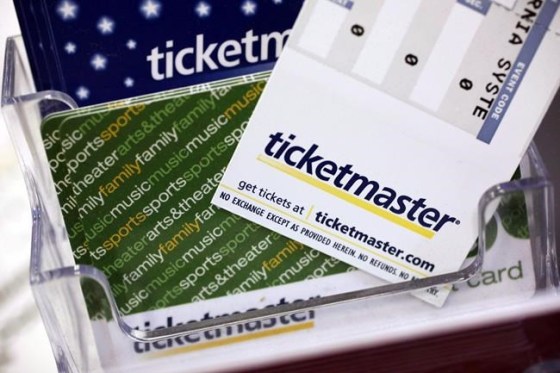
Finally, there is the high-profile anti-trust lawsuit brought by the U.S. Department of Justice against Live Nation and its ticket-selling platform, Ticketmaster. While it is true that breaking up the gargantuan Live Nation/Ticketmaster virtual monopoly would create more competition, there is no assurance it would bring ticket prices down.
(Paul Sakuma / The Associated Press files)
Industry experts believe that there are too many moving parts and too much money available for sanity to ever return to ticket sales.
Ben Kruger, chief marketing officer for online reseller Event Ticket Seller, argued in The Washington Post that many artists now allow promoters and venues to use “dynamic pricing,” which inflates the face value of a ticket when demand surges. (Uber and vacation sites use the same algorithms to drive up the price of rides, plane tickets and hotel rooms.)
“Through dynamic pricing, initial sellers now change ticket prices in real-time based on demand,” Krueger wrote. “Two fans in identical seats can pay significantly different prices just minutes apart. How do you cap resale at 10 per cent above face value when face value itself is moving?”
So, where does all this leave sporting and music fans?
You need to be diligent to get in the virtual lineups to buy face-value tickets, realizing that for the world’s biggest events (Taylor Swift, the FIFA World Cup) you are going to pay a premium if you buy at the wrong moment.
The only other thing you can do at this point is save up money for the events that are most valuable to you. And if you get them, make sure you don’t look back with regret.
|