Your forecast
Increasing cloudiness this morning with a 60 per cent chance of showers late this morning and into afternoon. Expected high is 17 C, low 10, UV index 3 or moderate.
What’s happening today
After a four-year absence due to the COVID-19 pandemic, local producers of beer, cider, wine and spirits are once again flocking to Assiniboine Park as part of this year’s Brew at the Zoo from 7 to 10 p.m. Tickets from $55 at assiniboinepark.ca

Brew at the Zoo (Supplied)
Today’s must-read
Hours after the fire-ravaged Windsor Hotel was reduced to rubble Wednesday, firefighters were forced to battle blazes in two more vacant buildings in Winnipeg — a troubling trend that has sparked concerns about safety and costs. By the end of August, the city had recorded 104 fires in vacant buildings — already a new annual record. Chris Kitching has the story.
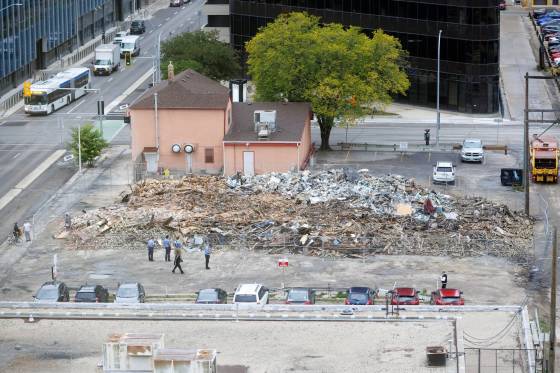
The Windsor Hotel, at 187 Garry St., was vacant when it went up in flames. (Mike Deal / Winnipeg Free Press files)
On the bright side
Counting nose hairs in cadavers, repurposing dead spiders and explaining why scientists lick rocks, are among the winning achievements in this year’s Ig Nobels, the prize for humorous scientific feats, organizers announced Thursday.
The 33rd annual prize ceremony was a prerecorded online event, as it has been since the coronavirus pandemic, instead of the past live ceremonies at Harvard University. Ten spoof prizes were awarded to the teams and individuals around the globe. Among the winners was Jan Zalasiewicz of Poland who earned the chemistry and geology prize for explaining why many scientists like to lick rocks. The Associated Press has the story.
On this date
On Sept. 15, 1967: The Winnipeg Free Press reported at a meeting a the Fort Garry Hotel, shareholders of the Bank of Western Canada voted nearly seven to one in favour of winding down the bank, established only three years earlier; the decision would still have to be approved in Manitoba Court of Queen’s Bench. In London, the Institute for Strategic Studies released figures that indicated the Soviet Union could be pulling ahead in the nuclear arms race. Canada planned to cut its armed forces by 6,000 to 100,000. Read the rest of this day’s paper here. Search our archives for more here.
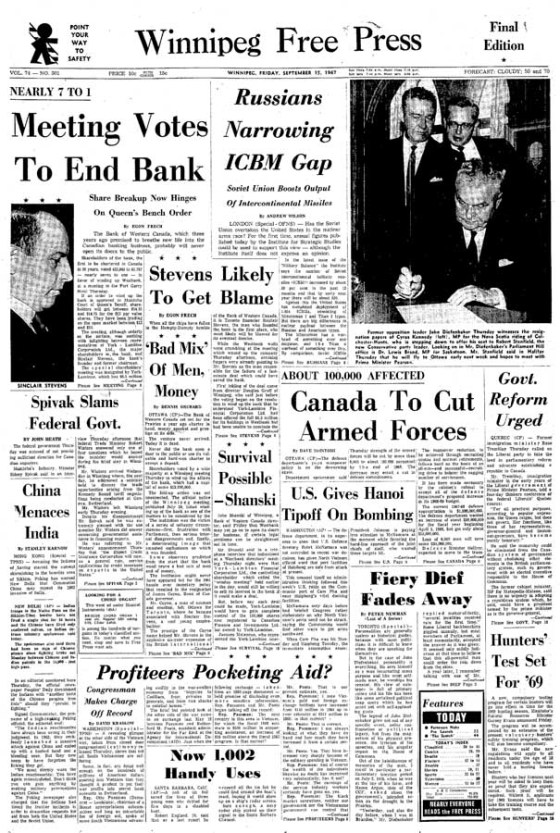
Today’s front page
Get the full story: Read today’s e-edition of the Free Press.

|